
April 9, 2026 • 26 min read
10 Customer Experience Assurance Solutions & Their Differentiators in 2026

Director of Content & Market Research
April 9, 2026
Contact centers face a dual pressure: move fast on AI adoption, yet avoid costly failures in live environments.
Customer experience assurance solutions address that tension, providing leaders with a safety layer that enables them to accelerate innovation without fear of disrupting what already works.
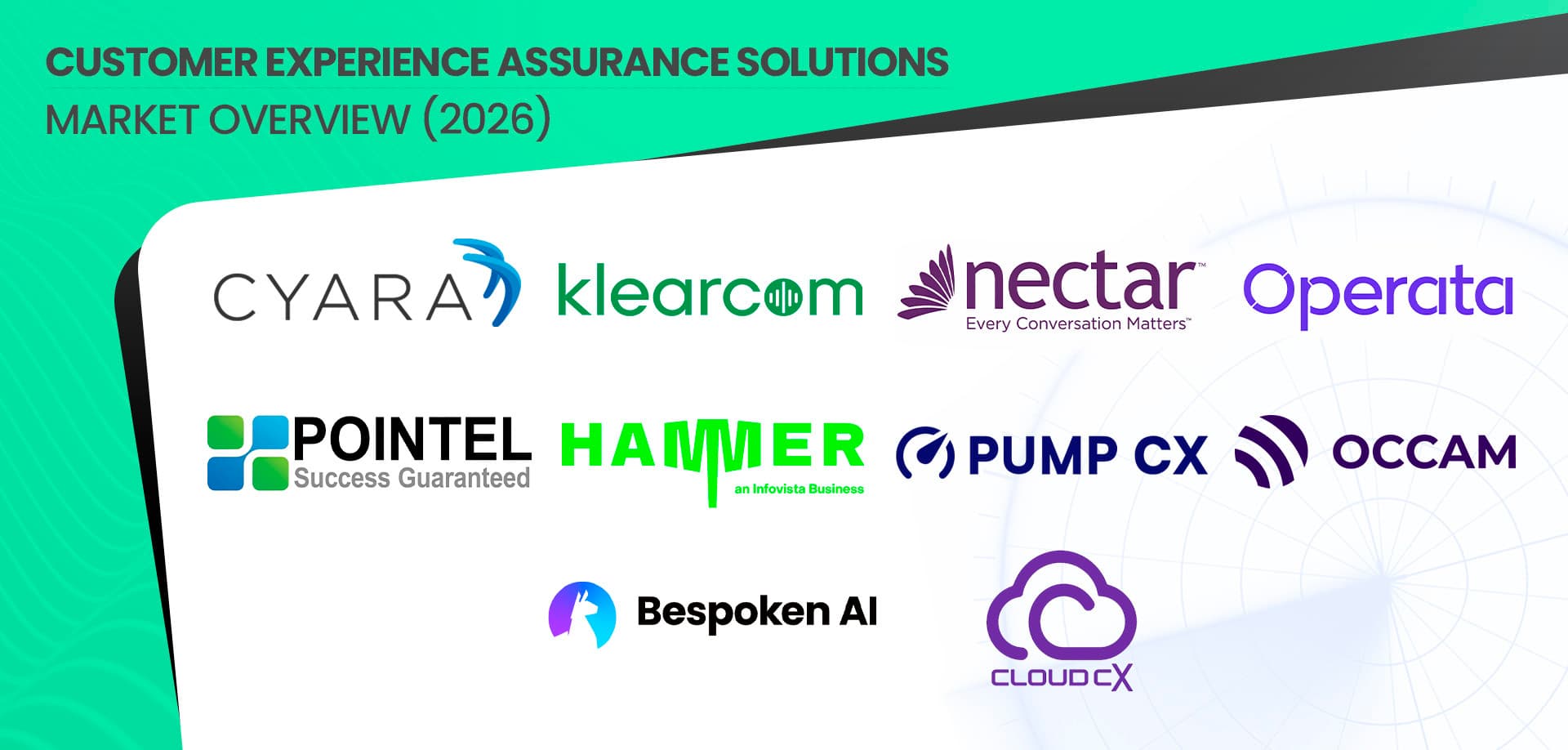
Cyara, Nectar Services Corp., and Hammer are the incumbent vendors that many enterprises turn to for that assurance. But new players are emerging to challenge them.
Read on for a breakdown of what their technologies can do, and which customer experience assurance solutions stand out.
What Is Customer Experience Assurance?
Customer experience (CX) assurance aims to ensure that every interaction a customer has with a business is seamless and uninterrupted, across all channels and systems.
Rather than reacting to problems after customers or employees report them, CX assurance allows organizations to test, validate, and proactively monitor experiences across:
- Networks and infrastructure
- IVR and AI systems
- Integrations between systems
- The agent desktop
By acting quickly on the insights CX assurance solutions unlock, companies can identify issues in each of these areas before they affect customers.
As such, they prevent customers from being the ones to “test” an organization’s tech, ensuring consistently high-quality system performance.
Which Tests Should a Customer Experience Assurance Solution Cover?
Customer experience assurance is about more than testing and validating systems. It also involves ongoing monitoring to assure performance in real time.
After all, a one-time test isn’t enough. Businesses need continuous validation to maintain confidence in their contact center experiences.
That said, pre- and post-deployment testing is a core part of CX assurance. Given that, here are the cornerstone tests that CX assurance providers typically cover.
Network & Telecom Testing
Customer interactions often involve multiple telecom providers and routing paths, sometimes across countries.
CX assurance solutions can test and monitor to ensure calls connect successfully. They can sometimes also trace issues to the point of failure, across carriers, connections, session border controllers (SBCs), and beyond.
Yet, even when calls connect, quality issues can arise, especially in global routing scenarios where cheaper carriers may degrade voice quality.
Given this, CX assurance providers also test voice quality, most often by simulating real customer experiences across specific geographies.
IVR & Call Flow Testing
While AI voice agents are slowly becoming the norm, many contact centers still operate with an IVR. Once a call connects, this is the next layer of testing.
Across the IVR, customers can hit dead ends, experience inescapable "doom loops", or misroute to the wrong department.
As such, CX assurance providers test the IVR by either maintaining a library of test scenarios or installing an IVR crawler to map the system and spotlight issues.
AI Agent & Integration Testing
Just like the IVR, voice (and digital) AI agents can deliver underwhelming experiences.
Given this, CX assurance providers increasingly test and monitor customer-facing agents for:
- Compliance
- Bias (e.g., geographic, gender)
- Accuracy (against the company’s knowledge base)
- Brand risk (i.e., recommending a rival company’s product)
- Hallucinations
- Drift over time
- Misuse scenarios (i.e., customer trying to jailbreak the AI)
Critically, CX assurance solutions also test whether AI agents integrate properly with backend systems (e.g., payments, order tracking).
Pure-play AI assurance tools rarely offer this capability and, therefore, fail to deliver the broader, independent view of a fully-fledged CX assurance vendor.
AI-to-Human Handoff Testing
When AI cannot resolve an issue, it must hand it off to a human agent.
Contact center routing strategies aim to ensure the best-placed agent takes over. Yet, the success of those strategies is not a given.
As such, more CX assurance vendors test to validate:
- Whether handoffs happen correctly
- Whether the customer is routed to the right agent
- Whether the agent has the appropriate skills
Load Testing
Load testing simulates a high volume of calls and contacts to stress test the contact center ecosystem, ensuring high performance at peak demand.
Many only associate load testing with the IVR. Yet, it can also help to validate the performance of routing engines, CRM systems, and the core contact center infrastructure.
Agent-Side Experience Testing
CX assurance providers test and monitor the agent desktop, network, and (increasingly) hardware to validate the employee experience.
In doing so, they test agent connectivity, network performance (e.g., lag, jitter), voice quality, and access to crucial systems, such as the knowledge base.
Ultimately, this ensures agents can effectively serve customers once a call is handed off.
The 10 Customer Experience Assurance Solutions
Here are ten of the most commonly implemented CX assurance solutions, and what differentiates them.
1. Cyara
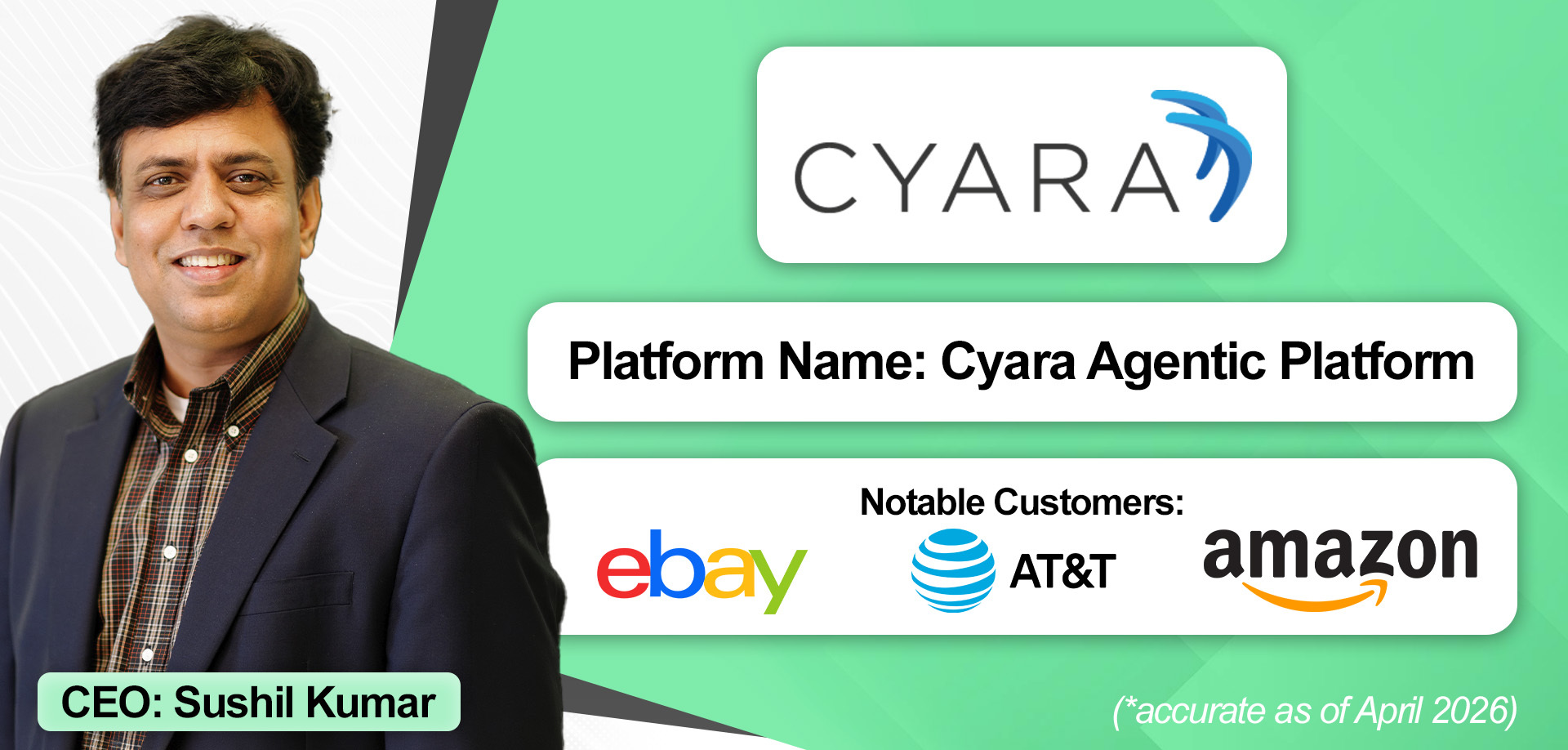
Cyara is the most well-established provider in this market, delivering CX assurance solutions for 20 years and working with almost 500 global enterprises.
That experience has helped Cyara establish close relationships with major contact center providers, integrations with leading AI platforms and frameworks, and global telecom and carrier partnerships.
As a result, it can boast a deep understanding of legacy environments, custom integrations, and region-specific telecom dependencies, enabling the provider to quickly diagnose issues across complex environments.
Additionally, the breadth and depth of Cyara’s portfolio ensures testing covers more systems without heavy custom work, supports its detection of location-specific performance issues, and creates a barrier to entry for many competitors.
Its global infrastructure, spanning 145 countries and approximately 400 carrier relationships, is also a major differentiator. It allows Cyara to perform in-country voice quality testing, use real devices, monitor carrier connections in each region, and simulate real customer experiences from specific geographies
Finally, Cyara’s roadmap demonstrates a clear direction for the market. It includes a focus on unifying CX assurance with journey intelligence, using that additional data to determine: what to test, when to test, and how frequently to test.
"Cyara’s strength lies in our ecosystem approach. We partner with nearly all major CCaaS providers and AI vendors, giving us unmatched depth and insight across the entire customer experience landscape."

Standout Features
- Platform Depth: Enterprise contact centers are not greenfield systems; they are layered with legacy workloads, custom integrations, and various telco dependencies. Cyara’s platform depth and ecosystem knowledge can prove a differentiator in highly complex environments.
- Global Infrastructure: With infrastructure spanning 145+ countries and hundreds of carrier relationships, Cyara replicates real-world customer conditions globally, tests location-specific performance issues, and validates experiences across different geographies and networks.
- Roadmap: Cyara’s roadmap merges CX assurance and customer journey data to proactively recommend what a contact center should test and when. This may enable more strategic, efficient, and impactful CX assurance.
How Much Does It Cost?
The Cyara Agentic Platform is listed on the AWS marketplace for $10,500.00 per month. However, Cyara can adjust its pricing to various enterprise requirements. Request a demon and find out more here.
2. Nectar Services Corp.
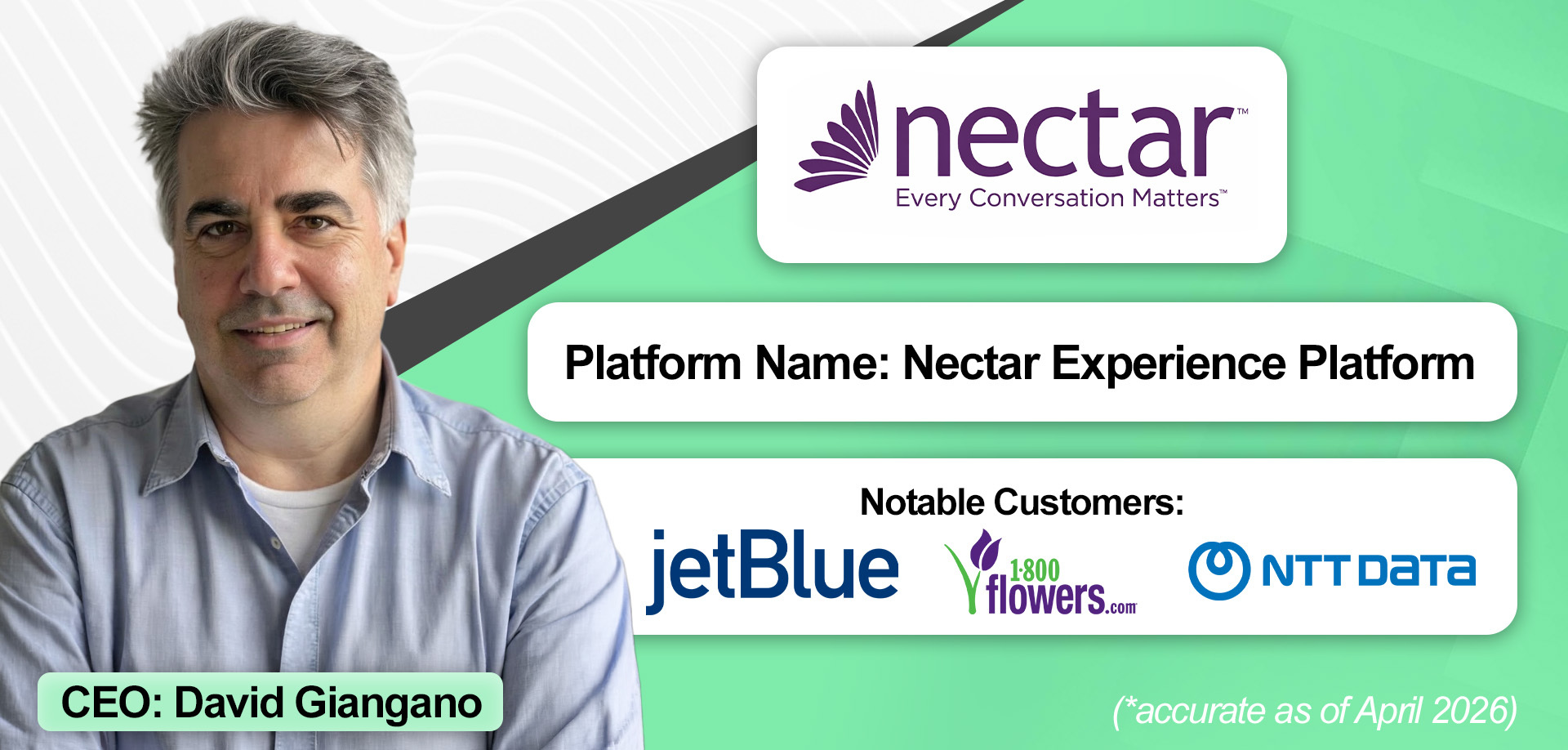
Everything on Nectar’s platform is accessible through APIs. While that supports its deployment across complex, multi-vendor environments, it’s also an advantage for tomorrow’s agentic contact center.
Indeed, its large API surface and investment in MCP tooling mean that organizations may soon translate insights from their CX assurance tools into actions, automatically fixing problems using real data across the contact center.
Additionally, Nectar has introduced an AI assistant that notifies users of customer experience issues and provides remediation guidance. The assistant also allows users to query telemetry data across multi-vendor ecosystems and dive deeper into problems. It doesn’t only present dashboards.
Its extensive ecosystem of close partnerships is another differentiator. This goes beyond contact center, unified communications, carrier, and SBC providers. Nectar also demonstrates close partnerships with ITSM providers (i.e., ServiceNow, JIRA, and PagerDuty) and SIEM vendors (i.e., Splunk, Eventbridge, etc.).
Many of its partners and service providers also actively invest in its platform to address end-user-to-core application visibility and management challenges.
Lastly, Nectar’s platform is deep, featuring CX assurance solutions optimized for specific environments, including Genesys Cloud, Microsoft Teams, and Zoom.
“Nectar has an API-surface from the beginning for AI Agents using MCP, advanced AI/chatbot assurance (as well as the normal CX Assurance), and an extensive ecosystem… The guys are way ahead.”

Standout Features
- Large API Surface: Nectar was designed with a broad, API-first architecture that makes it fully agent-ready via MCP, enabling AI agents to perform actions across the platform’s data and proactively solve issues across the CX ecosystem.
- Extensive Partner Ecosystem: Supported by a deep base of major partners and service providers, Nectar addresses complex user edge-to-core application visibility and management challenges across multi-vendor environments.
- Nectar AI Assistant: Nectar’s AI assistant allows natural language querying of vast telemetry data, early issue detection, context-aware root cause analysis, and AI-driven remediation guidance, empowering admins with real-time insights and suggested actions.
How Much Does It Cost?
Nectar Services Corp. does not publicly disclose its pricing. It first looks to understand a business's priorities via a discovery call. Book time with the Nectar team here to learn more.
3. Klearcom
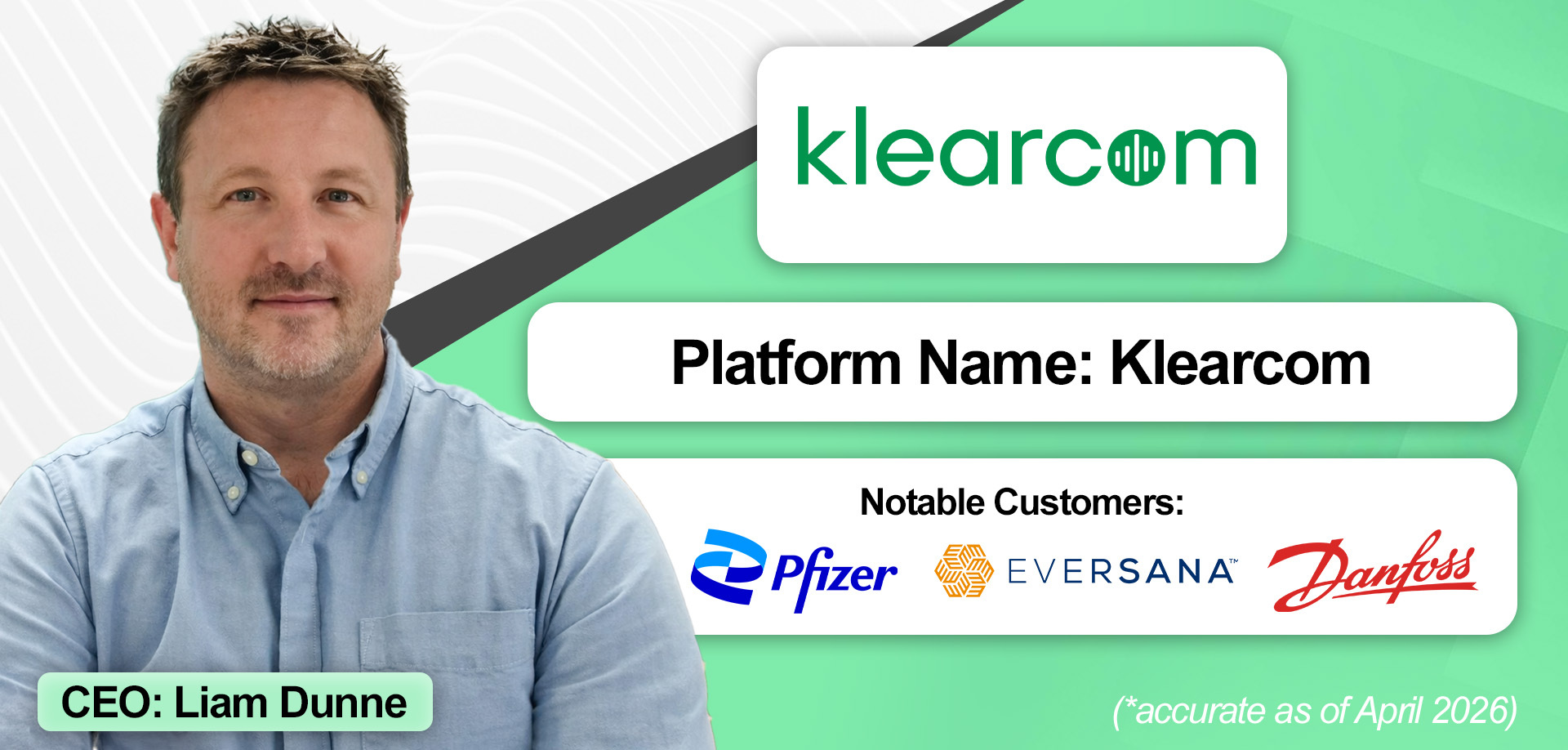
Customer experience assurance tools are prone to generating too many alerts, including false positives. Recognizing this, Klearcom validates every issue with a 24/7 human triage team that commits to a five-minute service level globally.
As a result, Klearcom accepts the burden of checking issues remotely, ensuring only genuine problems are reported. That means: no alert fatigue, faster detection and resolution, and clear accountability when issues arise.
Another differentiator for Klearcom against industry stalwarts is that it doesn’t require its customers to buy ports to run tests. Nothing needs to be installed or integrated. Klearcom’s customers provide their numbers and start testing immediately.
Alongside its portless approach, Klearcom supports unlimited concurrent testing across more than 100 countries, allowing organizations to test all locations simultaneously without restrictions.
Ultimately, this allows real-time testing in local time zones, prevents delays or bottlenecks between teams, and ensures continuous monitoring without gaps.
Lastly, Klearcom extends CX assurance beyond the contact center by including conference call testing to support other customer-facing teams.That’s available within a unified platform, which doesn’t fragment tools, unlike many competitive offerings.
“We are the disruptor in the industry: no ports, non-intrusive testing, global coverage, and human-verified insights. Customers see the value immediately, often identifying critical issues on the first run.”

Standout Features
- Human-Validated Alerts: Klearcom provides a 24/7 triage team that validates every alert within five minutes, ensuring only genuine problems are reported. Critically, this eliminates false positives, reduces alert fatigue, and takes the burden off IT leaders.
- Non-Intrusive Platform Design: The solution requires no installations, integrations, or ports. Its ‘non-intrusive approach’ means that brands can just share their numbers and start testing immediately, accelerating time to value.
- Global Coverage: Klearcom supports 340+ carriers in 100+ countries. It matches this scale with unlimited concurrent tests, ensuring real-time testing in local time zones without disruption.
How Much Does It Cost?
Klearcom does not wish to publicly disclose its pricing. Instead, it asks prospects to reach out directly to learn more. Contact Klearcom for a pricing consultation here.
4. Operata
Most CX assurance solutions relay technical and operational data. Yet, Operata also plugs into the agent desktop environment to incorporate real-time experience data from customer interactions. That allows it to surface new insights and add context to flagged issues.
For example, Operata can help answer questions such as:
- Is a headset microphone too far from the user’s mouth?
- Is the agent using the correct audio device?
- Has another app (like Teams) taken control of the microphone?
- Which network is a remote agent utilizing? (i.e., Wi-Fi vs Ethernet)
- What’s their CPU usage?
- How many tabs do they have open?
- How is the agent’s laptop performing?
These insights don’t just flow through to the admin. Operata puts them in the hands of human agents. So, for instance, if something isn’t working, the system tells them what to fix, without needing to raise a service desk ticket.
Interestingly, the provider also allows users to query the system in natural language. For example, a supervisor can type: “Why are these agents experiencing issues?” The system can analyze data and identify patterns, like a shared ISP causing problems.
Again, this changes who can access insights. Instead of relying on IT teams, contact center managers, team leaders, and resource planners can directly ask questions and get answers.
Yet, to return to the first point, perhaps the biggest differentiator of Operata is that it utilizes real-time data, based on actual customer interactions, instead of synthetic data. As such, it can continuously show what is really happening across the system, not just in a test scenario.
“Operata isn’t just analytics, it’s a category-defining platform. We do what others do (assurance and monitoring), but they don’t do what we do: end-to-end observability with real-time data and full context.”

Standout Features
- Real-Time Data Usage: Operata tracks real calls to detect issues as they happen, understand the true customer impact, and enable speedy adjustments. It doesn’t solely rely on synthetic data to capture real-world variability.
- Agent-Level Assurance: By plugging directly into the agent desktop, Operata detects agent-facing issues beyond the scope of most CX assurance solutions. It can also track softphone, hardware, and browser performance.
- Insight Democratization: With Operata, CX isn’t only a tool for IT; it’s a tool for everyone. Remote agents receive proactive insights to optimize their environments, while supervisors, managers, and resource planners can interact with the system in natural language to troubleshoot.
How Much Does It Cost?
Operata uses a usage-based pricing model, starting at around $0.006–$0.0085 per agent minute, with minimum monthly commitments ranging from $3,000 to $4,250 depending on the plan. Discover more about Operata’s pricing model here.
5. Occam
Occam integrates directly into the contact center ecosystem to replicate real agent behaviors, rather than testing via generic simulations.
That capability is significant in scenarios like load testing. For instance, if a contact center is testing 4,000 concurrent calls, Occam’s Razor Platform can simulate hundreds of agents handling those interactions without needing real agents to be online. That removes subjectivity and ensures consistent, repeatable results.
Another differentiator comes in Occam’s latest product announcement: SimplifAI. SimplifAI ingests configuration files from platforms like Genesys, Five9, and Amazon Connect, automatically generating both technical and business-friendly diagrams of the system. This makes complex architectures easier to understand and share across teams.
The new solution also automatically generates a testing program to validate the setup, helping organizations accelerate deployments.
Elsewhere, Occam customers have direct access to a dedicated technical account manager via Slack or Teams, who acts as an extension of their team.
Finally, the provider offers a single solution built from the ground up. That means features like intent matching and chat testing are already integrated, not separate tools. Yet, it’s also significant as new features come part and parcel with the platform. They’re not sold as add-ons.
“We don’t just test the contact center software. From legacy carrier connections to cloud platforms, IVRs, CRMs, and agent tooling, we validate every touchpoint of the customer experience.”

Standout Features
- Real Agent Behavior Duplication: Occam integrates directly into the contact center to replicate real agent actions. This enables realistic, scalable testing without relying on synthetic simulations or test environments.
- SimplifAI: SimplifAI converts platform configurations into clear technical and business diagrams, while automatically generating test suites to validate them—accelerating deployments and ensuring systems perform as expected.
- Dedicated Customer Support: Occam provides 24/7 global support with direct access to technical account managers via Slack or Teams, acting as an extension of the customer’s team for faster resolution and collaboration.
How Much Does It Cost?
Occam tables a usage-based pricing model, where customers pay only for the tests they run. As usage exceeds $1,500 per month, tailored packages are available to reduce per-test costs. View the full Occam Razor pricing breakdown here.
6. Hammer
Hammer is a prominent name in the CX assurance space, with global offices and a long-tenured team. In 2021, it became part of Infovista.
Since then, Hammer has often been sold alongside Infovista Ativa. While the ultimate goal is to combine the two solutions on one platform, even separately, Ativa extends the scope of traditional CX assurance with advanced network intelligence.
For instance, Ativa can visualize network usage patterns and customer behaviors across services, devices, and locations. As a result, Hammer users can passively monitor additional CX touchpoints beyond the scope of most competitors.
Alongside Ativa, Hammer customers often deploy Virsae. This expands visibility into operational and agent-level metrics, such as call routing accuracy, agent hardware performance, and workflow efficiency.
Yet, in terms of the Hammer platform itself, one of the most notable features is an AI intelligence layer that can dynamically generate test scripts.
Consider a scenario where passive monitoring identifies low traffic to a number; the AI layer can automatically place a test call, report the results, and determine if there’s a network or carrier issue, all without human intervention.
For the future, Hammer is positioning CX assurance as key to a contact center’s security posture, considering how it can detect anomalies, like a recently swapped SIM, by analyzing network traffic and triggering automated actions to validate the integrity of the customer journey. That could lead the space in a new direction.
“CX failures are often network problems in disguise. Testing tells you what failed; correlation tells you why. Our approach connects customer experience to infrastructure reality.”

Standout Features
- Network Intelligence (via Ativa): Hammer correlates live traffic across both the network and contact center stack. This enables passive monitoring of all interactions, not just tests, and eliminates blind spots across the customer journey.
- Automated Test Script Generation: An AI layer within Hammer’s platform automatically generates and runs test scripts based on real-time signals, triggering actions (like test calls) to identify and validate issues without human intervention.
- Roadmap: Infovista ultimately aims to unify Hammer and Ativa on one platform: VistaOne. That’s a significant step to simplify the user experience. The company also hopes to use CX assurance and network intelligence insights to support contact center security and compliance.
How Much Does It Cost?
Organizations should contact Hammer directly for a consultation, demo, and custom quote. Request pricing from Hammer here.
7. PumpCX
PumpCX is the largest CX assurance provider in Australia, working with eight of the country’s ten largest contact centers. Now, it’s expanding with a U.S. office and, via a reseller network, into Europe.
Similar to Occam, it monitors the contact center ecosystem to simulate real-world customer and agent experiences, instead of testing against its own API and training models. For PumpCX, this is essential for accurately testing multi-vendor, cloud environments where calls spread across different systems.
The vendor also differentiates through its deep AI agent assurance suite. Interestingly, this includes testing AI against different customer personas, such as elderly callers, young callers, angry customers, confused customers, and distressed customers.
PumpCX is also building a growing library of test scenarios. Some are specific to the customer's use case; others are edge cases and guardrail tests. Classic examples include: Will the AI recommend a competitor's product? Will it go off-topic and start answering questions it has no business answering, running up token costs in the process?
Soon, customers may build their own test scenarios through natural language. So, the customer types in what they want to test, while the system builds and executes it.
Lastly, PumpCX supports integrations with standard CI/CD, DevOps, and ITSM tools out of the box, where some competitors require extra payments for custom integration work.
"We've had voice quality and network testing baked into what we've been doing for 13 years. We're really good at that. Now we're overlaying the AI part, and we're doing it from both directions, where most people are only coming from one."

Standout Features
- ‘Real-World’ Simulations: PumpCX tailors simulations to each contact center environment, navigating systems just as a real customer or agent would. This approach uncovers gaps that standard API-level testing often misses, including misrouted calls and data errors.
- AI Agent Testing: The vendor’s persona testing ensures AI systems respond appropriately, while its expanding library of use-case, edge-case, and guardrail scenarios accelerates the evolution of a contact center’s self-service proposition.
- Out-of-the-Box Integrations: Integrations extend far beyond CCaaS, WFO, and CRM systems. PumpCX also offers out-of-the-box integrations with standard CI/CD, DevOps, and ITSM tools, which help to lower custom integration costs.
How Much Does It Cost?
PumpCX doesn’t publicly disclose pricing information. Instead, customers must request a custom quote that aligns with their requirements. Book a demo with PumpCX here.
8. CloudCX
CloudCX aims to differentiate through execution, building close customer relationships. This is evident in its support, with customers suggesting that the vendor is quick to onboard features upon request, even if they're not on its roadmap.
Similarly, customer education is a significant focus. For instance, CloudCX provided extensive resources to customers before the Digital Operational Resilience Act (DORA) came into effect in 2025, helping to ensure their compliance.
CloudCX can also differentiate with its focus on underserved markets, such as manufacturing and airlines, where it can offer expert guidance.
Moreover, while it works with customers deploying many CCaaS solutions, QuickTest is particularly widely utilized by Genesys customers, with a specialized assurance program for customers moving from on-premise environments to Genesys Cloud.
CloudCX has also recently expanded to provide agent experience assurance and monitoring, adding depth to its platform. This works by deploying AI within the contact center infrastructure to simulate how real agents log in, handle conversations, and interact with systems.
Lastly, the vendor tests virtual agents, further rounding out its portfolio, simulating caller personas, accents, and speaking styles.
Standout Features
- Customer Support & Education: Customers highlight the vendor’s ability to implement requested features quickly. The company also provides educational resources, enabling teams to continually advance their CX assurance strategy.
- Genesys Cloud Specialism: CloudCX delivers deep expertise in Genesys environments, offering automated migration tools for moving between on-premises and cloud platforms, enhanced change management visibility through CI/CD integration, and proactive monitoring of Genesys entry points.
- Vertical Focus: CloudCX targets underserved industries such as manufacturing and airlines. By combining technical expertise with its QuickTest platform, CloudCX empowers teams in these verticals to deliver consistent, exceptional customer experiences.
How Much Does It Cost?
CloudCX offers a free test of a contact center’s IVR. However, pricing for its full-scale QuickTest platform is not publicly available. Contact CloudCX to learn more here.
9. Bespoken AI
Bespoken AI is moving into broader CX assurance. Yet, it most commonly focuses on conversational AI and IVR assurance. This is where it stands apart.
For instance, it offers model testing to validate LLMs, speech recognition, and natural language understanding (NLU) models. That’s alongside more conventional regression, load, and functional testing.
The vendor is also experimenting with deterministic vs. non-deterministic testing. As a result, it can validate both rules-based conversational AI flows and AI that responds to customers in many different ways, enabling a more granular view of a virtual agent’s performance.
Alongside this, Bespoken has a transparent and flexible pricing model, unlike others in the space. This is based on the number of simulated interactions and user accounts. It also offers tiers ranging from self-service to fully managed “testing-as-a-service.”
Of course, its platform is not as extensive as Cyara or Nectar. Yet, Bespoken AI is expanding fast, with agent experience and network-level testing, alongside experience supporting migrations to platforms like Genesys Cloud and Amazon Connect.
Interestingly, it has even started to support projects beyond contact centers. For instance, it’s testing in-car voice systems for companies like Mercedes and Ford.
“The learning curve is very intuitive… and the price point tends to be very competitive. Unlike others, where you have to continuously unlock further support with higher fees, our support package is neatly built into the pricing.”

Standout Features
- AI Assurance & Monitoring: Specializing in conversational AI assurance, Bespoken will soon support both deterministic AI testing (predefined inputs and expected outputs) and emerging non-deterministic testing for AI agents, enabling high coverage, real-time monitoring, and robust defect detection.
- Pricing Model & Ease of Use: Bespoken offers transparent, flexible pricing, with tiers ranging from self-service to fully managed testing-as-a-service. It pairs this with a focus on ease of use. This is evidenced by its intuitive interface, allowing teams to get up and running in a day.
- Partner Ecosystem: The vendor collaborates with major system integrators (SIs), including IBM and Accenture, specialized contact center consultants such as Boxside and Slalom, and is available across many CCaaS marketplaces. This ensures broad integration and implementation support.
How Much Does It Cost?
Bespoken AI is available across three tiers: Self-Serve Professional, Guided Professional, and Custom Enterprise. The first two are available at $2,000 and $3.000 a month, respectively. The price of the final tier depends on the organization’s requirements. Learn more about Bespoken AI’s pricing model here.
10. Pointel
Pointel isn’t only a CX assurance vendor, it’s also a specialized service provider and SI, designing, implementing, and managing contact center solutions for over 25 years.
Over this period, Pointel has established offices in North America, Europe, and Asia, claiming to work with 500 of the Fortune 2000 companies.
Its experience across the space and geographic footprint enables Pointel to be a more hands-on provider, sharing broader expertise beyond the fundamentals of CX assurance. That expertise is particularly strong across Genesys Cloud and Engage environments.
In terms of STAMP (its System Test And Monitoring Platform) specifically, Pointel emphasizes usability. For example, its test management capabilities allow cases to be stored, cloned, reused, grouped, and shared, streamlining assurance processes.
Additionally, it focuses on improving collaboration across teams, with shared testing frameworks that allow contact center users, IT, and DevOps teams to work together.
That’s particularly notable in today’s contact center, where ownership across systems is often unclear. Yet, Pointel’s framework enables better handoffs between stages and faster feedback loops.
Standout Features
- Broader Services: With more than 25 years experience as a service provider specializing in contact centers, Pointel offers critical expertise to support deployments, especially across Genesys environments.
- Usability Emphasis: Despite covering all the conventional features expected of a CX assurance provider, Pointel has long placed emphasis on usability, as evident in its test management capabilities, flexible execution options, and no-code architecture.
- Collaboration Frameworks: Pointel establishes accountability through collaboration frameworks that define clear roles for IT, DevOps, and contact center teams within the CX assurance strategy, enabling them to work together effectively.
How Much Does It Cost?
Pointel doesn’t publicly share pricing information regarding STAMP. Instead, companies must request a customized quote. Contact Pointel here.
Trends Transforming the Customer Experience Assurance Market
Starting with the obvious (AI agents), here are some of the most impactful trends reshaping the CX assurance space.
AI Agents Threaten to Add Enormous Complexity
More CX assurance brands are releasing testing and monitoring suites for customer-facing AI agents, as the contact center industry shifts away from IVRs.
Yet, soon, contact centers will have these customer-facing agents communicate with other AI agents that fetch data from and complete tasks within various CX systems to automate longer-tail resolution workflows.
Over time, this will add exponential complexity. After all, it’s not just about making sure one agent gives the right answer; it’s about ensuring multiple AI agents communicate correctly, avoid drift, and don’t amplify errors.
As such, managing these relationships and providing a dependable architecture for agents and servers will prove a major focus for CX assurance providers in the near future.
Insight-Driven Testing Emerges
CX assurance providers are starting to consider which customer journeys are most critical for a specific organization.
Why? Because this insight helps determine which tests should be run frequently and which can be scheduled less often, ensuring that critical issues are caught quickly.
As such, expect the worlds of CX assurance and customer journey intelligence to soon converge.
CX Assurance Becomes Proactive
Over the years, CX assurance has moved past collecting data from different systems, dumping it in a data lake, and searching for patterns. Instead, contact centers now track real-time signals across the entire contact center ecosystem.
The next step for providers is to take those signals and not only alert a member of the CX team, but also provide recommendations to solve the issue at hand.
Those recommendations may come from knowledge content or standard operating procedures (SOPs). Yet, further down the line, AI assistants may track the impact of different solutions and make data-driven recommendations.
Some may even use agentic AI to not only recommend fixes but to action them autonomously.
AI Transforms the Testing UI
AI is transforming the testing interface, so instead of building test cases step by step, users describe an outcome in plain language - e.g., “Book a flight tomorrow at 3pm” - and let the system generate and execute the test.
That’s a fundamental change. The UI stops being a place where teams design testing flows and becomes more like giving instructions to a GPT.
Over the longer term, the system will self-discover the customer’s environment, generate the relevant tests automatically, and run them with little human input (per the trend above).
At that point, the “UI” is barely a UI in the traditional sense. It’s more of a control layer where users define intent and review outcomes.
CX Assurance Providers Become Strategic Partners
AI systems can be too complex and unpredictable for enterprises to manage independently.
For instance, customers may think their customer-facing AI is ready, as the platform vendor has already “tested” them, and internally, everyone has signed off. However, a CX assurance layer can emphasize the bigger picture and surface major failures.
That capability shifts power. The assurance vendor isn’t just running tests anymore; they’re the ones telling the business whether AI is safe to launch, what’s broken, and how serious the risk is.
As such, they become less of a tech provider and more of an independent authority.
Keep an Eye on the CX Assurance Space
Today, customer service is not just about phone calls. Customers can reach businesses through RCS/SMS, email, social platforms, and messaging apps.
Moreover, interactions are no longer limited to human agents; AI agents are now heavily involved, and soon, AI customers promise to come to the fore.
Ultimately, this all creates multiple potential failure points across channels, between systems, and during AI-to-human handoffs.
That’s why CX assurance is a space to watch closely over the coming years.
Dive deeper into adjacent CX technology markets by checking out the breakdowns below: