
April 2, 2026 • 26 min read
10 CPaaS Providers & Their Differentiators in 2026

Director of Content & Market Research
April 2, 2026
The CPaaS market is projected to grow 1.7–3.1x, from $32 billion in 2025 to as much as $100 billion by 2030. (Source: the CPaaS Acceleration Alliance).
Reaching that ceiling will require providers to successfully scale next-generation messaging formats (like RCS and WhatsApp), unlock network API revenue streams, and integrate AI.
That's a tall order, especially for providers still heavily reliant on legacy SMS business, a revenue stream that will slowly but surely diminish over the coming decade.
The good news is that CPaaS providers are already rapidly evolving their platforms. The challenge is connecting legacy customers with their vision for the future.
With CPaaS adoption still driven largely by tactical, piecemeal deployments, accelerating growth means telling a clearer, more compelling story about the strategic value on the table.
That’s the big picture. Below is a more comprehensive look at where the market stands today and its most prominent providers. But, let’s start with the very basics.
What Is CPaaS?
CPaaS has conventionally consisted of three core elements: communication channels, integrations, and workflow builders.
As a result, organizations have leveraged CPaaS solutions to plug channels into applications and software, as well as build programmable communications workflows.
For instance, they have built proactive customer service workflows. These detect a signal from an enterprise system, such as an order management solution, to send a proactive notification to a customer.
Yet, CPaaS platforms are evolving, and the possible use cases are multiplying.
As this happens, market leaders strive to move up the enterprise stack, claim new AI capabilities, and reposition as platforms.
6 Trends Reshaping the CPaaS Market
Here’s an overview of key trends reshaping the market and changing the very definition of ‘CPaaS’.
1. CPaaS Becomes Part of a Much Larger Ecosystem
Enterprises are thinking less about technology in siloes. They're breaking down CRM, customer engagement platforms, communication channels, and AI, and recombining them around outcomes: what is the customer trying to achieve?
In doing so, brands aspire to:
- Connect people and systems in real time
- Add data and intelligence at the right moment
CPaaS is a critical part of this. Yet, it’s now part of a larger ecosystem, and vendors are still understanding where they fit.
As a result, many CPaaS providers are experimenting, with few clearly articulating strategies, and messaging is inconsistent.
At the same time, AI valuations are skyrocketing, new entrants are emerging rapidly, and merger and acquisition (M&A) activity is likely.
"We’re essentially at an inflection point where the next generation of market leaders is being formed."

2. The Developer Experience Takes a Back Seat
CPaaS originally succeeded by being developer-friendly. Providers like Twilio led the way with strong SDKs, good documentation, and robust developer relationships.
However, AI is changing the rulebook. It doesn’t care about documentation, branding, or developer experience. After all, it can interpret APIs directly, choose providers dynamically, and optimize cost, quality, and geography.
Ultimately, that undermines the traditional CPaaS value proposition, and AI’s impact on the space will only harm brands sticking to the old-school CPaaS playbook.
“With MCP wrappers and AI orchestration, brands don’t need a single CPaaS solution, and they can route across multiple vendors automatically. That’s a major shift, and a big disruption.”
3. Voice AI Emerges as a Key Battleground
CPaaS providers are quickly moving into voice AI, targeting transcription and insight generation. That involves:
- Transcribing calls at scale
- Analyzing 100% of interactions (not just samples)
- Unlocking “dark data” from conversations
Providers are also expanding their voice automation capabilities. That involves handling tasks like appointment scheduling and managing structured interactions.
As they release such solutions, CPaaS vendors sense significant potential for growth, with industry experts touting voice with digital overlays as the front end of tomorrow’s customer experiences.
Of course, they’ll face stiff competition from traditional conversational AI platforms. However, voice AI requires low latency, interruptibility, and high accuracy (including dialects and jargon). That’s where CPaaS companies have an edge.
4. Network APIs Improve “Invisible Experiences”
CPaaS providers, such as Vonage, Twilio, and Proximus Global, are investing significantly in adding network APIs from telecom operators to their platforms.
These open up new CPaaS use cases. For example:
- Verifying identity (e.g., Is this really John Smith calling?)
- Detecting SIM swaps (e.g. Potential fraud signals)
- Real-time voice translation
“Network APIs improve customer experiences invisibly by eliminating extra verification steps and reducing friction. So they’re a key part of an engagement, but not the ‘visible experience’.”

5. Telecoms Providers Realize CPaaS Isn’t Easy
Telecom operators are entering the CPaaS space. The most obvious example is Ericsson acquiring Vonage. Yet, Proximus Global has also snapped up several CPaaS players. Meanwhile, Deutsche Telekom is building its own CPaaS platform.
Quickly, these providers have realized CPaaS is not easy.
“CPaaS is a fast-moving, low-margin, high-complexity market… It requires a different culture from traditional telecoms.”

However, telcos aim to exploit an opportunity for network-native voice AI. In doing so, they may power improved voice AI experiences.
6. The Competitive Landscape Murkies
Leading CPaaS providers are targeting different growth strategies. Some are leaning into network APIs and telco integration, while others are repositioning as AI platforms.
Other strategies include a focus on specific industries, voice-first experiences, and data ownership to enable more intelligent communications.
It’s too early to say which strategy and provider is winning. Real deployments, security, and reliability will be the true test, not demos. Yet, understanding their points of differentiation is more critical than ever for CPaaS players.
“Major vendors, like Twilio, Infobip, and Vonage, are moving toward network APIs and CX-driven differentiation. Smaller vendors are stuck in price-driven commoditization. That creates a race to the bottom for undifferentiated players.”

The 10 CPaaS Providers
As outlined, the CPaaS market is undergoing rapid transformation, with providers pursuing diverse growth strategies. Here’s a look at ten of the most prominent global CPaaS companies and how they differentiate in an evolving landscape.
1. Twilio
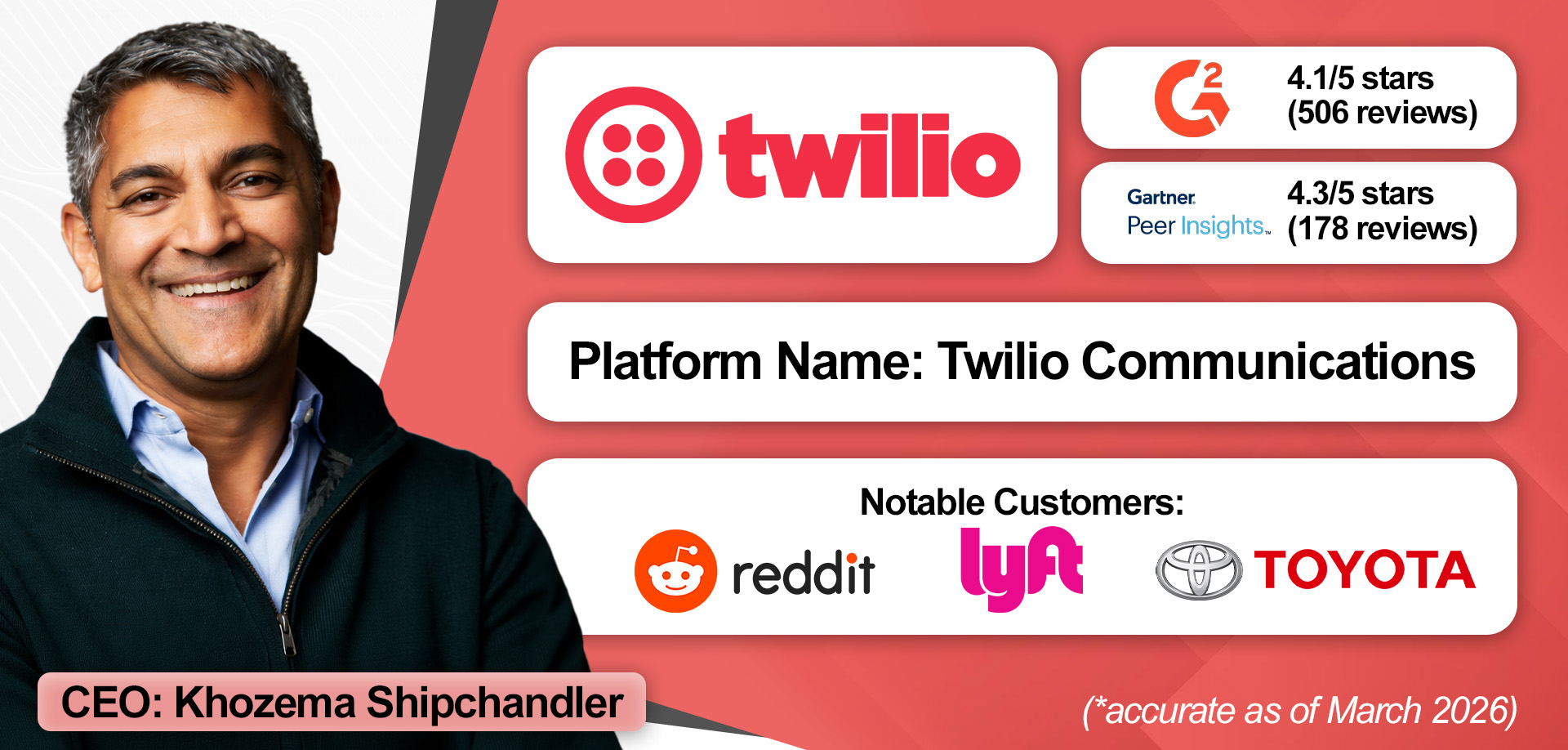
Twilio owns a customer data platform (CDP) through its 2020 acquisition of Segment. The integration initially proved cumbersome. Yet, Twilio is now combining messaging, voice, and customer data in exciting new ways, allowing enterprises to move beyond basic notifications to highly contextual, real-time engagement.
Twilio Predictions is an excellent example, helping businesses understand not just what customers did, but what they are likely to do next. This shift from static to dynamic data facilitates more proactive, personalized customer engagements.
Another tool that gained significant attention in 2025 was ConversationRelay. It allows teams to build voice AI agents using their preferred Large Language Model (LLM).
Twilio’s emerging Technology and Innovation team (Twilio Alpha) helps accelerate the development of such capabilities, testing prototypes with customers and quickly integrating feedback.
The provider’s scale is another defining advantage. Its Super Network spans thousands of carrier connections in over 180 countries, enabling reliable, high-performance global messaging and voice applications. Combined with machine-learning–driven traffic optimization and deep analytics, it helps enterprises scale worldwide without compromising quality.
Yet, ultimately, Twilio’s primary differentiator is in its integration of data, AI, and communications into a cohesive ecosystem, supported by a strong community and continuous innovation. It doesn’t compete purely on APIs or pricing.
“At the time, Twilio’s Segment acquisition was controversial, but it is paying off, enabling real-time segmentation, predictive insights, and customer confidence scoring. This moves beyond historical data into predictive customer intelligence.”
Standout Features
- Data-Driven Engagement: The combination of Twilio Communications and Segment enables real-time customer segmentation, predictive insights (churn risk, next purchase likelihood, etc.), and contextualized communications.
- Global Scale & Reliability: Twilio operates a Super Network with 4,800+ carrier connections across 180+ countries, supporting high-performance, resilient messaging and voice applications.
- Community: The CPaaS giant has fostered an ecosystem of 10+ million developers and 3,000+ tech partners, supporting them with robust training/resources. It also engages them closely for product development via Twilio Alpha.
How Much Does It Cost?
Twilio Communications is available on a pay-as-you-go model, with volume discounts available as organizations scale. A free trial is also available. Learn more about Twilio Communications pricing here.
2. Infobip
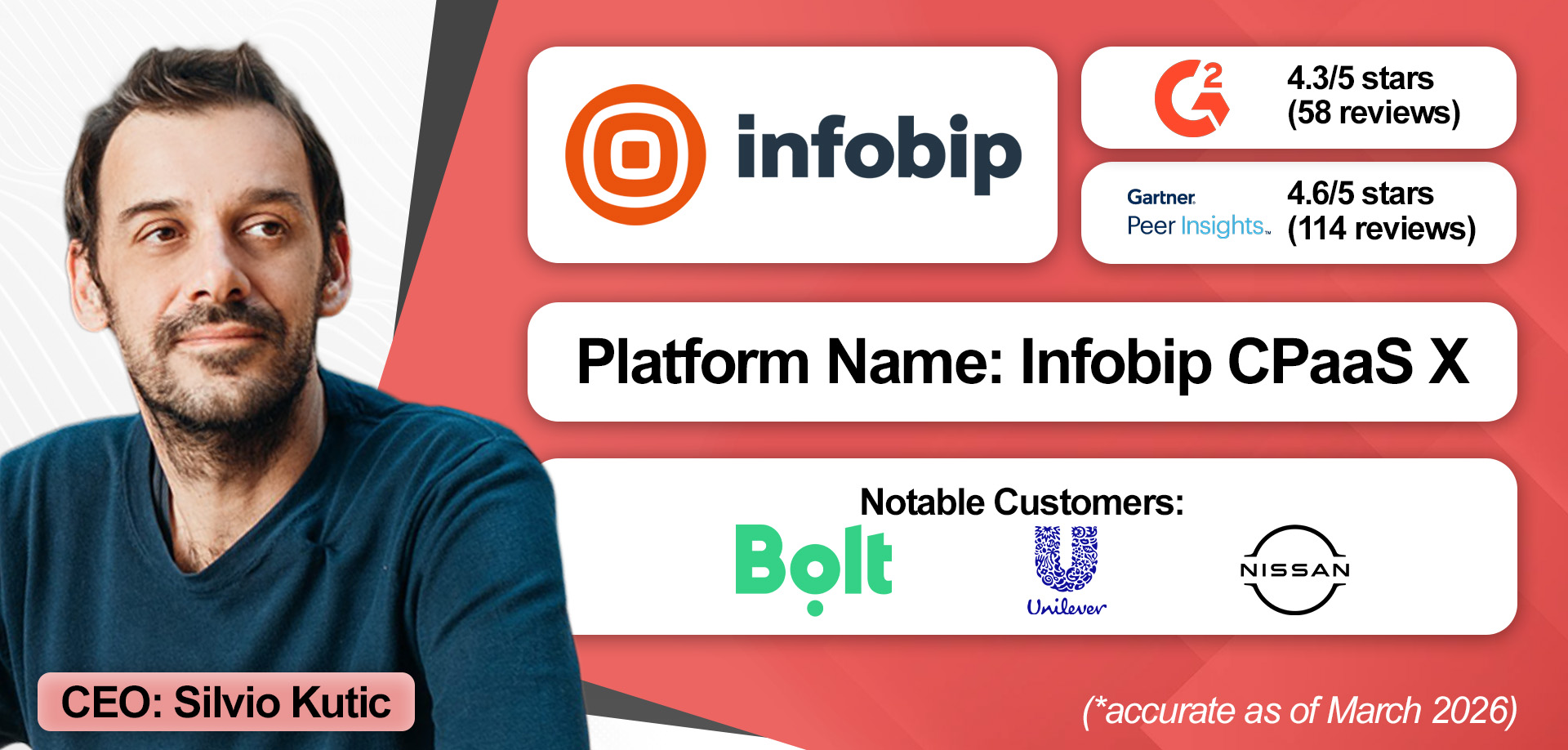
Like Twilio, Infobip excels in its infrastructure. With 800+ direct telecom connections, 1,300+ physical servers, and 40+ data centers worldwide, it delivers reliability and reach that few CPaaS providers can match.
It pairs that foundation with a deep portfolio that pushes well beyond conventional CPaaS, encompassing a contact center suite, journey orchestration, and a proprietary CDP.
Interestingly, Infobip combines this CDP, journey orchestration, and its omnichannel integrations as part of its Agent OS vision, enabling goal-oriented AI agents that complete tasks from product discovery to frictionless checkout.
With these AI agents flitting between enterprise systems, Infobip positions itself ahead of the next wave of agent-to-agent collaboration and serves the broad CX function, not individual teams, such as sales, service, and marketing.
Moreover, Infobip is consistently ahead of the curve on emerging channels. With over 10 billion RCS messages delivered and active participation in Network APIs through the GSMA Open Gateway, it builds real deployment experience ahead of mainstream market adoption.
Finally, Infobip exhibits strong vertical expertise. Industry-specific templates, dedicated cross-functional teams, and proven deployments make it a long-term strategic partner, particularly across telecoms, financial services, and retail.
"Infobip has combined its customer data platform with real time journey mapping, and then you've got this omnichannel capability with WhatsApp, RCS, SMS. That puts them puts them in a very different position compared to more traditional vendors in this space."
Standout Features
- Global Infrastructure: Infobip has built one of the most extensive communications networks in the CPaaS market, with direct connections to hundreds of telecom operators and data centers spanning every major region, delivering reliability and global reach.
- Partner Ecosystem: Infobip's reach extends far beyond its own sales force, with a broad network of telcos, system integrators, agencies, and software vendors carrying its platform to market worldwide. Its telco white-labeling model goes further still, helping carriers evolve into tech companies in their own right.
- Vertical Strategy: Infobip supports financial services, retail, healthcare, travel, and telecoms with templated use cases and dedicated cross-functional squads that help customers design solutions around real business outcomes.
How Much Does It Cost?
Infobip sells communications APIs on a pay-as-you-go basis. It also offers a free trial and calculator to help customers forecast expenditure. Discover more about Infobip’s pricing strategy here.
3. Vonage
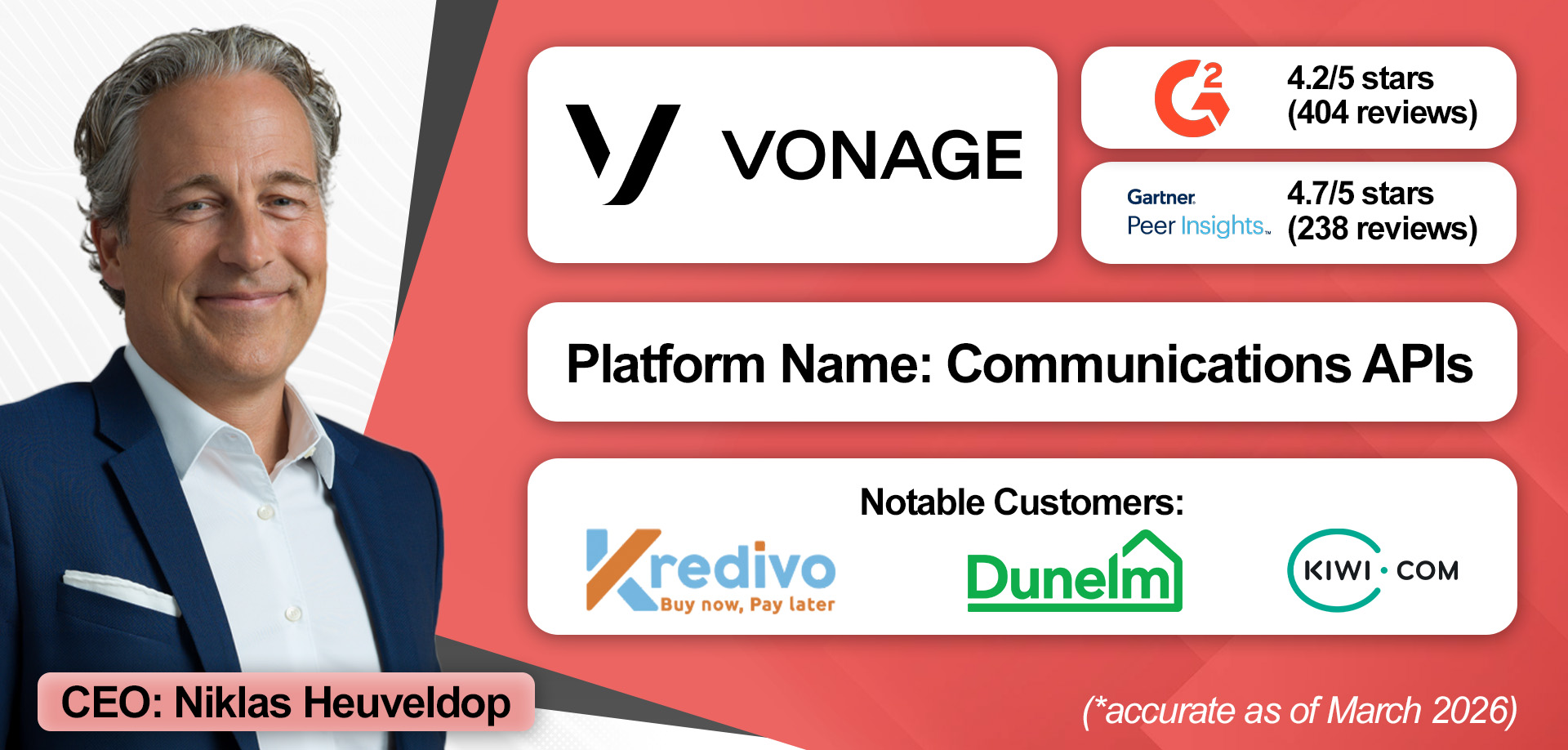
Vonage's relationship with Ericsson (its parent company) gives it an edge, unlocking a new generation of network APIs that most competitors cannot replicate.
Capabilities around SIM Swap detection, number verification, location retrieval, device roaming, and quality-on-demand give businesses direct access to network-level intelligence for smarter, more secure customer interactions.
That security piece is fundamental. Rather than relying on application-layer workarounds, Vonage addresses fraud at the network itself. As a result, it can offer a level of protection that is more robust and harder for bad actors to circumvent.
On top of its infrastructure, Vonage has built one of the broadest communication API portfolios in the CPaaS space. The breadth of channels allows businesses to design sophisticated communication strategies without the complexity of managing multiple vendors.
Vonage further differentiates by combining CPaaS, UCaaS, and CCaaS within one ecosystem. Its developer APIs allow brands to build custom solutions, adopt oven-ready applications, or blend both. That's a level of flexibility that few enterprise communications platforms can offer.
The Vonage AI Studio is a final differentiator, enabling businesses to deploy virtual assistants across voice, SMS, and social channels, alongside advanced speech synthesis in over 50 languages and recognition across 120.
Standout Features
- Network APIs: Vonage's Ericsson partnership unlocks network APIs, including SIM Swap detection, number verification, location retrieval, and quality-on-demand, that most CPaaS providers cannot yet replicate. Connectivity across 1,600+ telecommunications networks ensures it delivers these capabilities reliably at a global scale.
- CPaaS-UCaaS-CCaaS: With CPaaS on the same platform as CCaaS and UCaaS, businesses can build custom communication solutions, deploy packaged applications via Vonage Unified Communications and Vonage Contact Center, or blend both.
- Vonage AI Studio: AI Studio allows Vonage customers to build and deploy AI agents across voice, SMS, RCS, and social messaging. Supporting text-to-speech in 50+ languages and speech recognition across 120, it makes voice AI globally accessible.
How Much Does It Cost?
Vonage offers flexible pricing to suit different API usage patterns, including pay-as-you-go for occasional or variable usage, fixed subscription plans for heavy users who prefer cost predictability, and tiered models that combine a base subscription with pay-as-you-go rates. Free trials are also available. Go deeper on Vonage’s CPaaS pricing model here.
4. Sinch
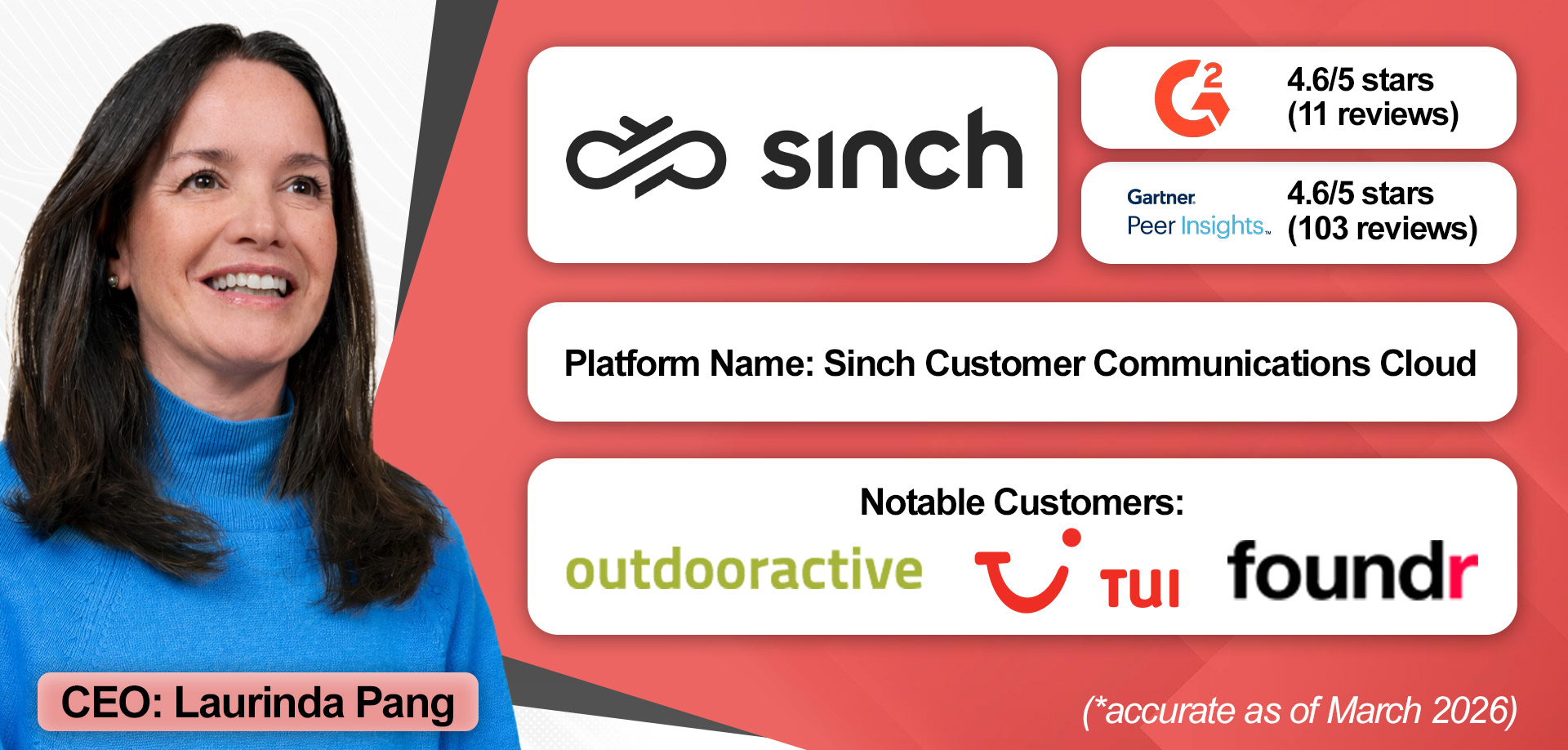
Sinch has built a Super Network that handles 900 billion interactions annually. With direct connections to over 600 telecoms and its own voice network in the U.S., reaching 95% of U.S. consumers, Sinch excels in its reliability and scale.
It matches this with a robust local presence. Operating in 65 countries with a local presence, Sinch aims to bring the reach of a global carrier with the knowledge of a local provider, supporting enterprises in navigating local regulations, data privacy rules, and telecommunications requirements.
Sinch's channel coverage is also broad, including regional apps like WeChat and KakaoTalk. This breadth, combined with an active developer community, gives enterprises the flexibility to reach customers on whichever channel is most relevant across any market or use case.
The Sinch Customer Communications Cloud also includes 1,500 pre-built integrations and native connections into Salesforce, Microsoft, SAP, and Adobe. These enable enterprises to build sophisticated communication workflows without starting from scratch.
Moreover, close relationships with tech juggernauts extend Sinch's reach deep into the enterprise stack, while its mature channel strategy has further bolstered its momentum.
Lastly, its AI use cases are plentiful, from Artificially Inflated Traffic (AIT) fraud detection to tools that help marketers generate personalized, omnichannel campaign content. Its new Voice Relay solution is another exciting example, making text-based AI agents available across voice.
Standout Features
- Regional Support: Sinch has a local presence in 65 countries, enabling product localization, regional regulatory compliance, and country-level guidance. That's a meaningful advantage for businesses operating across multiple jurisdictions.
- Enterprise-Wide Integrations: Sinch's capabilities can be natively embedded into Salesforce, Microsoft, SAP, and Adobe, with partnerships extending to co-product development and joint go-to-market efforts. Sinch also boasts 500+ pre-built third-party integrations within its portfolio.
- AI & Data Partnerships: Sinch has built a strong AI partner network spanning the most widely-utilized LLM providers and data intelligence platforms, like Databricks. The vendor also works with Red Hat to audit its own internal models, reflecting a commitment to responsible AI.
How Much Does It Cost?
Sinch offers its global communications APIs on a pay-as-you-go basis, promising flexibility. Take a closer look at Sinch’s pricing here.
5. Cisco Webex
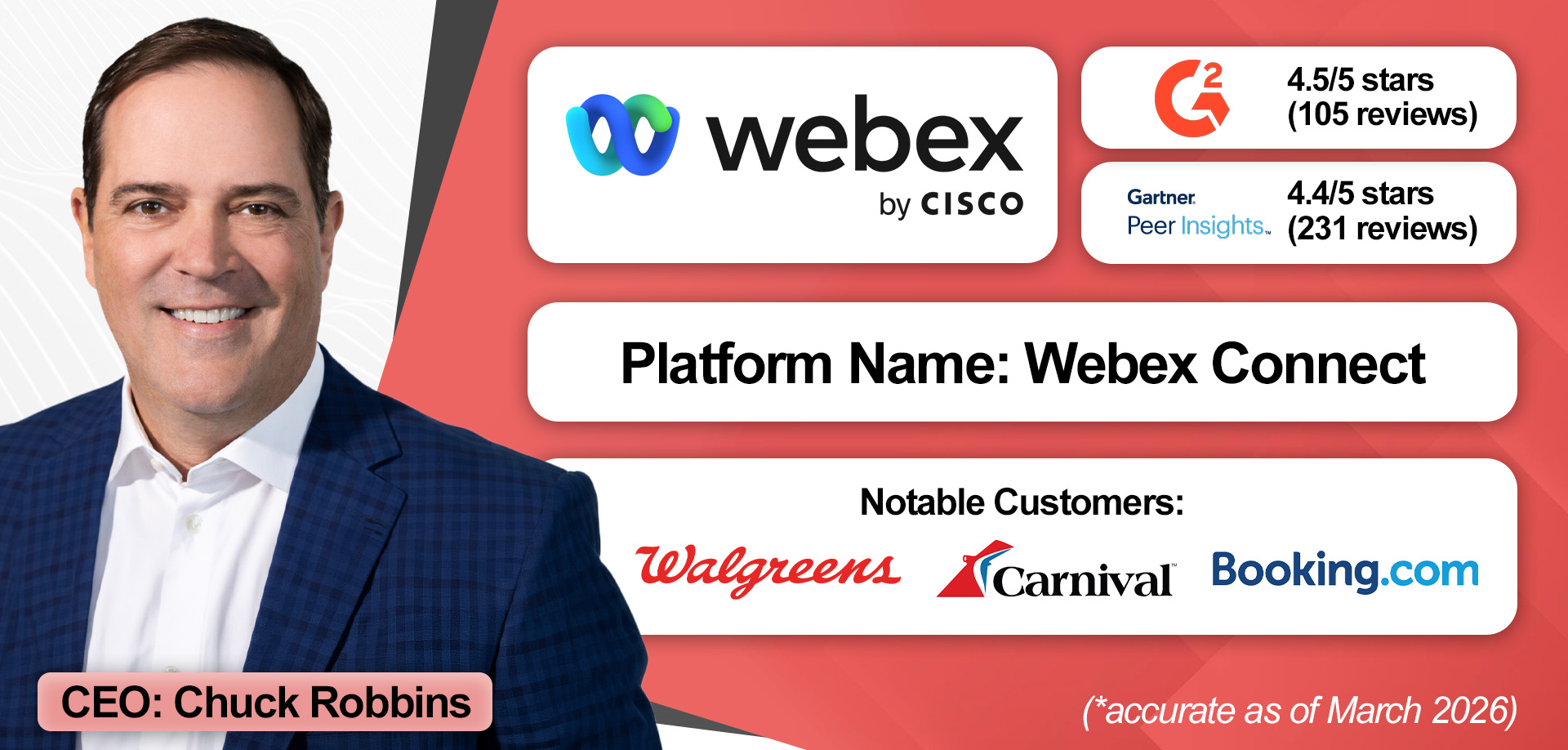
Cisco entered the CPaaS market through its 2020 acquisition of IMImobile, bringing established enterprise credibility to a highly fragmented space.
Since then, a key focus for the tech giant has involved merging CCaaS and CPaaS, allowing enterprises to design end-to-end customer journeys while pivoting to more proactive customer support models.
Its Visual Flow Builder is a key solution here, enabling developers and non-technical users to build sophisticated conversational flows without replacing existing systems. That message reverberates with contact centers that still have on-premise workloads.
Webex Connect's Customer Profile and Contact Policy modules also stand out. These allow businesses to personalize experiences based on channel preferences and engagement history, while native integration with Cisco's Journey Data Services keeps customer profiles continuously updated across touchpoints.
Critically, Cisco also emphasizes flexibility. Rather than locking customers into a single AI ecosystem, Webex Connect integrates with Google, Microsoft, AWS, IBM, and Kore.ai, enabling enterprises to pull on existing AI investments and evolve their capabilities over time.
Lastly, Cisco's vertical strategy - specifically across healthcare, finance, and retail - is advanced, backed by pre-packaged applications and an extensive partner ecosystem that accelerates time to value.
Standout Features
- CPaaS-CCaaS Fusion: Cisco's native integration between Webex Connect and Webex Contact Center allows enterprises to develop new proactive support journeys that blend modalities. Connect also helps contact centers bridge on-premise workloads and reimagine workflows.
- Cisco Journey Data Services: Cisco's Journey Data Service continuously collects and updates customer profile data with every interaction, ensuring businesses maintain an accurate, real-time view of each customer. Natively integrated with Webex Connect's Customer Profile and Contact Policy modules, it enables personalized, context-aware interactions.
- Flexible AI: Rather than prescribing a single AI engine, Webex Connect integrates with Google, Microsoft, AWS, IBM, and Kore.ai, allowing enterprises to build upon existing investments rather than start over.
How Much Does It Cost?
Cisco doesn’t publicly disclose pricing for Webex Connect. However, it is understood to offer pay-as-you-go pricing. Request a quote from Cisco Webex here.
6. Bandwidth
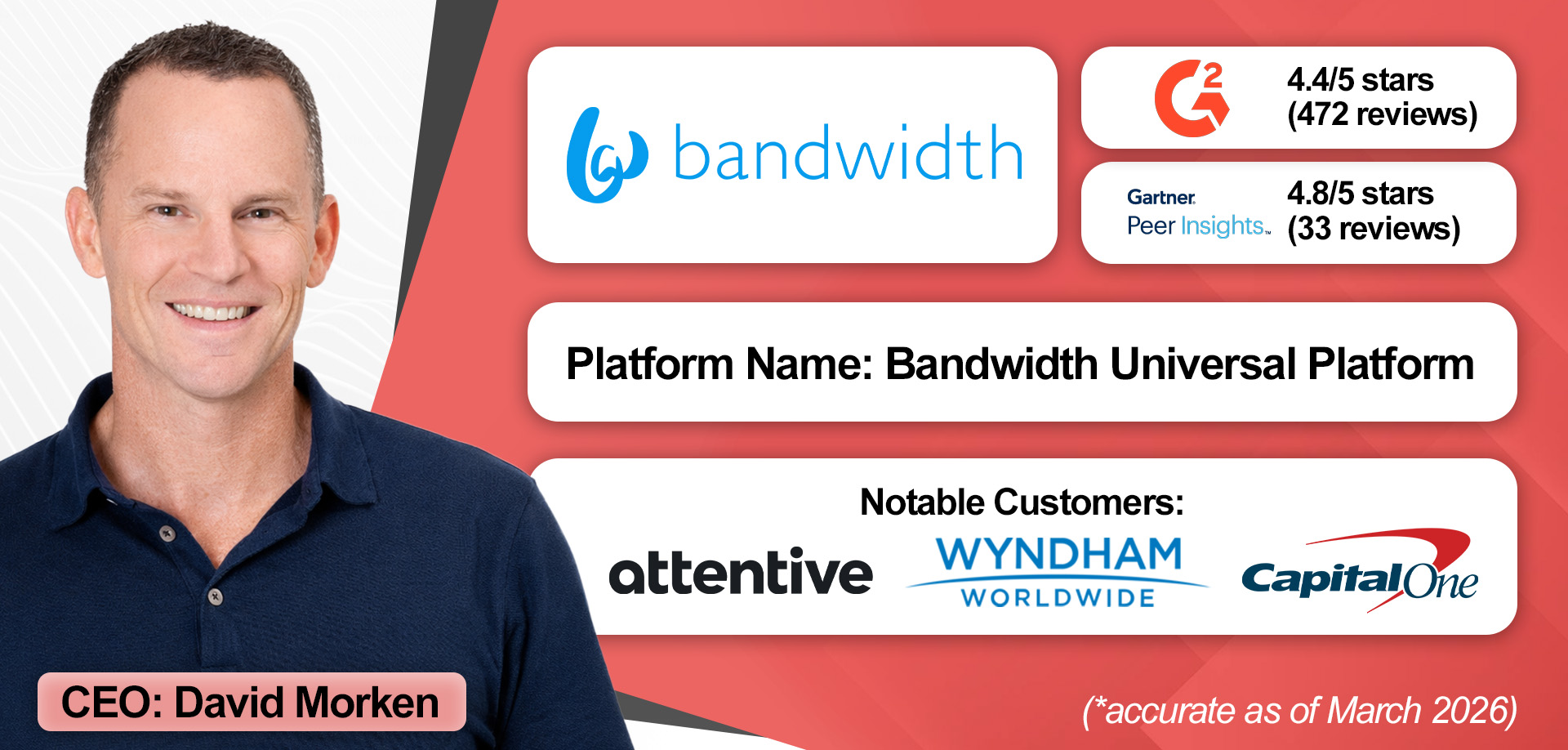
Bandwidth Maestro allows enterprises to integrate its Universal Platform and best-in-class enterprise communications solutions in one environment, with no-code orchestration. Solutions include Genesys, Five9, and Zoom for CCaaS, alongside Microsoft Teams, Google, and Webex for UCaaS.
Maestro also extends into conversational AI, enabling enterprises to choose from a broad ecosystem of providers to deploy voice AI agents. That's a critical differentiator as voice AI becomes the next CPaaS battleground.
Underpinning its voice APIs is a cloud-native global network that Bandwidth owns and operates itself. While that brings benefits in terms of quality, reliability, and economics, it also translates into a level of regulatory expertise that is difficult to replicate.
Indeed, with deep experience navigating international telecoms regulations, Bandwidth can offer compliance consulting across multiple regions, a meaningful advantage for global organizations managing communications at scale.
However, while Bandwidth targets the enterprise with its global networks and Maestro, its partnerships with enterprise communications giants allows it to package customized solutions for the midmarket, too. This dual go-to-market approach broadens its appeal.
Lastly, Bandwidth is one of few CPaaS providers to offer dedicated emergency management capabilities including 911 services. That’s a distinctive and business-critical capability.
Standout Features
- Vendor-Agnostic Enterprise Communications: Bandwidth's approach gives CIOs the freedom to build an enterprise communications stack around their preferred UCaaS, CCaaS, and conversational AI platforms, with CPaaS the glue. The Maestro platform operationalizes this through no-code orchestration.
- First-Party Network: By owning and operating its own cloud-native global network, Bandwidth enjoys direct control over reliability, scalability, and economics that third-party dependent providers cannot match.
- Emergency Communications: Unlike most CPaaS providers, Bandwidth builds emergency management directly into its platform. For organizations in North America where reliable emergency communication is essential, these native 911 capabilities make Bandwidth a highly credible choice.
How Much Does It Cost?
Like most CPaaS players, Bandwidth follows a pay-as-you-go, volume-based model. One differentiator is in how it bills in six second increments in voice, instead of full minutes. That can reduce costs for shorter calls. Get the full pricing rundown for Bandwidth CPaaS here.
7. Tencent Cloud
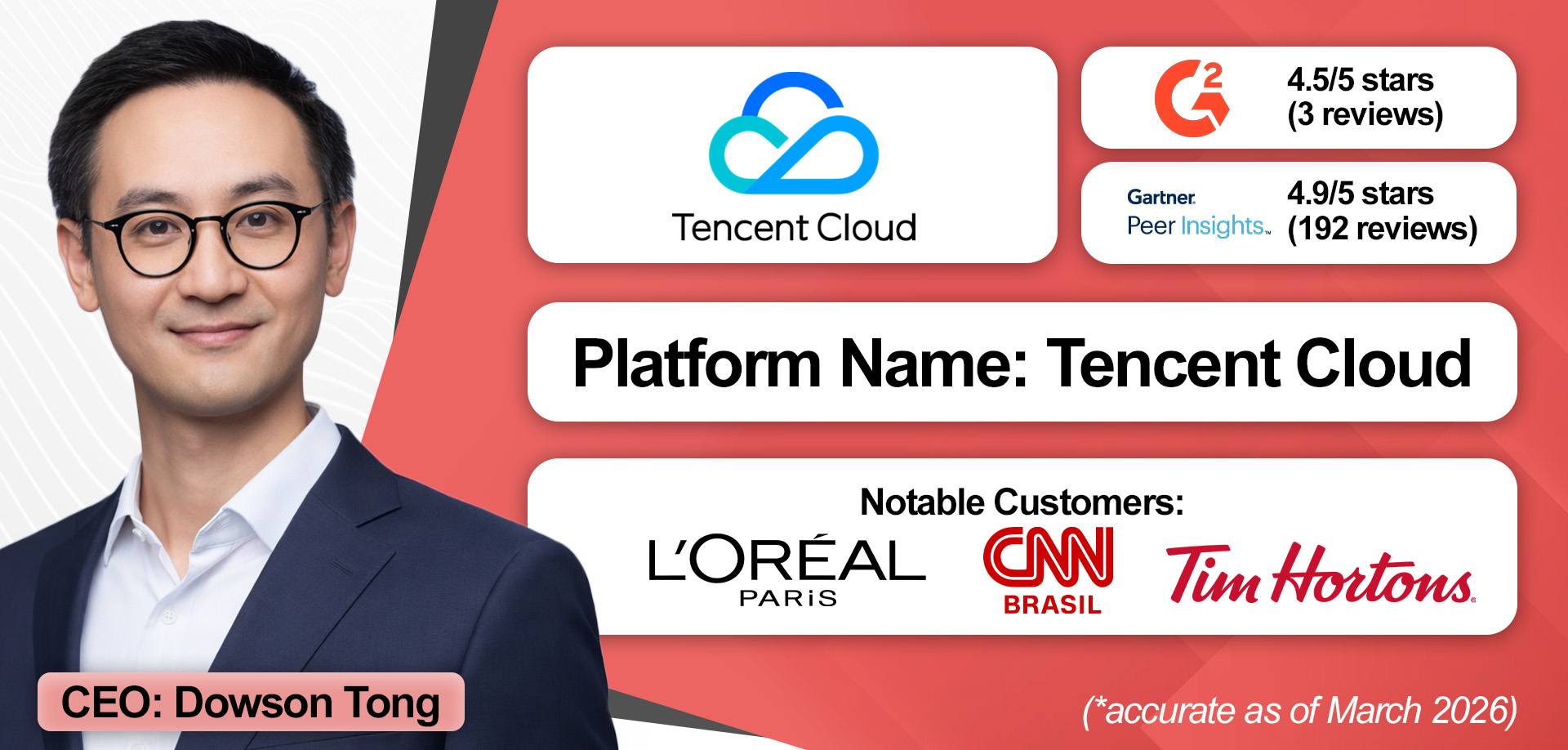
Tencent Cloud differentiates in the CPaaS market with highly scalable, low-latency audio and video capabilities built for demanding use cases like gaming, virtual meetings, and social platforms.
The provider also emphasizes security and compliance. For instance, the vendor foregrounds explainable AI for regulatory transparency. Meanwhile, Tencent Cloud Antifraud offers machine learning risk models to secure communication workflows.
Tencent Cloud Antifraud is part of a broader ecosystem, which is a major advantage, as the vendor extends CPaaS beyond messaging into a comprehensive environment that includes IoT connectivity, 5G, and biometric authentication.
Ultimately, this interconnected environment allows businesses to build richer, more contextual communication experiences.
Tencent Cloud is also pushing innovation at the edge with solutions like EdgeOne Pages. This offering enables developers to quickly build and deploy front-end applications and APIs, without the need to manage infrastructure. This accelerates time-to-market.
Lastly, Tencent is another vendor with a robust contact center focus, offering conversational intelligence, virtual agents (including an AI Voice Agent), and human-AI orchestration all designed for customer service teams.
Standout Features
- Vertical Strategy: Tencent exhibits a strong focus on underserved verticals, such as gaming, education, and social platforms, offering advanced audio and video capabilities that support large-scale, real-time interactions.
- Security & Compliance: Explainable AI for regulatory transparency, ML-based risk models, and privacy-preserving technologies enable customers to bake in new layers of security into their deployments.
- Broader Ecosystem: Tencent combines the more conventional elements of CPaaS with IoT, 5G, and biometrics, plus developer tools like EdgeOne Pages for fast, serverless app and API deployment.
How Much Does It Cost?
Tencent Cloud offers CPaaS on both a pay-as-you-go and monthly subscription models. It also offers a pricing calculator, helping customers better forecast costs. Discover more about Tencent Cloud pricing here.
8. Tata Communications
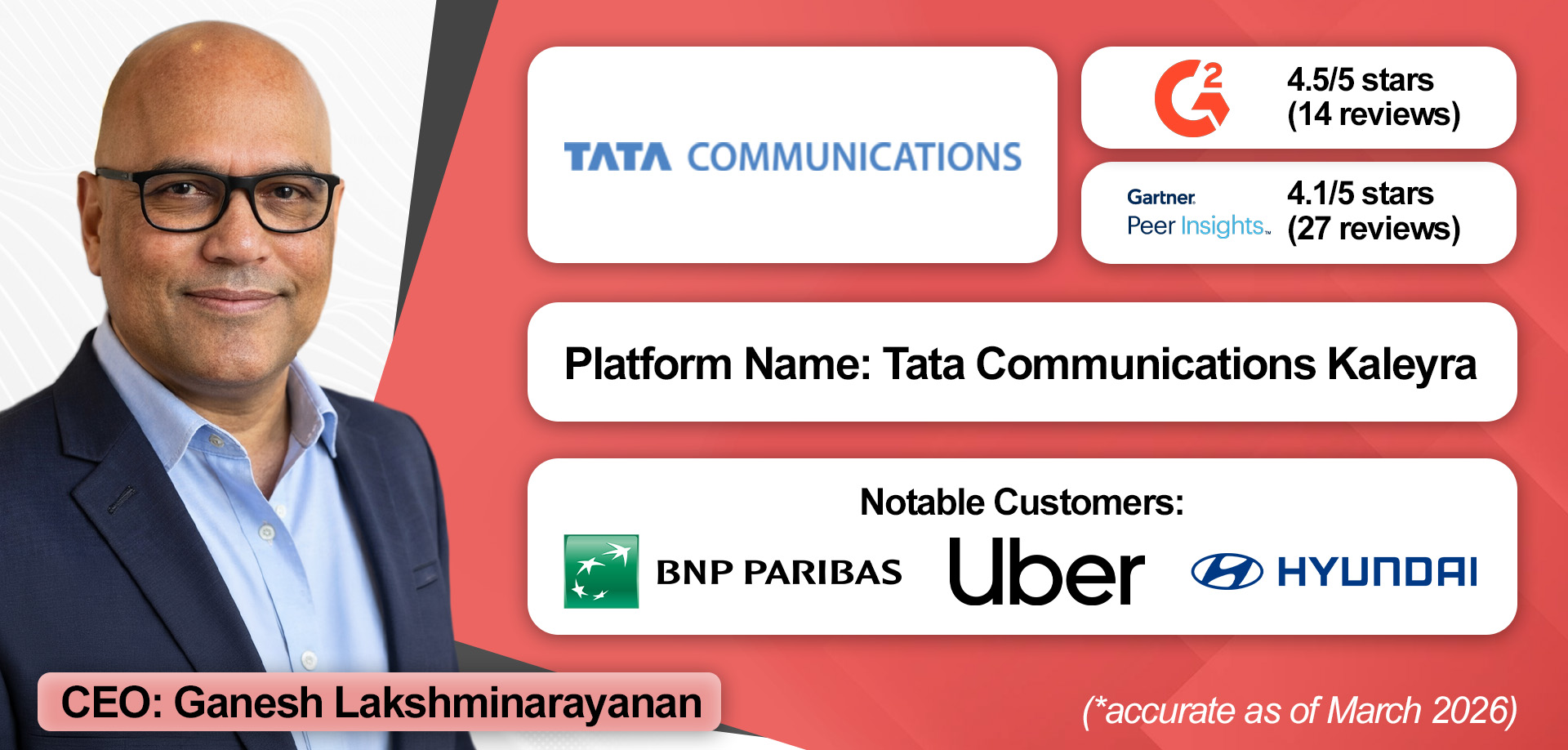
Tata Communications snapped up Kaleyra in 2023 to extend its CPaaS offering. Since then, it has moved further into anticipating customer needs and proactive notifications, releasing innovative capabilities such as next-best-channel selection.
Yet, perhaps most intriguing is how Tata has slotted Kaleyra into its broader Customer Interaction Suite that unites CPaaS, CCaaS, and conversational AI under one roof. This aims to have live agents, AI agents, and omnichannel workflows operate in concert.
The offering is likely to appeal to the financial sector, where Tata Communications has deep relationships. Indeed, high delivery rates for time-critical messages alongside its ability to adapt to evolving banking regulations has made it a trusted partner across the sector.
Supporting that "trusted partner" reputation is the adjacent Tata Consultancy Services, which enables the company to be more of a strategic collaborator than only a technology provider.
Its supportive infrastructure also has a global scale, with 1,600 communications service provider (CSP) relationships and 700+ mobile network operator voice interconnections. All this enables voice services in 200+ countries.
However, Tata is particularly strong across India, Asia Pacific, the Middle East, and Africa, unlike many industry competitors that hone in on Europe and North America.
Standout Features
- CPaaS-CCaaS Convergence: The Customer Interaction Suite brings CPaaS, CCaaS, and conversational AI together in a single platform. Its adjacent consultancy services bolster this offering, helping companies pivot to AI-led, proactive service models.
- Financial Services Specialism: Tata Communications has strong financial services credentials dating back to its 2002 acquisition of VSNL. Its deep understanding of banking and data privacy regulations, combined with reliable delivery of critical messages, reinforces this strength.
- Long-Term Enterprise Relationships: Tata Communications primarily goes to market through direct sales and co-creation with large enterprises, supporting long-term relationships that include 300 Fortune 500 companies.
How Much Does It Cost?
Tata Communications offers a usage-based model for CPaaS, with custom rates for enterprises. However, it doesn’t publicly disclose the costs of its APIs. Contact Tata Communications for a quote here.
9. Proximus Global
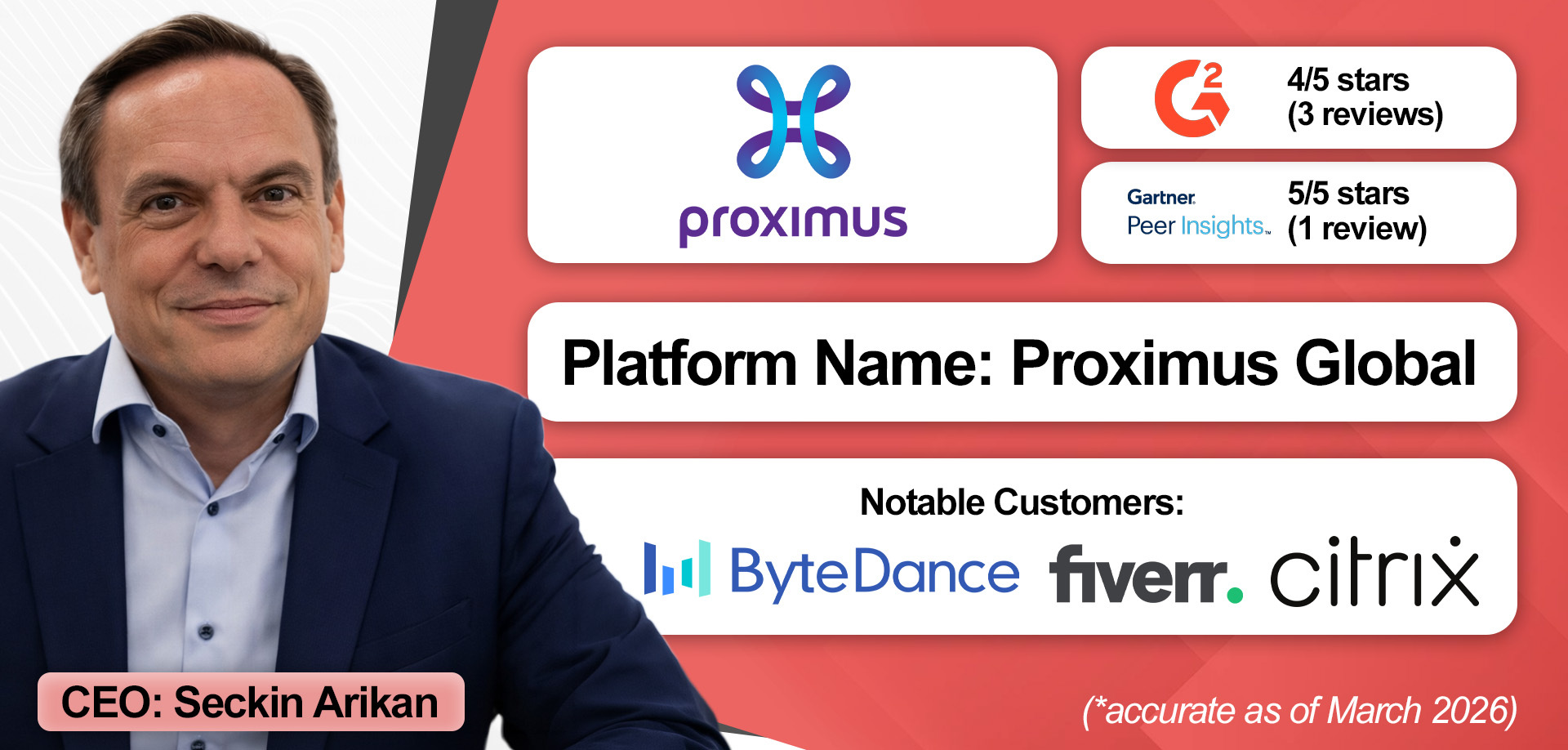
In 2024, Proximus Global brought together BICS, Telesign and Route Mobile to establish a global CPaaS player.
BICS operates one of the largest international voice and data networks, with 700 direct connections to mobile and fixed network operators, giving Proximus Global a robust connectivity foundation.
Geographic coverage is also a key strength. Route Mobile has a deep reach across India, the Middle East, and Africa, while Telesign is well established in North America and Europe. This East–West footprint supports a unified go-to-market approach with strong regional understanding.
Through Telesign, Proximus Global also offers a digital identity and fraud prevention capability built on over a decade of data patterns and 2,000+ AI signals. The integration of this, as well as Nokia Network APIs, within its CPaaS platform gives enterprises a single-vendor option across customer engagement and identity verification.
Finally, the go-to-market model accommodates different buyer types. Telesign's advanced SDKs and API testing serve the developer community. Meanwhile, Route Mobile seeks a more consultative engagement with enterprise customers.
Such a breadth of commercial model extends Proximus Global's reach across both developer and business buyer audiences. Yet, it still has work to do in piecing its massive portfolio together into a single, digestible vision.
Standout Features
- Network & Geographic Coverage: BICS delivers a global voice and data network handling up to 10.5 billion transactions monthly. That provides a network backbone for Route Mobile’s strength in India and MEA and Telesign’s presence in North America and Europe.
- Digital Identity & Fraud Prevention: Telesign's fraud prevention platform draws on a decade of data patterns, 2,000+ AI signals, and 50+ global data partnerships. By integrating this, Proximus offers enterprises a single-vendor solution across customer engagement and identity protection.
- Broad Commercial Model: Telesign’s developer-friendly tools support technical buyers, while Route Mobile’s direct sales approach serves enterprises seeking a consultative model. Expanding global SI partnerships further broadens its reach.
How Much Does It Cost?
Proximus Global doesn’t list API prices like other competitors, but tailors contracts based on requirements and volume. Learn more by reaching out via Route Mobile.
10. Tanla
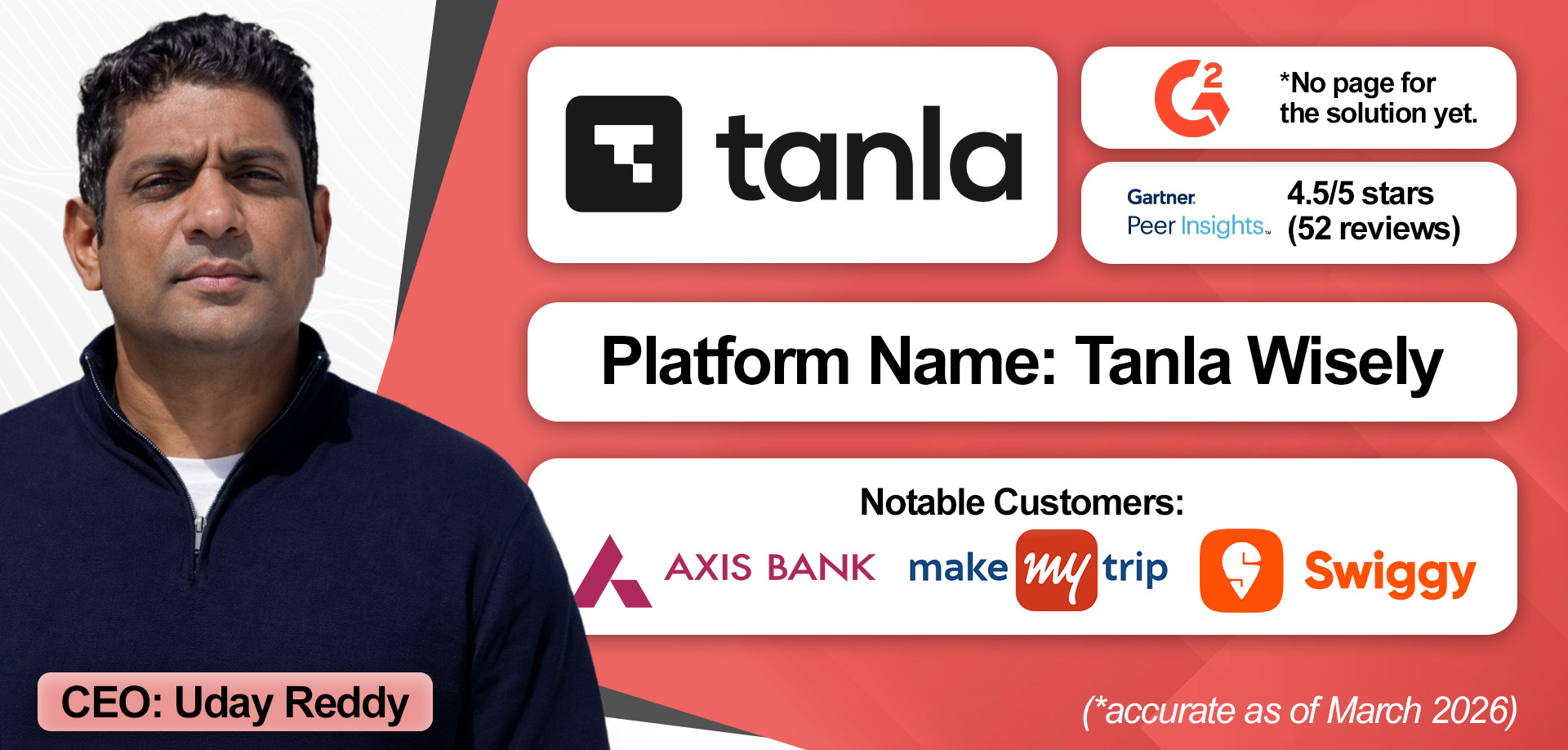
Tana frames Wisely as an integrated, API-led “platform of platforms”, connecting multiple layers of capability across applications, networks, security, and AI engines.
Its architecture enables enterprises to manage communication workflows, engagement, and complaince through a single, unified system rather than fragmented tools.
Across the platform, security is a core differentiator. For instance, its Trubloq.ai solution uses blockchain to secure messaging and prevent spam. Meanwhile, Wisely ATP applies machine learning to detect scams and fraudulent traffic in real time.
The provider also offers consent management, silent network authentication, number verification, and secure transaction alerts to bolster its security and compliance posture.
Elsewhere, Tanla leans into marketing use cases more than most CPaaS providers. Its Wise Albert data intelligence solution is key here. It supports audience segmentation, automated campaign content generation, and channel optimization, enabling more relevant, precise engagements.
Finally, its early investments in RCS proved shrewd. It's now the “preferred partner” for Google's Rich Business Messaging (RBM) for MaaP across India, while it also collaborates closely with Vodafone to support “billions” of messages monthly.
Standout Features
- Platform Architecture: Tanla blends messaging, data, security, and network on a "platform of platforms", with high interoperability.
- Data Intelligence: AI-powered insights through Wise Albert for audience segmentation, content automation, campaign optimization, and channel selection, enable more personalized and effective communications.
- Security & Compliance: The vendor's securing and compliance innovations through Trubloq.ai (blockchain-based anti-spam) and Wisely ATP (ML-driven fraud detection) ensure regulatory compliance and consumer safety.
How Much Does It Cost?
Tanla operates primarily on a usage-based model, yet does not publicly disclose its CPaaS pricing. Contact Tanla for a consultation and quote here.
Honorable Mentions
The CPaaS space has grown ever more crowded in recent years. Telcos entered to monetize their infrastructure, enterprise communications players saw a chance to extend their offerings, and AI startups strived to deliver new-age messaging platforms.
As such, there are many more global CPaaS providers than those listed above. Here are some of those that stand out.
8x8
8x8 runs a single API, supporting RCS, SMS, WhatsApp, Viber, voice, and other channels. It also owns CCaaS and UCaaS solutions, enabling a single enterprise communication ecosystem. The vendor takes advantage of this with innovations such as Journey IQ. The solution provides a comprehensive view of customer communication touchpoints, tracking how an interaction evolves over time and flagging where new problems might emerge as additional channels (like email) enter the conversation.
Bird
MessageBird rebranded as Bird in 2024, announcing discounts on SMS and WhatsApp of 40-90%, in comparison with Sinch and Twilio. It also launched a native CRM to add data and intelligence into customer conversations at the right moment. Since then, it has pivoted further into marketing and vertical specific innovation. For instance, in February 2026, Bird launched Travel Explorer, a new tool for companies in travel and tourism that want to offer an AI concierge.
CM.com
In 2025, Bird launched a bid to acquire CM.com for €166MN. While it didn’t go through, Bird’s interest may come down to the vendor’s large footprint across the live experience space, supporting arenas, museums, and sports teams with tailored solutions. That said, the vendor also reaches across other sectors, owns its infrastructure, and offers robust compliance and security support across Europe especially.
Comviva
Comviva combines Network APIs and Communication APIs in a single marketplace with flexible pricing models. It also supports both private and public cloud deployments, enabling scalability. Still, Comviva is best known in the banking and telco sector. However, it’s starting to expand, moving into retail, travel, transport, and logistics with prepackaged solutions. A recent win with UPS in the United States shows that it can compete globally, too.
Microsoft
Azure Communications Services (ACS) provides the communications backbone to Microsoft Teams and Dynamics 365 Contact Center, the vendor’s respective UCaaS and CCaaS solutions. As such, customers can embed the same communication tools and leverage the same networks Microsoft does to support its products. The ability to extend these solutions with ACS and avoid mixing vendors is a key advantage for Microsoft. Meanwhile, an integration with Copilot Studio for building agentic communications workflows without coding is another differentiator.
Plivo
Founded in 2011, Plivo helped pioneer the CPaaS market, alongside Twilio, Vonage (formerly Nexmo), and Bandwidth. It has remained a prominent player by emphasizing affordability, fast implementation, and ease of use. Those objectives bleed into its AI strategy, with Plivo Vibe, a solution that helps build agent flows via natural language, while testing, refining, and publishing them from one interface. Meanwhile, its customer support is often commended across verified customer review platforms.
RingCentral
RingCentral is a Gartner Magic Quadrant leader in UCaaS and a prominent CCaaS player. With 500,000+ customers worldwide, those in its orbit may utilize RingCentral Developers to not only embed communications tools but build out proactive service workflows and extend the contact center. Also, the recent announcement of the RingCentral Customer Engagement Bundle is a compelling step toward bridging the UCaaS and CPaaS worlds, packaging communications solutions that fit various organizational needs.
Telynx
Telnyx owns and operates its infrastructure end-to-end, spanning 60+ countries, handling more than 100 million daily API requests. That direct ownership allows its platform to blend communication channels, network, and AI orchestration more effectively than many market alternatives. As a result, its platform is comparatively simple to build on, while enabling lower latency and safeguarding performance. Notably, Telnyx also secured recognition as G2's top-ranked CPaaS provider in its 2025 Best Software Awards.
For more analyst-led breakdowns of customer experience technology markets, see the articles below: