June 26, 2026 • 31 min read
11 Conversational Intelligence Solutions & Their Differentiators in 2026

Director of Content & Market Research
June 26, 2026
Companies such as Neon are currently paying approximately 30 cents per minute for conversational data.
If a contact center agent spends four hours per day speaking with customers, they will generate roughly $20,000 worth of conversational data over the course of a working year. That’s more than some global outsourcers pay their service agents in annual salary.
This stark comparison underscores how conversational data has become quantifiably valuable, and most organizations already possess it in abundance.
The question is whether they're leveraging it effectively.
Enter conversational intelligence solutions, which offer organizations the tools to transform raw dialogue into meaningful, actionable insight.
What Is a Conversational Intelligence Solution?
A conversational intelligence solution captures, monitors, and analyzes conversations across voice and digital channels to generate insights.
Contact centers were early adopters, using the technology to ensure compliance, measure sentiment, and understand demand drivers.
Over time, additional use cases emerged, such as automating quality assurance programs, tracking new metrics, and monitoring competitor mentions.
A growing push to democratize these insights has extended their reach across the business. For example, such insight allows marketing teams to assess campaign effectiveness, sales teams to identify upsell drivers, and product teams to surface design improvement opportunities.
Beyond contact centers, sales, retail, and field service teams have also begun leveraging the technology to capture new customer insights.
Yet, the market focus is now shifting from insight generation to insight activation. That involves connecting systems, building workflows, and deploying AI agents to put conversational intelligence to work across the organization.
Meanwhile, the underlying technology has evolved significantly. Generative AI (GenAI) has accelerated innovation in a space that once depended on complex NLP models, lowering the barrier to entry and prompting vendors in adjacent markets to embed conversational intelligence capabilities directly into their platforms.
Even so, standalone solutions can still play a distinct and valuable role within the customer experience stack.
Why Implement a Standalone Conversational Intelligence Solution?
Nowadays, conversational intelligence solutions are most often leveraged as part of a broader platform, whether that’s a CCaaS, CRM, VoC, WEM, conversational AI, or broader customer analytics platform.
Many of these platform providers are well-regarded for their conversational intelligence modules, with Contentsquare, Dialpad, NiCE, Medallia, and Observe.AI being excellent examples.
The primary benefit of working with such providers is that they’ll leverage interaction insights to bolster other products within their platforms, from routing engines to digital marketing tools.
However, there are still several reasons why an organization may select a standalone conversational intelligence offering, like the four below.
- Product Depth: Conversational intelligence solutions within prominent CCaaS, conversational AI, and VoC platforms remain largely keyword-based with poor transcription accuracy (often between 80-90%). With a greater focus, specialist providers innovate faster and offer greater depth in functionality, integrations, and workflows.
- Specialist Support: Standalone providers tend to offer specialized support, an advantage that helps enterprises extract tailored value from the technology. They also typically innovate faster, given that conversational intelligence is their primary focus.
- AI Independence: Organizations risk limiting themselves if they commit entirely to a single vendor's AI strategy, language model, or roadmap. As such, some prefer the independence of well-integrated point solutions. They want flexibility if they decide to change CCaaS or CRM vendors in the future.
- Centralize Customer Insights: Large organizations often have implemented different contact center platforms across various locations. An independent conversational intelligence solution allows brands to extract insights across all of these locations, centralize them, and unpack trends across the entire customer base and agent population. Brands can also apply one analytics layer across both service and sales operations, even when they're running on completely different technology stacks.
11 Conversational Intelligence Solutions
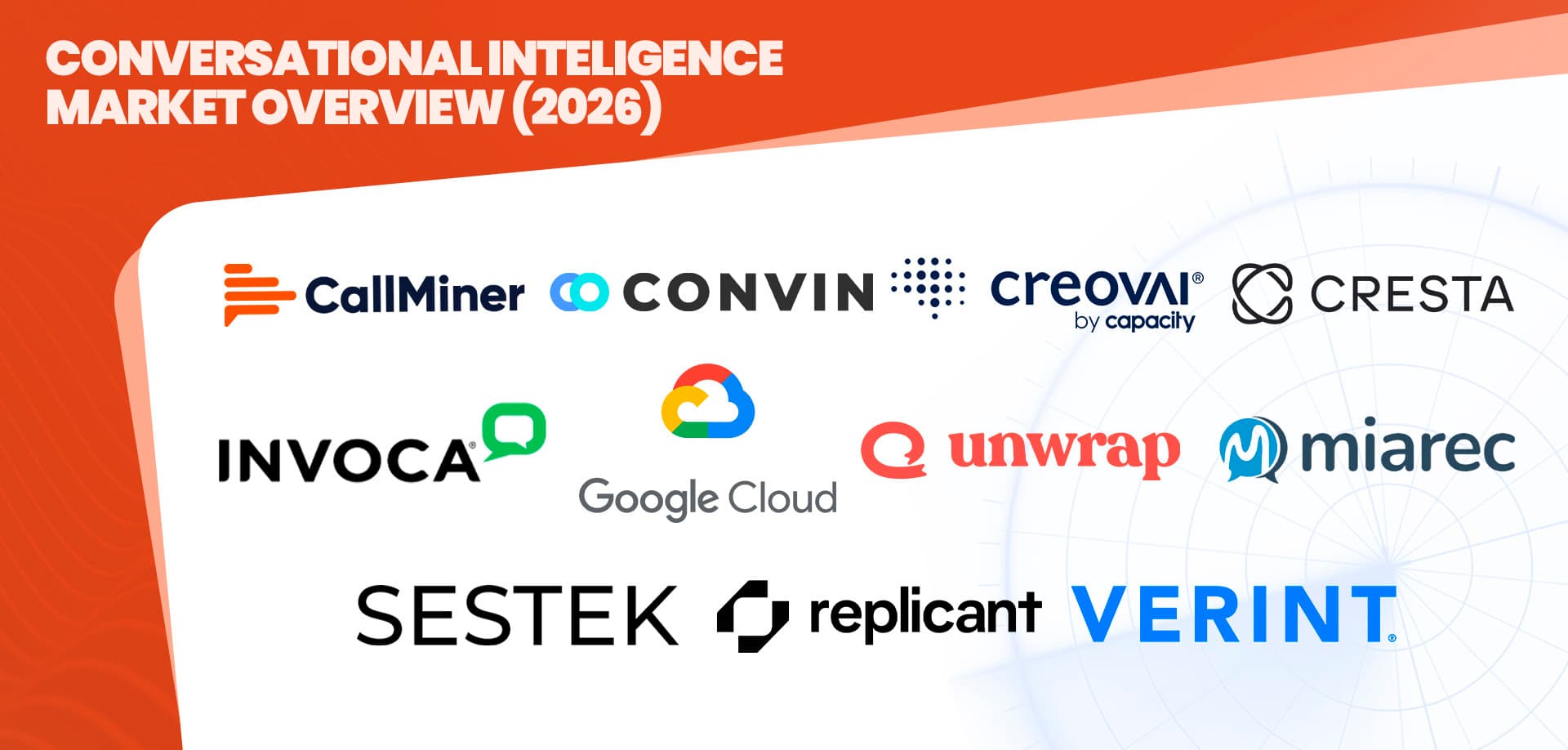
Cresta, CallMiner, and Verint offer widely-implemented conversational intelligence solutions, but they're not the only ones shaping the market’s future. Several emerging players are disrupting the market with bold new approaches.
Below are some of the most prominent and visionary vendors within the conversational intelligence space.
1. Cresta
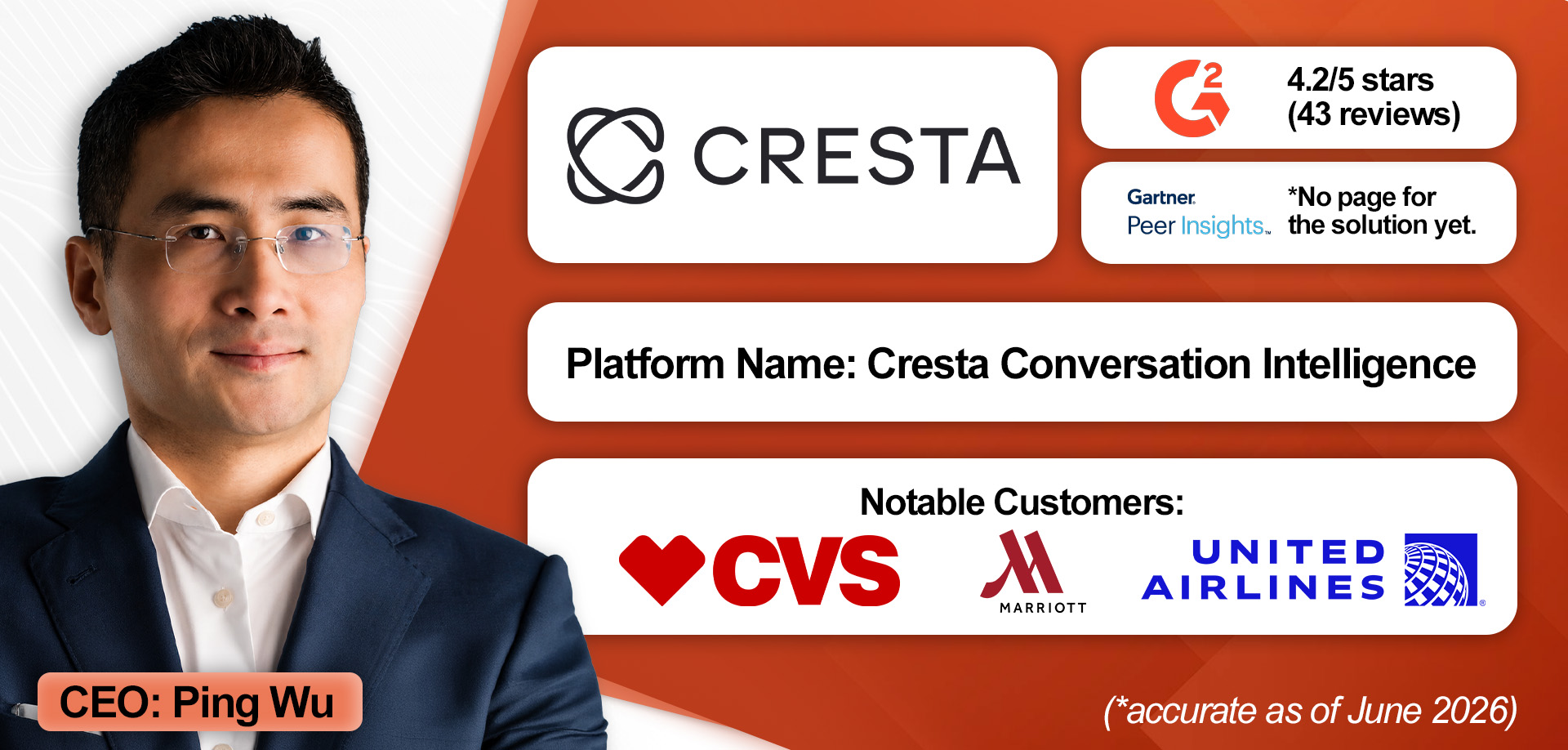
Conversational intelligence solutions have long helped identify opportunities for contact automation, but Cresta takes this further by breaking customer service demand into four distinct categories:
- Conversations that shouldn't be happening at all (i.e., failure demand)
- Conversations that are ideal for AI agents
- Conversations where customers genuinely want to speak with a human
- Conversations that should be happening but aren't
The fourth category is particularly differentiative. It surfaces missed opportunities for pre-emptive conversations that could drive growth and improve experiences, ones often overlooked due to resource constraints or a failure to educate customers at the right moment.
The first is also powerful. Rather than automating broken processes that generate failure demand and add customer effort, Cresta helps brands fix them at the root by isolating where the journey breaks down and quantifying the impact of that pain point on outcomes that matter to the broader business.
For the second category, Cresta adds practical justification through an Automation Readiness Score and ROI projections. It also offers Synthetic Customers. These are AI-generated personas built from real interactions that enable organizations to test AI agents at scale, evaluating them on both their security and the impact of their decisions on customer and business outcomes.
Beyond demand intelligence, Cresta's conversational intelligence capabilities extend across its broader platform, which also includes Agent Assist and AI agents.
Its Agent Operations Center is another notable solution, enabling real-time, side-by-side quality monitoring of AI and human agents, with instant intervention tools to act when needed.
Cresta pioneered this side-by-side agent performance framework, which has since been adopted by many quality management (QM) providers, underscoring its thought leadership in conversational intelligence and the broader conversational AI market.
"Our whole philosophy is that there needs to be this feedback loop across the entire business, driving continuous improvement."

Standout Features
- Demand Intelligence: Cresta breaks down customer demand by analyzing how contact centers can best handle specific queries, whether by removing the query through process optimization, utilizing AI agents, or better supporting a human agent. Uniquely, it also analyzes opportunities to add contact volume, which may improve customer experiences and revenues.
- Synthetic Customers: The provider turns real customer conversations into AI-generated personas. These simulate interactions with AI agents, testing not only the decisions they make but the impact of those decisions on customer and business outcomes. The tool also ensures deployments are secure.
- Agent Operations Center: Cresta monitors historical and real-time conversations across human and AI agents within a unified framework, providing a single view of the hybrid contact center workforce.
How Much Does It Cost?
Cresta doesn’t publicly disclose the pricing model for its conversational intelligence solution. Instead, it offers custom quotes based on organizational requirements. Contact the Cresta sales team for a demo and quote here.
2. CallMiner
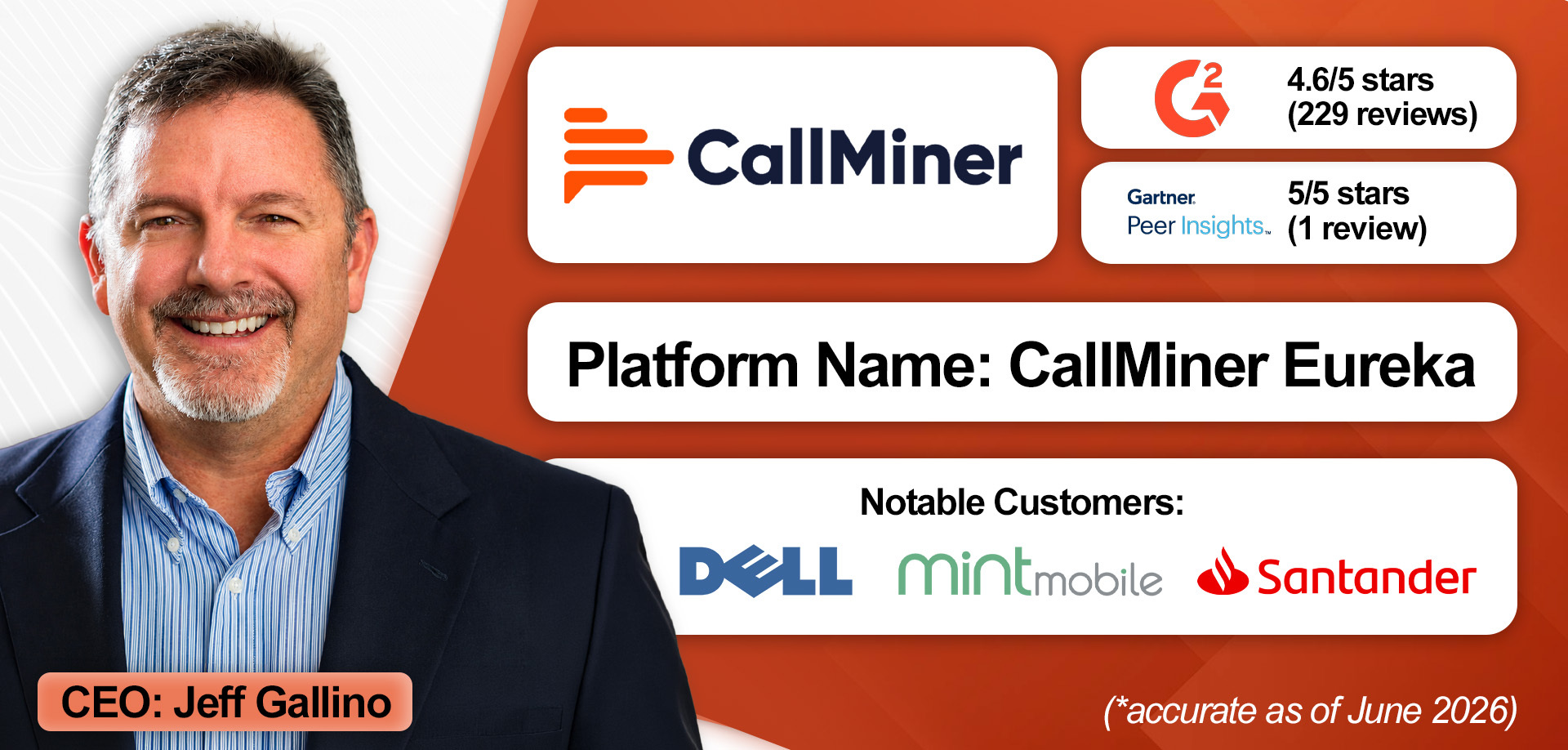
Founded in 2002, CallMiner pioneered contact center speech analytics, and despite significant evolution since, a core strength remains in its consistent delivery of baseline conversational intelligence functionality.
The latest Forrester Wave for Conversational Intelligence report recognized this, singling out its foundational capabilities, such as topic and behavior classification and insights exploration for praise.
Yet, what may set CallMiner apart is its ability to deliver these capabilities at the brand level, rather than only at the industry level.
Central to this are its AI Classifiers, built on each company's own interaction data rather than generic industry data. This foundation enables stronger data reasoning, contact categorization, and visualizations across channels, languages, and locations.
Critically, CallMiner also captures brand-specific nuances that more generic models tend to miss. So, for instance, if a customer uses shorthand or jargon to signal their intent to cancel, CallMiner will surface that insight, whereas some competitors may struggle.
The platform itself is structured around three core pillars: Intelligence, Augmentation, and Automation. The latter two translate insights into operational action through virtual agents, proactive outreach, and workflows.
Further differentiators include real-time translation and screen recording. The latter is particularly valuable, enabling analysts to add context to agent behavior and uncover workarounds that reveal broken or unclear processes.
Finally, CallMiner's long heritage shows in its ecosystem depth, with hundreds of pre-configured connectors to third-party CX solutions, plus a developer API to democratize insight and drive action across the business.
"Our entire platform evolution has been around, how do we get the richest, most complete insights as it relates to customer interactions across every channel, at enterprise scale."

Standout Features
- Brand-Specific AI: Rather than relying on generic industry models, CallMiner trains its AI Classifiers on a company's own interaction data, building a tailored intelligence layer that detects brand-specific nuances across channels, languages, and locations.
- New Platform Architecture: CallMiner’s Eureka platform has been rebuilt around three pillars - Intelligence, Augmentation, and Automation - with the goal of connecting insight generation directly to operational workflows, supported by a broad integration portfolio to spread those insights across the business.
- Integrated Screen Recording: By capturing agent screen activity alongside customer interactions, CallMiner provides a fuller context than audio alone, making it easier to evaluate workflows, compliance, and process adherence. This also reduces the need for separate recording tools within an Auto-QA program.
How Much Does It Cost?
CallMiner uses subscription pricing with bundled packages. Costs vary based on the number of users, interaction volume, modules, integrations, and deployment model. For exact pricing, prospective buyers must contact the CallMiner team directly.
3. Invoca
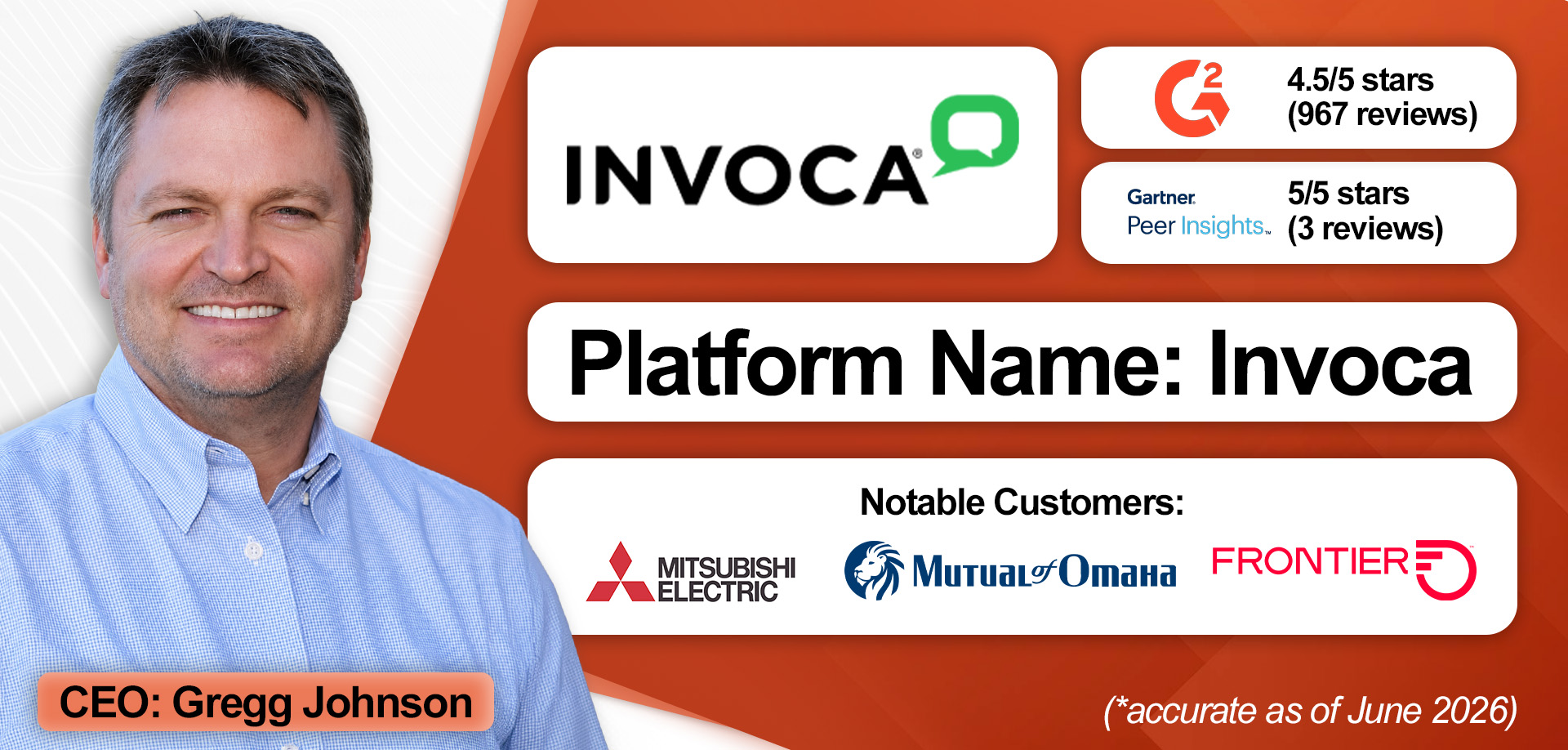
Invoca excels at combining website and conversational intelligence, capturing a customer’s browser behavior before they contact a business and sharing that context in real time with routing systems, human agents, and AI agents. That enables more orchestrated experiences.
Consider a hockey fan researching programming packages. Invoca passes that context to the agent in real time, enabling a greeting like: "Thanks for calling. We're currently running a promotion with 10% off our hockey package." The customer experiences it as a happy coincidence; in reality, it's carefully orchestrated.
This example reflects Invoca's core focus across three moments: what customers did immediately before a conversation, what they said during it, and what they do immediately after, and how each influences business outcomes.
Underpinning this is a deep integration ecosystem that extends well beyond the contact center, ensuring conversational and website insights have an upstream and downstream impact.
Here's another example: Invoca sends conversation outcomes back to advertising platforms such as Google and Meta to inform ad spend. It also integrates with personalization systems to shape future digital experiences. So, if a customer - for instance - mentions they want an iPhone, their next website visit can surface iPhone offers instead of Android promotions.
Finally, Invoca accelerates time to value by helping customers quickly analyze large libraries of recorded calls. This enables product customization to recognize brand-specific language, products, and services faster, while also automating knowledge extraction to support knowledge management and AI agent deployments.
“We focus not only on an aggregate set of conversations and what's happening in real time, but connecting individual conversations to an ecosystem of technology players to help inform better upstream and downstream experiences.”

Standout Features
- Revenue Intelligence: Invoca connects the dots across the customer journey by analyzing what happens before, during, and after a conversation to inform better-orchestrated service experiences. This includes tracking digital behavior ahead of an interaction to surface relevant context in real time, enabling more personalized and productive conversations.
- Deep Ecosystem Integrations: Rather than treating conversations in isolation, Invoca feeds insights from individual interactions into the broader technology stack, spanning advertising, personalization, and customer analytics platforms, so that both the experiences leading up to a conversation and those that follow are continuously improved.
- Deployment Experience: Invoca accelerates time to value by automatically analyzing a customer's existing call recordings to learn their specific products, services, and brand language from day one. It also automates knowledge extraction, reducing the manual effort typically required to set up and maintain conversational intelligence tools.
How Much Does It Cost?
Invoca offers three tiers: Pro, Enterprise, and Elite, plus optional add-ons like a quality management module. Pricing isn't listed publicly. Instead, each plan is custom-quoted. Visit the Invoca pricing page to explore what's included and request a quote.
4. Verint
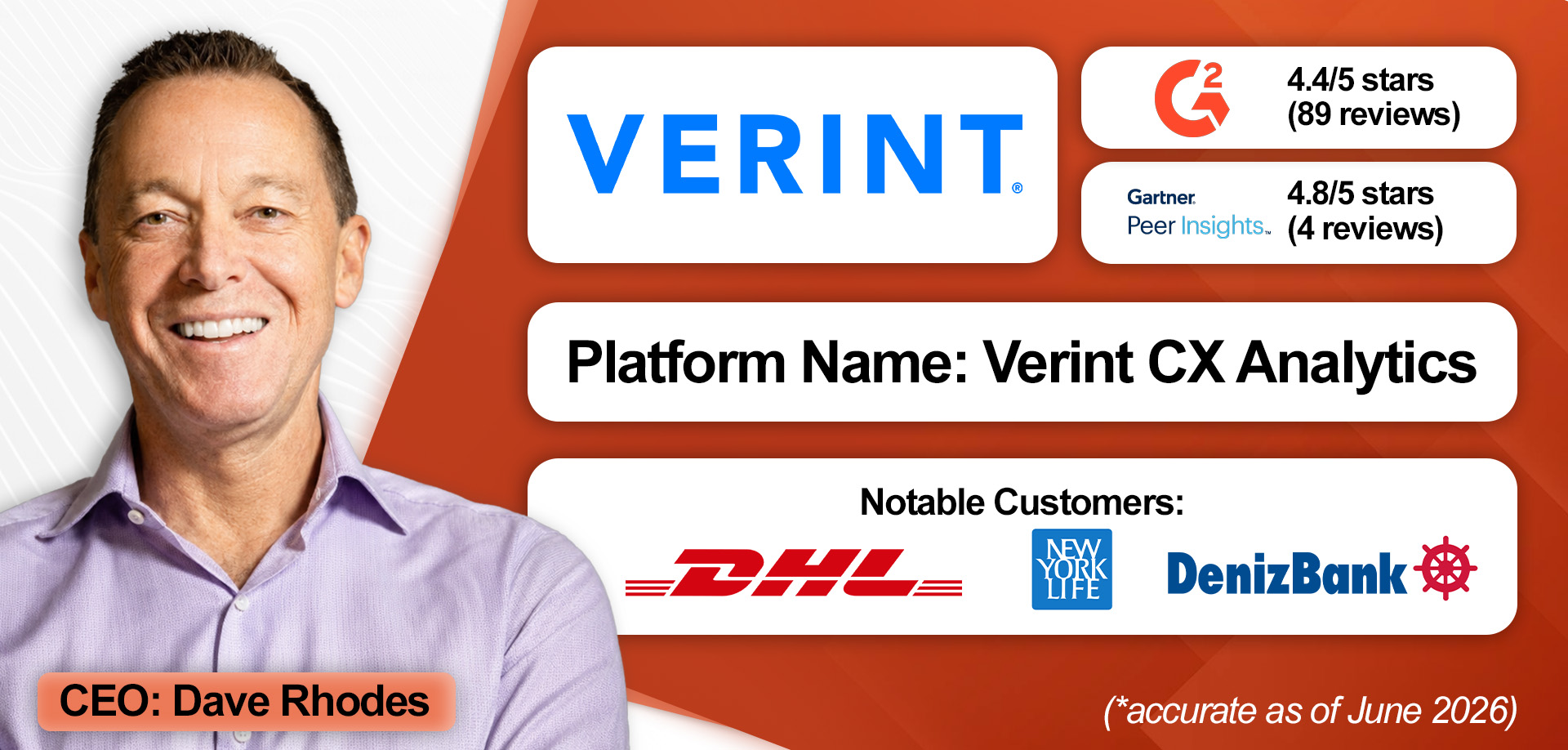
Verint has been mining conversational data for more than 20 years, supporting thousands of customers worldwide. More recently, it has deployed a team of specialized bots that transcribe, redact, index, and translate customer contacts into what it calls ‘usable intelligence’, learning each organization's unique terms and phrases along the way.
Other bots then act on those insights. Genie Bot, for example, lets users query customer interactions in natural language and instantly receive insights, which it can then translate into PowerPoint presentations, ROI analyses, and recommended actions.
Meanwhile, Coaching Bot builds personalized coaching plans and training content for each agent, drawing on which agents produce the best outcomes, how their behaviors differ, and what actions drive better results.
Verint has also introduced an Agent Factory, which orchestrates multiple bots and AI agents. Crucially, these bots and agents aren't confined to Verint's own CX portfolio; they can be embedded directly into existing operational workflows to action insights where work already happens.
Why does this matter? Because most enterprises can't simply abandon their QA processes, governance structures, or compliance frameworks to adopt a new AI system. Verint operates inside that reality, embedding into workflows rather than replacing them, which is a meaningful competitive advantage.
Finally, following a November 2025 acquisition, Verint now offers Calabrio Conversational Intelligence alongside its own platform. This lets it match clients to the right solution while cross-pollinating the best features of both. So, for instance, Genie Bot is now bundled with Calabrio's offering as well.
“We understand the entire workflow. It’s not like saying, forget everything you know about analytics, quality, or workforce management and start over. We embed it in the workflow, and that’s a big advantage.”

Standout Features
- Specialized Bots: Verint offers a range of purpose-built AI bots, many of which translate conversational insights into actions. For instance, Genie Bot turns insights into custom content through natural language prompts alone, while Coaching Bot generates individualized coaching plans by learning from top-performing agents. These are two examples of several.
- Workflow Augmentation: Rather than asking enterprises to abandon existing processes, Verint embeds AI into the workflows they already use. This approach respects real-world constraints around governance, compliance, and defined roles, making adoption practical in a way that "rip and replace" platforms do not.
- Dual-Platform Portfolio: Following its acquisition of Calabrio in November 2025, Verint can now match clients with the right platform for their needs while sharing the best features across both. Genie Bot, for instance, is now bundled with Calabrio's offering, extending Verint's most advanced capabilities to a broader customer base.
How Much Does It Cost?
Verint doesn’t publicly disclose pricing for its CX Analytics suite. Instead, organizations must contact the company for a demo and a custom quote. Contact the Verint sales team here.
5. SESTEK
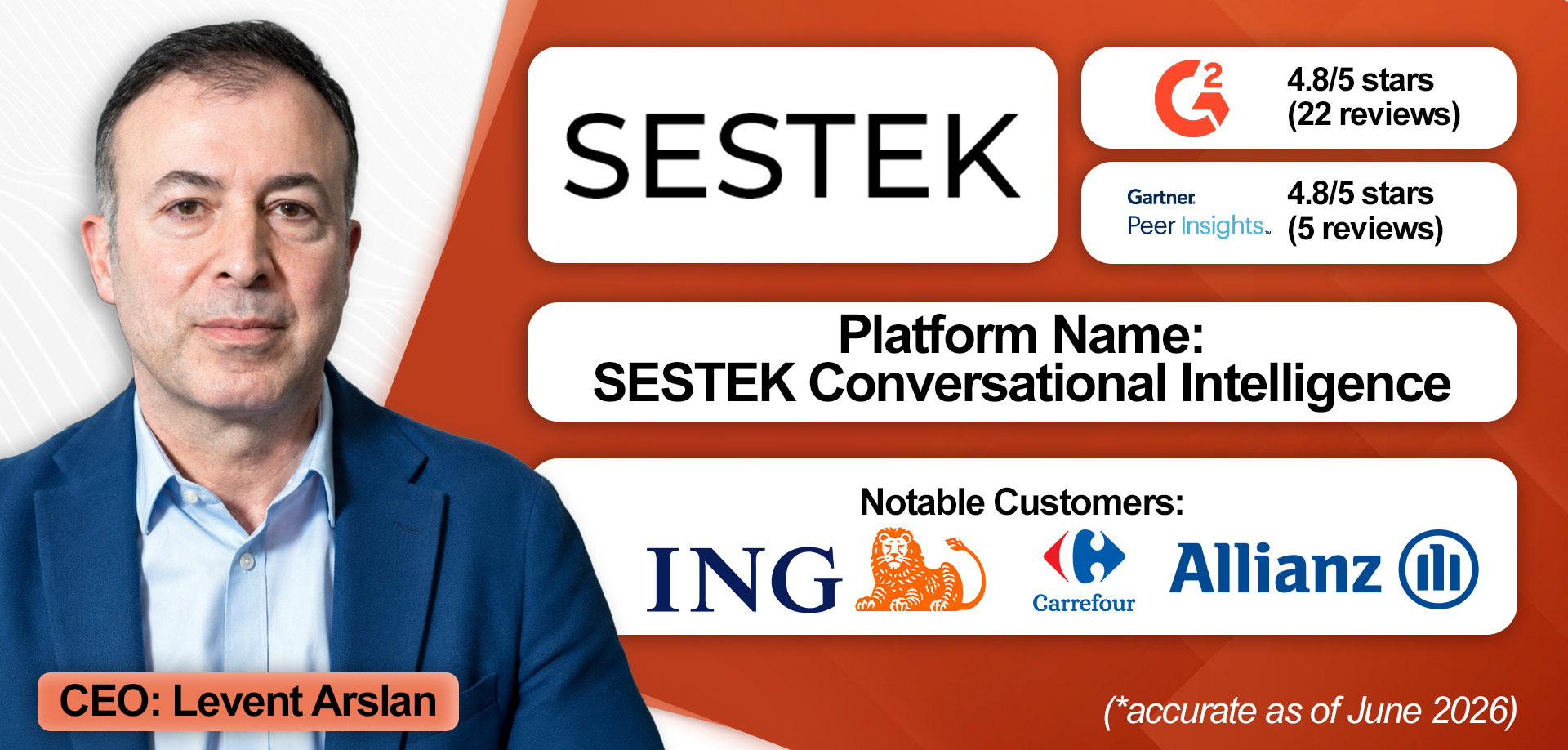
SESTEK Conversational Intelligence sits atop an organization's CCaaS, CRM, and workforce engagement management (WEM) stack, acting as a shared intelligence and orchestration layer.
To support this, it has developed AI agents alongside node-based, low/no-code workflows that pull insights from conversations and trigger automations across these third-party systems.
For instance, its customers may create a CRM task in response to a churn signal, negative sentiment, or compliance risk scoped during a customer conversation.
What's perhaps most exciting, though, is how SESTEK blends conversational intelligence with WEM. On the workforce management (WFM) side, teams can split demand by intent to sharpen forecast accuracy, summarize agent skills to strengthen schedules, and receive real-time insights that keep plans aligned with actual demand.
On the quality management (QM) side, a unified framework monitors both human and AI agents, enabling continuous performance optimization across the entire hybrid team. It also supports AI coaching.
Additionally, SESTEK differentiates through proprietary, domain-specific speech recognition and acoustic analysis models across 40 languages. The vendor claims to have won competitive replacements specifically because of these models’ performance.
Looking ahead, its roadmap includes specialized agents for different types of analysis and converting that into actions, backed by an observability layer for enterprise-grade governance. Multimodal intelligence is also in development, addressing the growing trend of contact centers blending channels within a single conversation.
“The real value of conversational intelligence is not just understanding what happened. It’s turning every conversation into insight, action, and continuous improvement. At SESTEK, we transform conversations into intelligence that improves quality, empowers agents, and continuously elevates the customer experience.”

Standout Features
- Deep WEM Convergence: Unlike most conversational intelligence platforms, SESTEK extends insights directly into WFM. Combined with unified quality monitoring across both human and AI agents and AI coaching, this WEM focus is a significant differentiator.
- Proprietary Speech Recognition: SESTEK has developed its own speech recognition model, trained on industry-specific contact center data. These models cover ~40 languages and bolster the provider’s ability to support multilingual operations.
- Roadmap: SESTEK is building toward a future in which conversational intelligence drives enterprise action through specialized AI agents. It is also planning multimodal intelligence to gain deeper insights from single conversations that blend channels, with a natural language UI.
How Much Does It Cost?
SESTEK doesn’t publicly disclose pricing for its SESTEK Conversational Intelligence solution. Prospective buyers should contact its sales team for a custom quote. Request a demo and quote from SESTEK here.
6. Creovai by Capacity
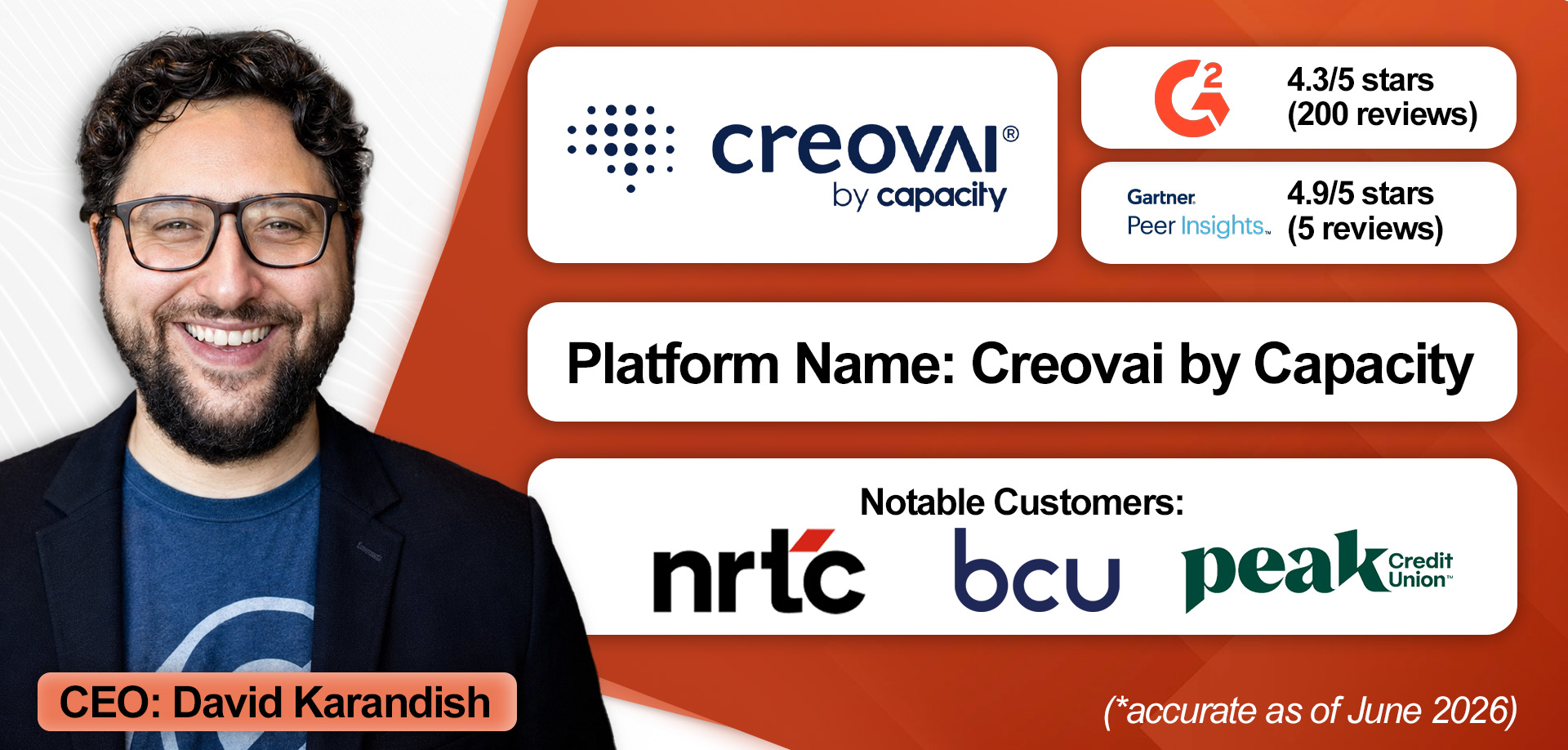
Acquired by Capacity in October 2025, Creovai's conversational intelligence solution now sits within a unified framework spanning knowledge orchestration, virtual agents, proactive customer engagement, and agent-assist capabilities.
While Creovai is still available as a standalone product, Capacity primarily leverages the solution to strengthen this broader framework.
A key example is in its Learning Loop. When the conversational intelligence solution surfaces recurring customer concerns - around a specific product or competitor, for instance - organizations can proactively configure guidance, knowledge articles, and recommended responses for both human and virtual agents. Capacity observes these interventions to learn from them, recommend future actions, and eventually offer to automate them.
The vendor is also strengthening Creovai’s core conversational intelligence solution itself. Through its acquisition of Lang.ai, it has added natural-language data mining, allowing users to interrogate conversational data in plain English, without complex reporting skills. The system interprets the query and surfaces relevant results directly.
Predictive analytics is another strength. Creovai's CSAT AI estimates customer satisfaction without relying on survey responses. Instead, it analyzes sentiment and conversational signals to classify customers as promoters, neutrals, or detractors. This also reflects the vendor's broader capability in developing predictive metrics that bolster conventional contact center reporting.
Finally, Capacity provides ongoing support services for customers to work with specialists who help audit operations, identify optimization opportunities, build reports, refine analytics programs, and adapt solutions as customer behaviors evolve.
"Where we have taken a leap forward is connecting [conversation intelligence] to the relationship it has with future engagements."

Standout Features
- Learning Loop: Capacity connects historical conversations to proactively configure guidance and recommended responses based on recurring trends. This creates a system that continuously learns from past interactions to improve future customer engagements.
- Predictive Analytics: The provider offers predictive metrics such as AI CSAT and churn scores, eliminating the need for traditional surveys by analyzing conversational signals and sentiment to classify customers. These classifications can be especially powerful for driving proactive customer success campaigns.
- Support Services: Capacity provides significant post-implementation services, giving customers access to specialists who help audit operations, identify optimization opportunities, build reports, refine analytics programs, and evolve solutions as customer behaviors and organizational priorities change.
How Much Does It Cost?
Capacity offers three plans: Core, Pro, and Enterprise. Plans can be expanded with virtual agents, Agent Assist, and integrations. Pricing is not publicly available and is provided through custom quotes. Discover what is included in each tier and request a custom quote here.
7. Replicant
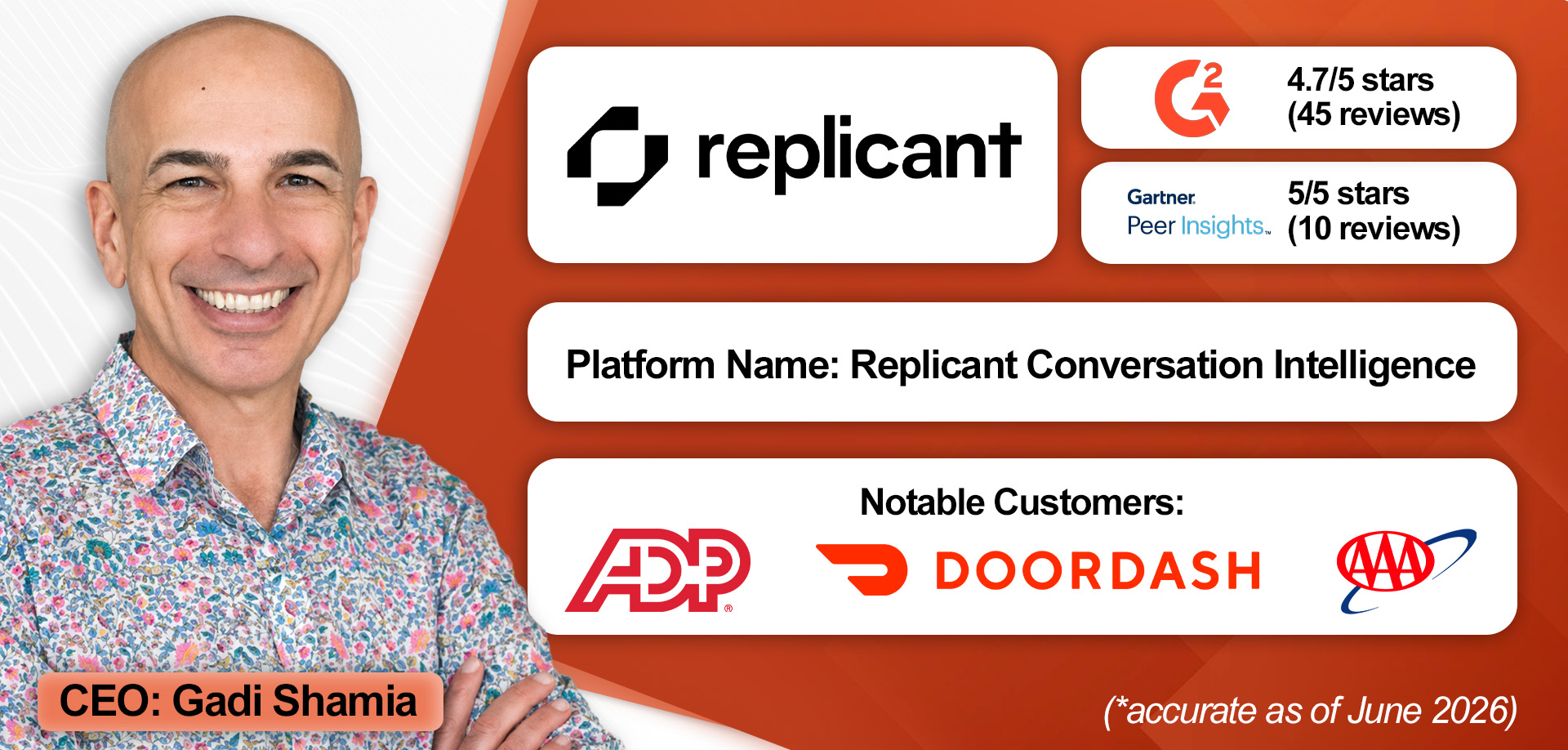
Replicant offers two core products: conversational intelligence and conversational automation. The former analyzes how top-performing human agents handle specific contact types, and the latter uses that intelligence to develop AI agent prototypes.
While some other providers do this, Replicant then analyzes why contacts escalate to human agents and proactively recommends improvements to continuously improve AI-led experiences. That escalation intelligence is a differentiator.
In terms of its core conversational intelligence product, instead of relying on transcription-first analysis, Replicant analyzes the audio directly, capturing tone, emotion, accents, background noise, and other signals that are often lost in text. This approach is backed by significant investment in audio modelling.
Elsewhere, the vendor's automated quality assurance (Auto-QA) capabilities are particularly advanced. For example, it has a Scorecard Simulation feature that considers the company’s key outcomes, extracts drivers of these outcomes from customer conversations, and simulates a new quality scorecard to A/B test against the existing scorecard.
While Replicant offers several other advanced QA capabilities, such as automated coaching plans, this feature tackles the classic contact center problem of supervisors continually measuring the same, age-old performance indicators. By surfacing fresh performance signals, Replicant keeps QA more engaging for supervisors and agents alike.
Lastly, the vendor is building workflows into CCaaS and UCaaS solutions, enabling use cases such as supervisor alerts when post-contact analysis flags extremely low customer satisfaction. Here, the supervisor receives the conversation context, enabling them to reach out proactively and recover the customer relationship before it’s lost.
"We invest probably more than anybody else in the cost of our models because we decided we want to analyze the audio directly… You're missing a lot of the nuance of what people really meant when you're only looking at transcriptions."

Standout Features
- Escalation Intelligence: Replicant studies how top human agents handle contacts to build AI agent prototypes, and then tracks why calls escalate to humans to proactively recommend improvements and improve AI-led conversations.
- Audio Modelling: Rather than converting speech to text before analysis, Replicant works directly from the audio, capturing tone, emotion, accents, and background noise that transcription typically loses.
- Contact Center Auto-QA: Beyond standard quality scoring, Replicant can simulate and A/B test entirely new scorecards tailored to business outcomes, and automatically generate ready-to-use coaching plans for supervisors and agents to self-learn.
How Much Does It Cost?
Replicant offers three plans that combine conversational AI and intelligence: Quick Start, Professional, and Enterprise. However, to use Replicant Conversation Intelligence in isolation, brands must request a custom quote. Contact the Replicant sales team here.
8. Unwrap AI
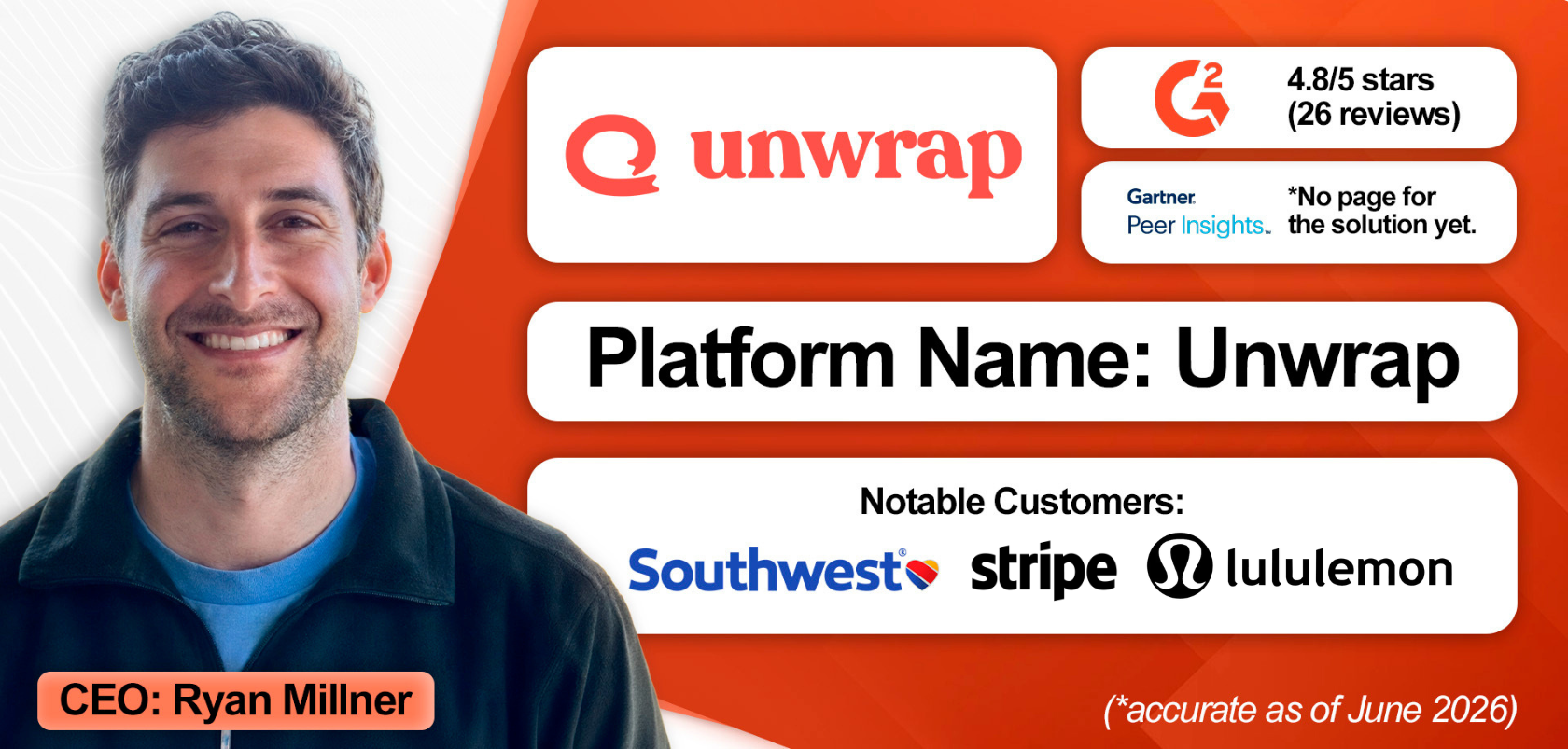
As its name suggests, Unwrap positions itself as an out-of-the-box conversational intelligence solution, with live contact analysis up and running within two to three hours.
It achieves this through a white-glove onboarding experience that includes custom integration setup aligned to a brand's existing workflows. Unwrap can also utilize an organization's current issue and feedback taxonomy to accelerate the implementation.
However, while the onboarding process lasts three weeks, Unwrap offers ongoing support, pledging to become an extension of the team. This underscores its focus on execution.
From a product perspective, Unwrap excels at connecting insights to outcomes. A strong example is its ability to map the specific resolution paths agents take to resolve customer queries, then measure how effective each path was against the metrics that matter most to the business.
When such tools uncover an actionable insight, Unwrap also allows brands to set up role-specific alerts for supervisors, analysts, and other critical stakeholders across their chosen CCaaS, UCaaS, or email platform.
Unwrap was also among the first conversational intelligence vendors to support MCP, enabling brands to build AI agents that act directly on conversational data. This integration extends to Claude Code, Cursor, and similar tools, allowing teams to query conversational intelligence insights, filter results, and generate trend visuals all through their preferred AI assistant.
Finally, the vendor has expanded into the Voice of the Customer space with Unwrap Surveys. Featuring intelligent targeting and AI-generated follow-up questions based on previous responses, the tool feeds new feedback into the same engine that already analyzes support tickets, making it especially compelling for contact centers that rely on post-contact surveys.
"With Unwrap, you don't have to go looking for answers. They are surfaced to you, proactively and accurately, without the complexity that kills adoption. That's why teams at DoorDash, lululemon, Ro, Perplexity, Southwest Airlines, and Microsoft chose us: not just a better tool, but a real partner in understanding what their customers need."

Standout Features
- Onboarding & Deployment Experience: Unwrap gets teams up and running in under three weeks, with live analysis ready in just a few hours. It plugs into over 3,000 tools and adapts to a brand's existing workflows and feedback taxonomy, minimizing disruption during setup.
- Unwrap MCP: Through its Model Context Protocol (MCP) support, Unwrap connects directly to AI assistants, enabling teams to query customer feedback, explore pain points, and generate trend visualizations using natural language, without leaving their existing workflow.
- Complementary VoC Capabilities: The vendor also provides a survey tool that asks dynamic follow-up questions in real time to uncover the reasoning behind customer responses. These insights feed into the same engine processing support tickets, reviews, and CRM data, providing a more holistic view of the customer experience.
How Much Does It Cost?
Unwrap AI uses a volume-based pricing model, with plans starting at $24,000 per year. Detailed pricing information is available upon request from its sales team. Learn more about Unwrap’s pricing approach here.
9. MiaRec
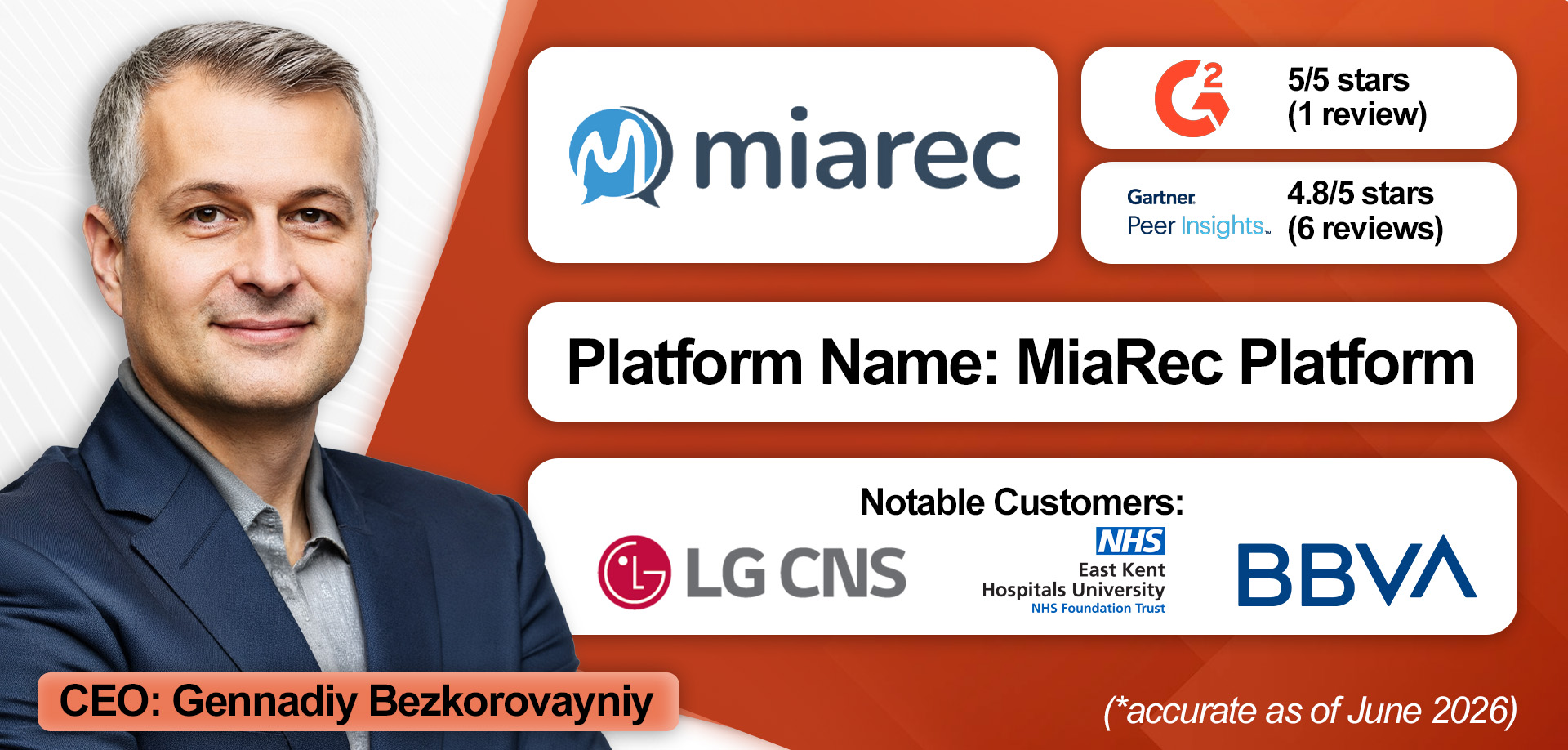
MiaRec's conversational intelligence solution is highly configurable, allowing customers to create custom analyses, workflows, and reports across industries and objectives.
While other solutions may do more out of the box, MiaRec compensates with a well-structured onboarding experience and hands-on support that turns this configurability into an advantage.
Indeed, customers consistently praise MiaRec's onboarding, which pairs each customer with both a dedicated Success Manager and a Technical Implementation Specialist. Together, they meet with customers once a week for the first six weeks, or often longer, helping brands define clear objectives, build out analytics initiatives and workflows, and refine the system based on feedback.
From there, MiaRec’s team remains available for ongoing assistance, with verified reviews repeatedly highlighting its responsiveness, patience, and customer success management.
Revenue intelligence is another key focus. MiaRec helps customers detect signals such as total missed revenue, missed opportunities by value range, and missed revenue by representative while connecting these insights across sales and support functions, delivering a more complete picture of the customer experience.
Finally, MiaRec is expanding its workflow automation capabilities to turn insight into action, with close integrations into platforms like Make and Zapier.
“Our system is completely customizable, and you can tailor it to almost any particular use case, regardless of the vertical or whatever it is you’re trying to accomplish.”

Standout Features
- Platform Configurability: MiaRec's platform is highly configurable, enabling customers to tailor it to virtually any use case through custom prompts, workflows, reports, and analyses. While competitors may offer more out-of-the-box functionality, MiaRec differentiates itself by providing extensive hand-holding to ensure configurability becomes a strategic advantage rather than a burden.
- Customer Support & Onboarding: MiaRec pairs each customer with both a dedicated Customer Success Manager and a Technical Implementation Specialist, who meet with customers at least weekly over a minimum six-week onboarding period. Together, they define objectives, configure analytics workflows, and refine the system based on ongoing feedback.
- Revenue Intelligence: MiaRec extracts and aggregates revenue data directly from sales and service conversations. This enables organizations to track purchase intent, revenue leakage, missed sales opportunities, and more, providing strong visibility into sales performance and supporting service-led sales strategies.
How Much Does It Cost?
MiaRec offers two bundles for its conversational intelligence solution: CX Intelligence and Revenue Intelligence. These are available for $99 and $129+ per user, per month, respectively. Learn more about what’s included in each bundle by contacting the MiaRec sales team here.
10. Google Cloud
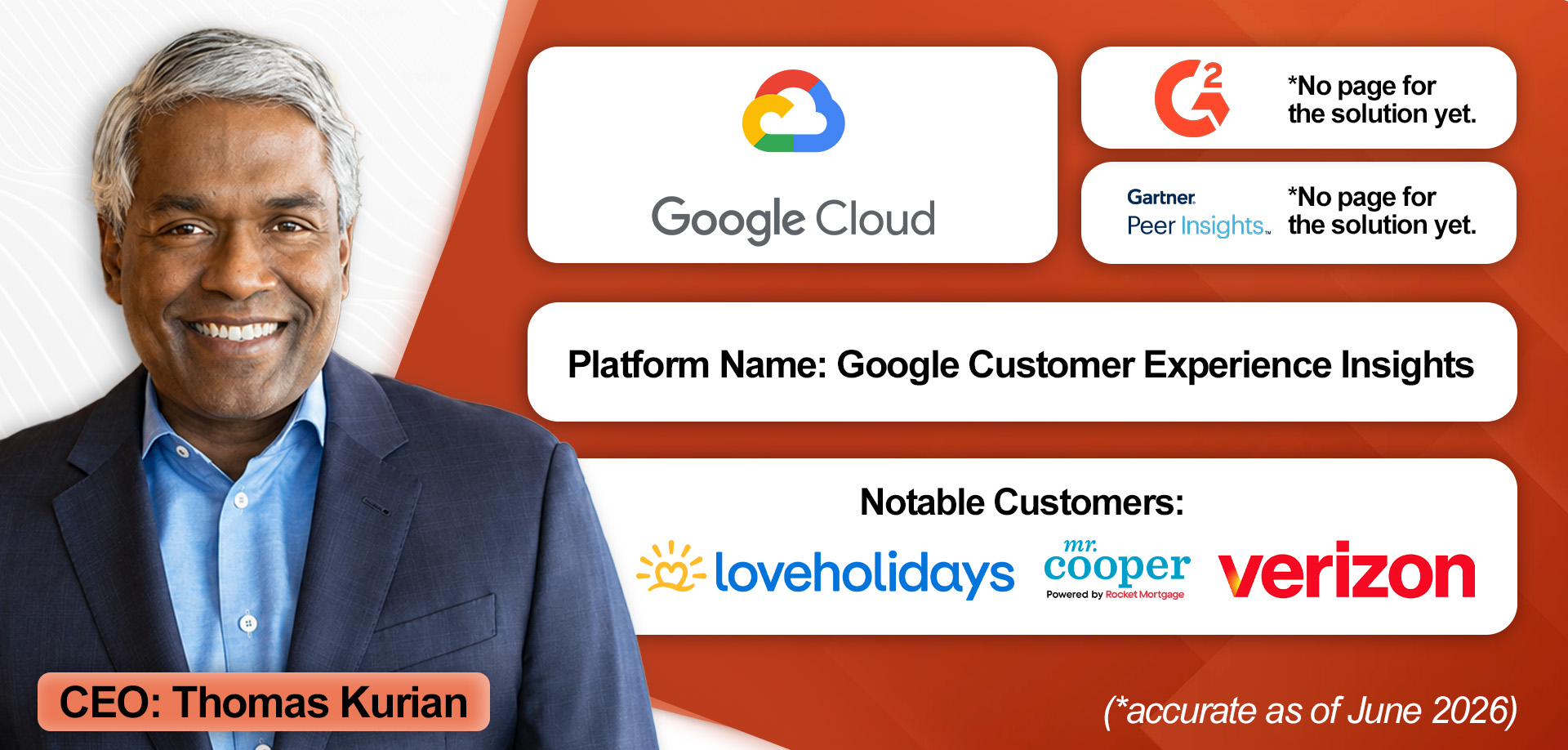
Google Customer Experience Insights (formerly Google CCAI Insights) differentiates through a deep integration with the broader Google ecosystem.
A lightweight example is its Google Sheets integration, which allows conversational insights to be stored and shared in a familiar spreadsheet format. More powerfully, a BigQuery integration unifies conversational data with CRM, ERP, billing, VoC, and WEM sources, enabling SQL-based analysis to uncover patterns invisible from interaction data alone.
Consider a spike in Monday morning contacts. Google Customer Experience Insights may suggest that password resets are driving most of this volume, while CRM data reveals those callers are predominantly new customers, and product telemetry points to a recent mobile app release as the root cause.
By helping customers cluster insights in this way, Google enables true root-cause analysis rather than surface-level observation.
Google also offers service-level preservation, integrating with scheduling systems to automatically cancel shrinkage activities, such as coaching or meetings, during periods of elevated demand.
However, overall, Google offers comparatively few out-of-the-box intelligence and pre-built workflow automations use cases. Instead, it champions configurability and access to first-party AI models.
On the latter, the cloud giant’s native models ensure organizations benefit from continuous AI advances without compatibility or operational issues as the models evolve, unlike rivals built on third-party model wrappers.
Finally, Google's pricing model is transparent and pay-as-you-go, supporting low-cost conversational intelligence experiments without a large upfront commitment. That’s particularly attractive at the SMB/midmarket level.
Standout Features
- Google Ecosystem Integration: Google Customer Experience Insights is deeply embedded within the Google ecosystem. Its BigQuery tie-in is perhaps most notable. It allows businesses to combine CX Insights with data across the business to surface patterns that interaction data alone can't reveal.
- First-Party AI Models: Unlike many competitors that rely on third-party AI, Google uses its own first-party models, enabling organizations to benefit from the latest AI advances without the compatibility challenges of replacing underlying models.
- Pay-as-You-Go Pricing: A consumption-based pricing model makes conversational intelligence accessible to smaller or cost-conscious businesses, since they can start with a limited sample without committing to significant upfront spend.
How Much Does It Cost?
Google Customer Experience Insights is priced per analyzed interaction as follows:
- Digital: $0.0015/message (Standard) or $0.0025/message (Enterprise)
- Voice: $0.015/minute (Standard) or $0.025/minute (Enterprise)
- Quality AI add-on: $50/agent/month
Learn more about pricing for Google Customer Experience Insights here.
11. Convin AI
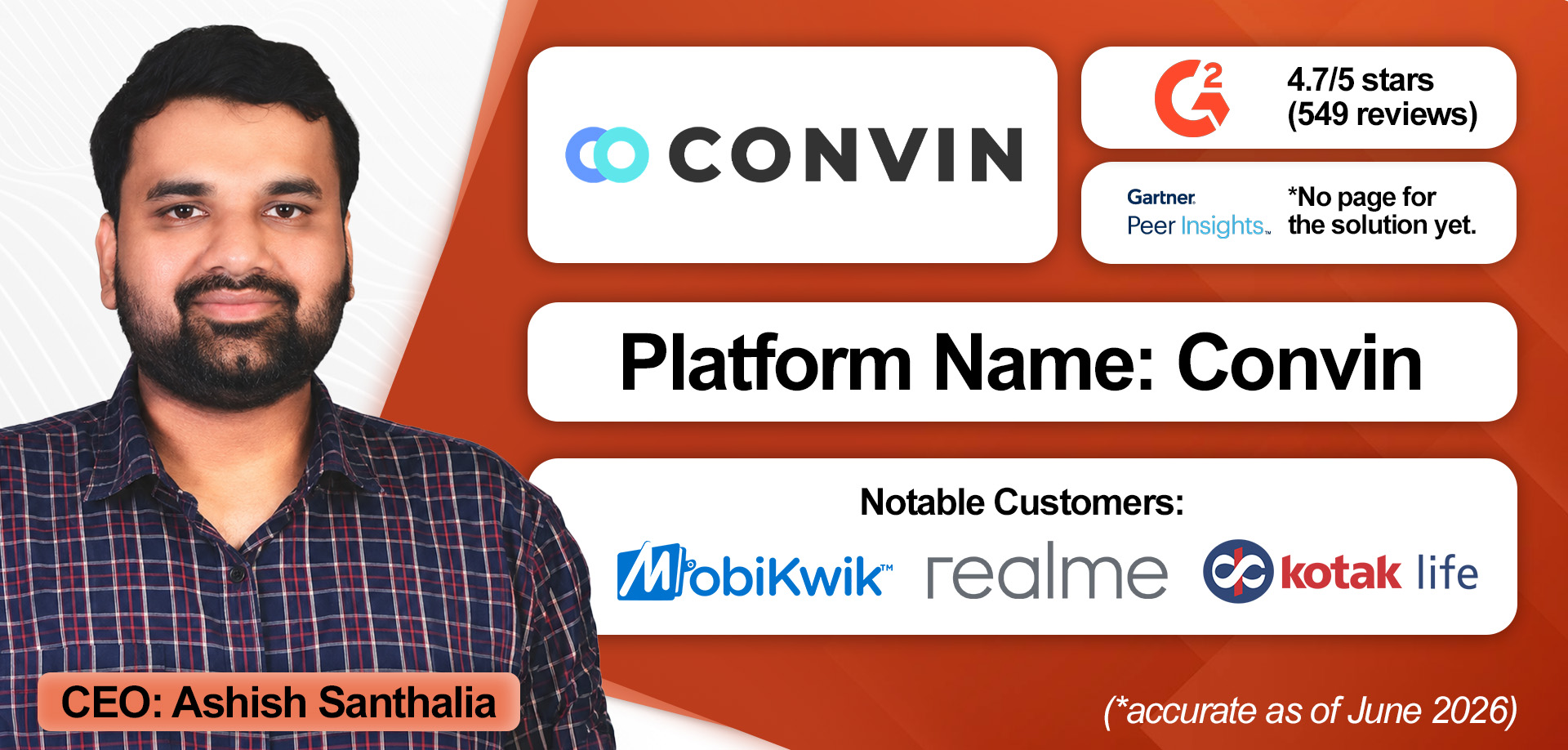
Convin AI positions itself as an "AI agent platform for customer conversations" and has built a significant market presence across Southeast Asia and the Middle East.
Central to its success is a focus on "inclusive AI." The platform offers AI-driven call analysis in over 70 languages, including proprietary models for eight Indic languages and support for mixed-language speech such as Hinglish. These capabilities will be difficult for rivals to replicate, given the scarcity of recorded data in Indian languages.
Convin has also launched a mobile app for iOS and Android that captures, records, and analyzes conversations from in-person sales, in-store retail, and field service interactions. In doing so, it unlocks richer insights from customer touchpoints that many competitive solutions overlook.
Indeed, capturing insights from otherwise untapped conversations, whether due to location or language support, is an advantage for the vendor.
Moreover, Convin has expanded its Auto-QA and agent coaching capabilities. A standout addition is "AI Mock Call enhancements," which transform real customer conversations into scenario-based simulations for agent onboarding and targeted performance improvement in a safe environment.
Finally, Convin is built on Oracle Cloud Infrastructure (OCI), which is a departure from the AWS, Google Cloud, and Microsoft Azure norm, making it a natural fit for brands already invested in the OCI ecosystem.
Standout Features
- Inclusive AI: Convin supports conversational analysis across 70+ languages, including proprietary models for eight Indic languages and mixed-language formats like Hinglish, giving it a meaningful edge in the typically underserved APAC market.
- Convin Mobile App: A dedicated iOS and Android mobile app lets Convin capture and analyze conversations that happen outside conventional contact center settings, such as in-person sales, retail interactions, and field service visits.
- Contact Center Coaching: Convin has built out a robust coaching ecosystem that includes AI-generated simulations based on real customer calls. The vendor also offers an in-house learning platform that turns QA findings into structured training content.
How Much Does It Cost?
Convin AI uses a fully custom, quote-based pricing model with no public tiers or fixed rates. Built around its core conversation intelligence platform, it offers modules - such as agent and supervisor assist, voice automation, and coaching - with Quality Management Software for free. Get Convin's full pricing breakdown here.
Trends Reshaping the Conversational Intelligence Market
In analyzing each conversational intelligence solution, several trends emerged that are shaping the market’s direction. The most significant are outlined below.
Conversational Intelligence Becomes Increasingly Outcome-Oriented
Organizations are investing heavily in AI, but many struggle to quantify the value they're receiving. Conversational intelligence solutions are increasingly utilized for this reason.
Indeed, brands are using this technology to more accurately track:
- Cost savings
- NPS and CSAT
- Churn risk
- Customer retention
- Conversion rates
- Agent performance
They then look for correlations across these metrics to quantify how operational improvements affect key customer, employee, and business outcomes.
Organizations are also using conversational intelligence to identify which agent behaviors and actions drive those outcomes, making this “outcome intelligence” an increasingly important differentiator.
Solution Providers Seek to Activate Conversational Intelligence Insights
Many conversational intelligence providers are actively bolstering their integrations and partnerships with CX tech providers that traditionally serve sales and marketing teams in a bid to activate the conversational insights they surface.
For instance, many now integrate with advertising platforms to inform ad spend and personalization platforms to dynamically adjust digital experiences.
Another emerging focus is integration with broader customer analytics platforms such as Google BigQuery, Adobe Analytics, and Quantum Metric.
One use case here is to help brands differentiate between true website abandonment and customers who simply switched channels and called for assistance.
Some providers, such as Invoca, use this insight to explain why customers escalate to support, helping marketing teams improve the online customer experience.
Natural Language Interfaces Rise
Increasingly, conversational intelligence providers allow users to interrogate data through a natural language interface, as evidenced by Cresta’s AI Analyst, Verint’s Genie Bot, and MiaRec’s Ask AI capability, just some examples.
The result is that brands can increasingly ask questions such as: "Which customers are most likely to churn in the next six months?" The platform will identify likely churn candidates and explain the underlying reasons.
Such insight extraction transforms conversation intelligence into a strategic business intelligence platform.
Vendors Expand Into New Markets
As foundational conversational intelligence use cases become commoditized, vendors are increasingly expanding into new areas to deliver symbiotic value.
That’s not a new trend. It started almost a decade ago with vendors pushing into the QM space, auto-filling scorecards, and isolating contacts for manual review.
However, it’s expanding into areas such as Agent Assist, knowledge management, and VoC.
There is added value here. For instance, a conversational intelligence solution can identify where particular agents struggle and feed that insight to an Agent Assist tool to offer personalized, real-time guidance.
Yet, traditional vendors in adjacent spaces are also entering the conversational intelligence market, from AmplifAI to Balto, leading to increasing overlap in capabilities and intensifying competition.
In this new reality, conversational intelligence vendors need a compelling vision and fresh perspective on the evolving role of interaction data within the contact center and broader enterprise.
Support Services Become Much More Mature
Unlike technologies that can be deployed and largely left alone, conversation intelligence requires continuous tuning and improvement.
After all, customer expectations change. Business priorities change. Organizational structures change. The system must evolve alongside them.
As a result, the provider–customer relationship becomes more collaborative, with vendors increasingly bolstering their continuous education, optimization, and strategic services.
The Future of the Conversational Intelligence Space
Historically, many organizations viewed conversation intelligence as little more than a quality monitoring solution. Today, these solutions can predict customer satisfaction, identify churn risk, surface emerging issues, and provide strategic business insights.
Now, vendors are set on turning that insight into action.
The best providers will go beyond surface-level recommendations. They'll pinpoint the customer and business outcomes that matter, unpack what drives them, and proactively suggest role-specific actions that move the needle.
Yet, soon, proactive recommendations alone won’t be enough. Companies will strive to activate those recommendations autonomously across the business, whether that means dynamically adjusting a website experience, triggering a retargeting campaign, or intelligently rerouting future customer interactions.
Consider the last example. Many providers can flag a vulnerable customer, but the leaders in this space will go further, using that insight to update a customer record and pre-emptively adjust the routing algorithm.
Finally, the vendors that will define this category aren't those bolting on complementary tools like Agent Assist, translation, or surveys because they can. They're the ones with a clear vision for where conversational intelligence fits within the broader customer experience stack and are building deliberately toward it.