May 19, 2026 • 8 min read
Zendesk Relate 2026: The Top Ten Announcements

Director of Content & Market Research
May 19, 2026
Zendesk Relate 2026 has kicked off, with over 2,000 customer service leaders descending on Denver, Colorado.
Last year’s event marked the launch of the Zendesk Resolution Platform.
In 2026, the vendor’s vision around the platform evolved, and so did its AI agent capabilities.
The first six of the top ten announcements from Zendesk Relate 2026 explore these new capabilities, before isolating new additions to its Copilot portfolio, quality assurance (QA) proposition, and CCaaS solution.
1. Zendesk Shares Its Vision for the Autonomous Service Workforce
Kicking off Relate 2026, Zendesk argued that companies are making a fundamental mistake by treating AI agents as a cost-cutting tool, rather than an opportunity to drive better outcomes.
To help organizations execute on that opportunity, the vendor shared its “Autonomous Service Workforce” vision, delivered through its Zendesk Resolution Platform.
At the center of that platform is the Resolution Learning Loop, which - across every human- and AI-led interaction - captures: the intent, the steps taken, whether the issue was successfully resolved, and how long it took. That data then feeds back into the AI and workflow systems, dynamically adjusting how AI agents solve issues.
As such, AI agents don't follow static workflows; they become “autonomous”.
“[Our AI] agents will be more than just code; they will be team members, held to the same high standards of accountability as any human.”

Like their human colleagues, these AI agents will pivot between channels, taking the customer through an experience that aligns with the desired outcome, not cost savings, while maintaining context throughout.
That’s the vision that Zendesk is working towards.
2. Zendesk Launches an AI Agent Builder
Zendesk debuted a new Agent Builder to help bring its vision for the Autonomous Service Workforce to life.
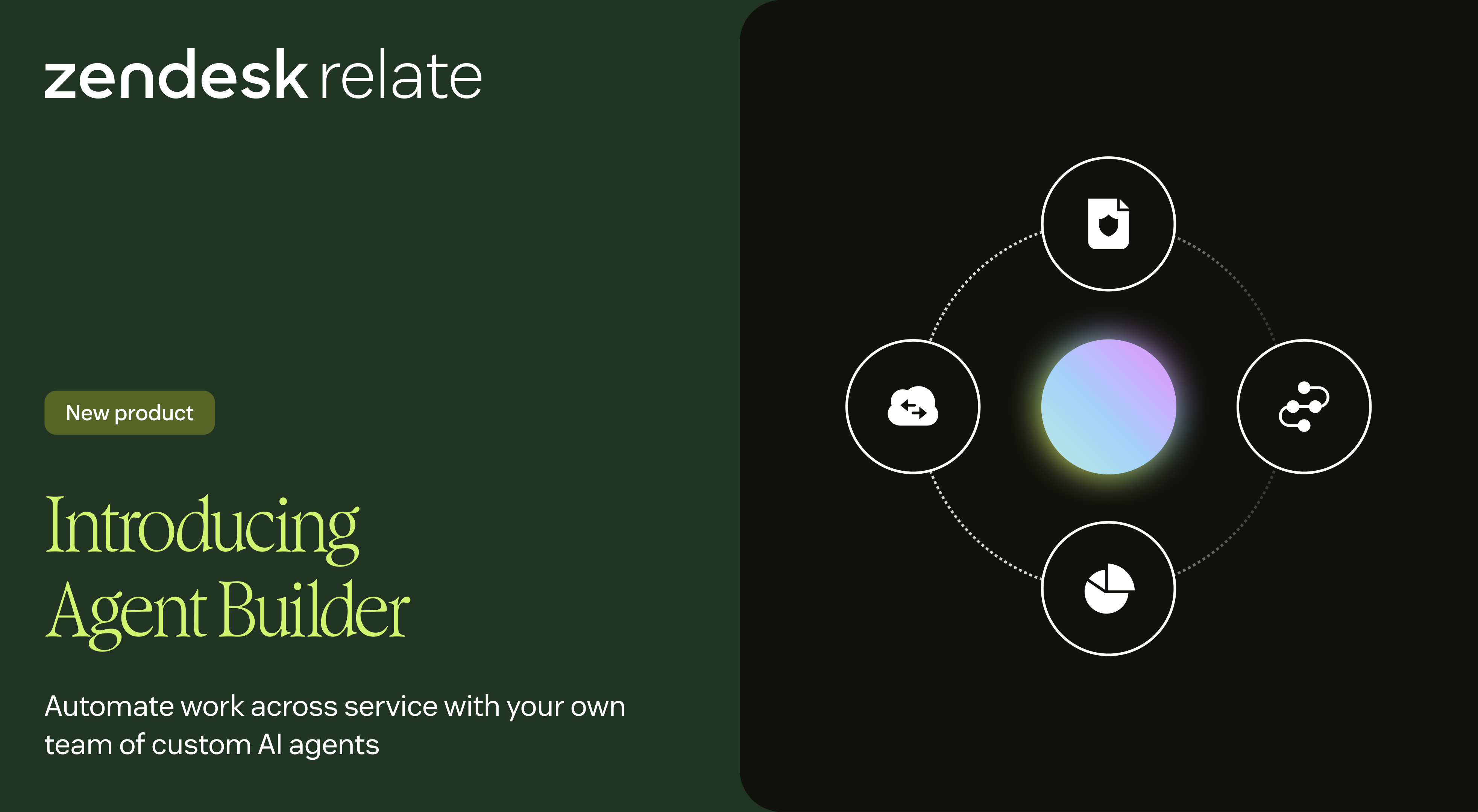
The Agent Builder provides a no-code interface that enables organizations to develop, test, and deploy custom AI agents tailored to their unique policies, business logic, and workflows.
While these policies and guardrails remain firm, the AI agents get drawn into the Resolution Loop and, therefore, self-optimize.
That includes its voice and digital AI agents, with Zendesk also expanding the former’s multilingual reach to support 60+ languages.
3. Zendesk’s AI Agents Reach Into Other Enterprise Systems
Contact center agents don’t just work inside Zendesk; they also utilize other tools. AI agents will need similar access to successfully resolve more complex queries.
Zendesk acquired Forethought earlier this year to help solve this problem. It allows companies to connect multiple specialized AI agents with backend systems, APIs, and web browsers, and then run workflows across them.
Now, Zendesk is making this capability available via its new Action Flows for AI Agents solution, enabling its AI agents to operate across Zendesk and external systems environments, triggering actions and pulling data.
Alongside Action Flows for AI Agents, Zendesk announced a library of 40 prebuilt workflow connectors to apps like Claude, OneDrive, and Okta. It plans to add over 100 more before the end of the year.
Lastly, the vendor announced support for MCP, paving the way for more ambitious IT teams to connect Zendesk AI agents with those in other enterprise systems, which collaborate to get work done.
4. Zendesk Bolsters Its Resolution Learning Loop
The Resolution Learning Loop plays a central role in Zendesk’s ambition to deliver the Autonomous Service Workforce, dynamically adjusting how AI agents solve queries.
The new Context Graph and expanded Knowledge Graph connectors aim to bolster the loop.
Context Graph keeps a record of its previous adjustments, monitors success, and uses that intelligence to inform future guidance.
Meanwhile, the Knowledge Graph connectors unify knowledge from various enterprise tools in one searchable index, supporting AI agents with data retrieval.
New Knowledge Graph connectors pull data from SharePoint, Google Drive, and Document360, in addition to several other systems.
5. Zendesk’s Outcome-Based Pricing Model Gets More Sophisticated
At Relate 2025, Zendesk became an early advocate for outcome-based pricing, where the organization only pays for an AI agent if it delivers a resolution.
Since then, much of the broader conversational AI market has followed suit, telling customers, “You only have to pay us when we deliver value.”
However, the pricing model still has its detractors. They highlight how tricky it is to measure a “resolution” accurately. Some also argue that just because the issue got resolved, that doesn’t necessarily mean the customer left the call happy, and is that, therefore, a good outcome?
Recognizing these concerns, Zendesk has committed to launching a dedicated AI evaluation model to independently confirm the AI agent has resolved the issue. Alongside analyzing the conversation, this will track what the customer does next.
6. AI Agents Also Come to Zendesk Employee Service
Zendesk released an Employee Service Suite at Relate 2025 as a hub for HR and IT teams to manage support requests, just like customer service teams do.
Now, they - like customer support teams - can implement AI agents to handle these requests.
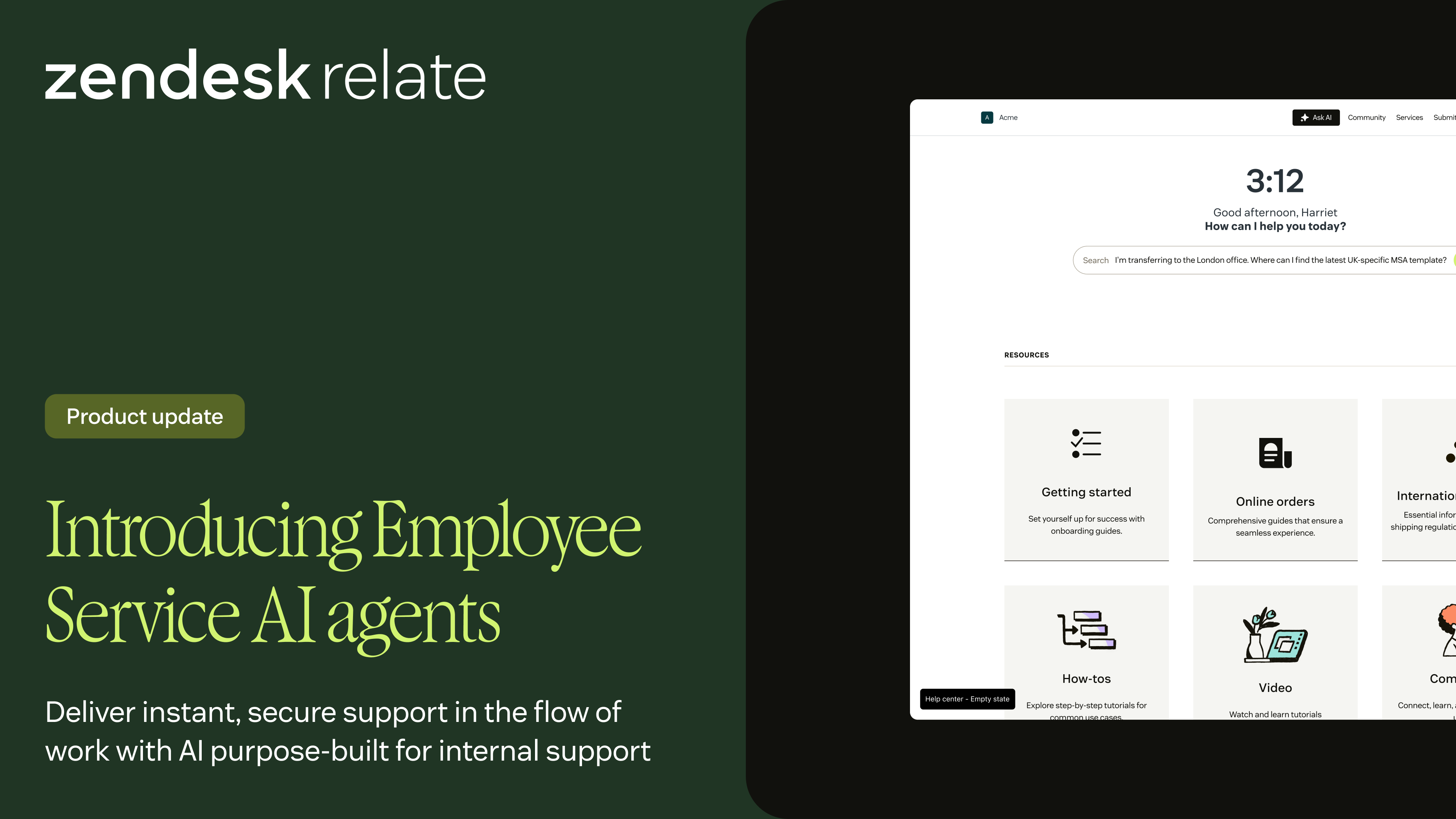
For instance, perhaps someone in sales is looking for a contract template. Normally, they might have to email the legal team and wait for a response. Yet, an AI agent could isolate the correct document in Google Drive, ensure permissions, and return the answer immediately.
Maybe that employee also requests a new piece of hardware. They can ask an AI agent to provision one for them without a colleague from IT in the loop. Following IT’s guardrails, the AI agent may connect actions across enterprise systems to autonomously fulfill the task.
To access these AI agents, employees can log into a Help Center. However, Zendesk also makes them available across collaboration solutions like Microsoft Teams and Slack to simplify the employee support process.
7. Zendesk’s Agent Copilot Starts to Take Actions Autonomously
Copilots have so far functioned as guidance tools, generating content (like conversation summaries) and suggesting next-best actions.
The next wave of Copilots will offer to perform those recommended actions, and the new-look Zendesk Agent Copilot is an excellent example.
It comes with out-of-the-box connectors to not only surface knowledge pertinent to the customer query and generate next steps, but also perform actions.
While Zendesk hasn’t shared much more yet, it promises its Agent Copilot will take action on at least 30% of tickets “from day one”.
8. Zendesk Announces Two New Copilots in Early Access
Alongside its Agent Copilot, Zendesk unveiled two further virtual assistants in early access. These are the new Knowledge Copilot and Analyst Copilot.
The Knowledge Copilot extracts intelligence from contact center conversations to identify gaps in the knowledge base, opportunities to improve content, and outdated articles.
Meanwhile, the Analyst Copilot scours real-time performance data to uncover trends in team performance, rationalize the root cause, and suggest improvement recommendations.
That performance data may cover trends in ticket volume, escalations, how reps interact with AI, agent sentiment, stress levels, and more.
Rounding up Zendesk’s Copilot portfolio is the Admin Copilot, which is now generally available.
The Admin Agent spotlights operational challenges by analyzing performance data over a trailing seven-day period, proactively suggesting changes to routing configurations, capacity rules, and service workflows.
9. Zendesk Democratizes Contact Center QA
In 2024, Zendesk acquired Klaus and entered the contact center QA market with a mature solution.
While it’s available as a bolt-on, Zendesk augments its Resolution Platform with some of these QA capabilities through its new Zendesk Quality Score.
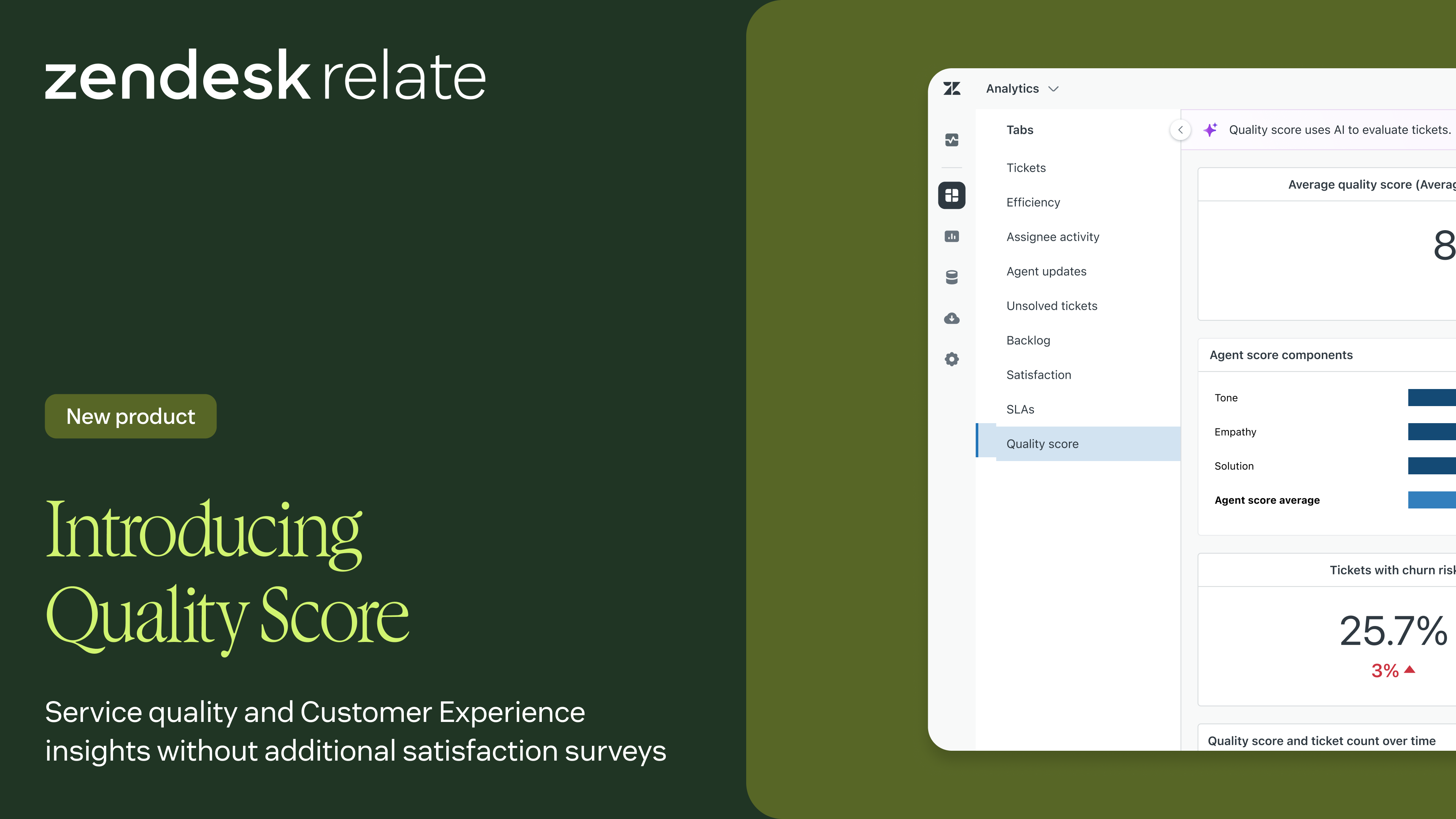
Zendesk Quality Score will be available to customers on Suite Professional plans and above, enabling them to grade every customer interaction, human- and AI-agent-led, based on their own QA criteria.
A Quality Score becomes available after every customer conversation, allowing supervisors to track performance trends across their teams, offer support after challenging interactions, and isolate opportunities for performance improvement and recognition.
Ultimately, this offers lightweight QA functionality to contact centers that have not invested in a specialist system.
10. The Zendesk Contact Center Gets a New Call Console
Zendesk moved into the CCaaS market with its February 2025 acquisition of Local Measure, a platform built on AWS, leveraging many of the same components as Amazon Connect.
The Zendesk Contact Center now overlays its core offering, providing a unified CRM-CCaaS experience.
At Relate 2026, Zendesk showcased this experience, featuring a brand-new call console. It allows agents to transfer calls, conference with available representatives, place calls on hold, and pause or resume recordings.
While these are cornerstone CCaaS capabilities, Zendesk aims to stand apart by making them available within a unified workspace alongside customer history, intent data, and interaction summaries when conversations are escalated from an AI agent.
In doing so, it differentiates by building a contact center where customer service data lives, with Salesforce recently following its lead.