For years, the contact center industry has approached AI through two competing strategies: help human agents become more productive or automate customer interactions entirely.
Sanas believes there's a third option.
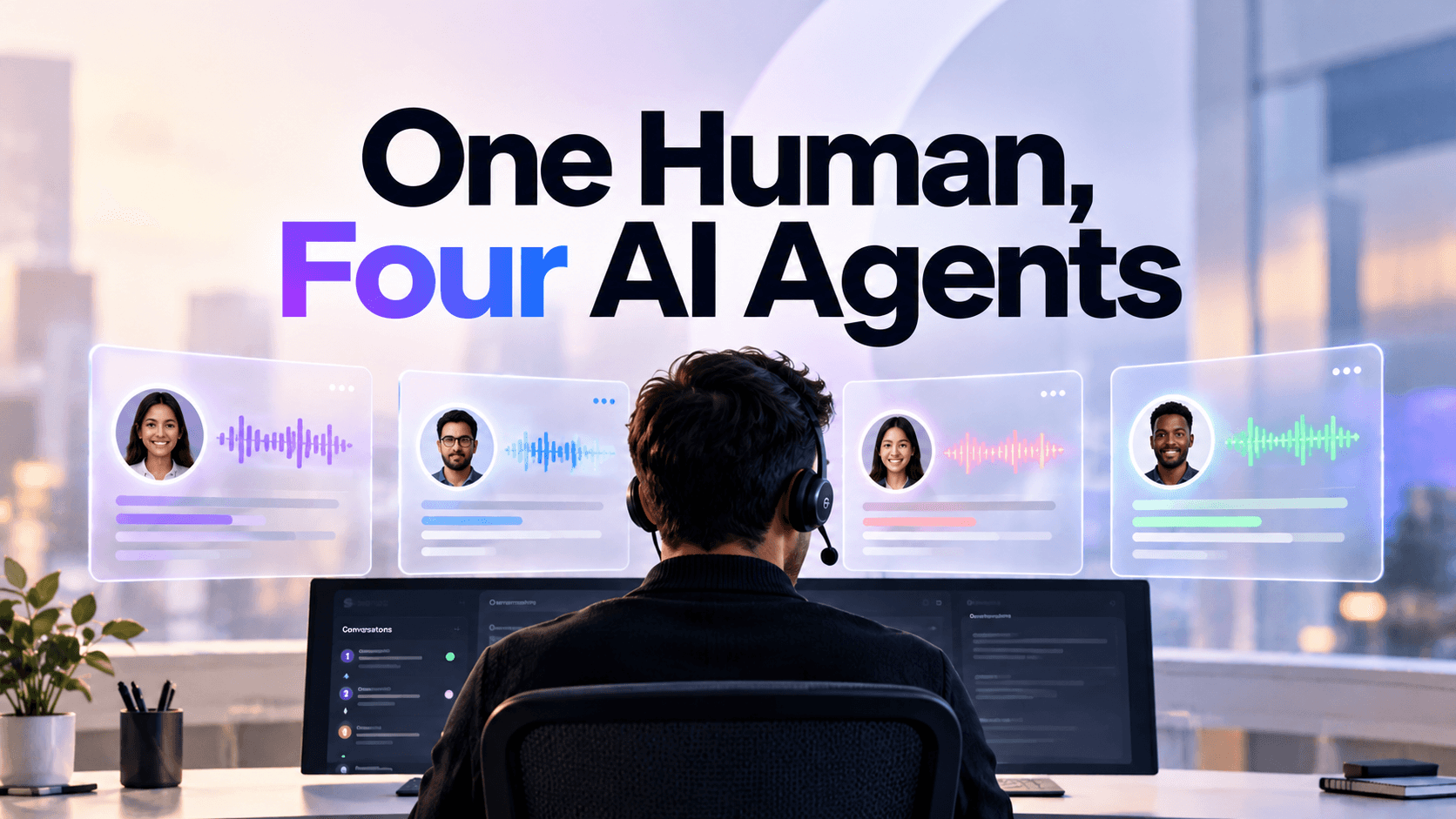
With the launch of Sanas Supervised AI, the company is introducing a model in which a single human employee can oversee up to four simultaneous AI-powered customer conversations, intervene when necessary, and return control to AI without interrupting the customer experience.
This extends beyond another advancement in conversational AI platforms. If the model proves effective at enterprise scale, it could fundamentally change how contact centers structure their workforce, measure productivity, and calculate the cost of customer service.
More importantly, it challenges the assumption that AI adoption must come at the expense of human involvement.
From Human Agents to AI Supervisors
Traditional agent-assist technology improves the productivity of individual employees. AI provides recommendations, retrieves information, summarizes conversations, and automates administrative tasks, but the human agent remains responsible for conducting the interaction.
Fully autonomous AI takes the opposite approach, handling conversations independently and escalating to human agents when necessary.
Both approaches have limitations.
Agent assist still generally requires one employee per live conversation. Fully autonomous AI introduces questions about reliability, customer frustration, escalation quality, and accountability when conversations become complicated.
Sanas Supervised AI attempts to address those limitations by changing the role of the human employee.
Rather than handling each conversation personally, an experienced agent monitors multiple AI interactions through a unified console. Supervisors can take control of a live conversation when necessary and subsequently return the interaction to automation.
Critically, the customer doesn't need to be transferred to another representative or repeat information already provided.
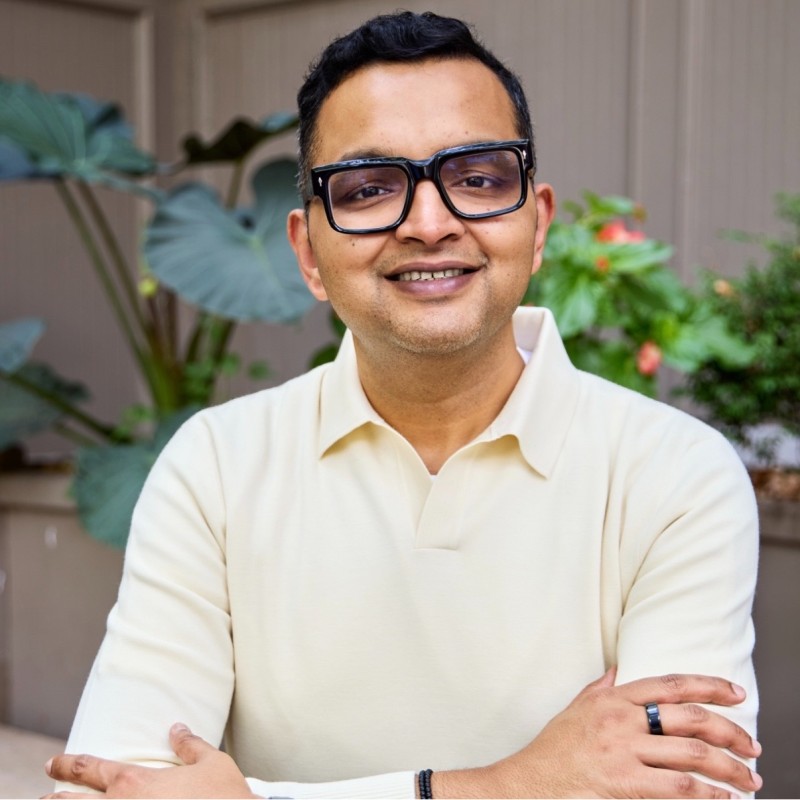
For Sanas CEO and Co-Founder Sharath Keshava Narayana, the shift is personal. Having started his career as a contact center agent, he sees supervised AI as an opportunity to elevate the role of experienced employees rather than eliminate their involvement.
"The people who have spent years handling these situations are the best people to supervise that work. They already understand the customers, the business, and what can go wrong on a call."
Sharath Keshava Narayana
Sanas CEO and Co-Founder
His argument is that the judgment developed through years of customer interactions could become more valuable as AI takes over routine conversations. Instead of managing one customer at a time, experienced agents could apply that expertise across multiple interactions, stepping in when automation falls short.
The approach reflects a broader shift in the industry: human expertise becoming a supervisory function rather than the primary mechanism for delivering every customer interaction.
The Bigger Opportunity Is Contact Center Economics
The most commercially significant element of Sanas' announcement isn't necessarily its AI technology. It's the potential change in workforce productivity.
A traditional contact center requires approximately one human agent for every simultaneous voice conversation.
Sanas is proposing a supervisory model that supports up to four concurrent conversations per employee.
That doesn't automatically translate into a fourfold productivity improvement. Actual performance will depend on the complexity of customer requests, how frequently AI requires intervention, and how effectively supervisors can divide their attention.
Nevertheless, the operating model introduces a fundamentally different way to think about contact center capacity.
Organizations could potentially increase conversation volume without proportionally increasing human staffing. Experienced employees could spend less time on routine interactions and more time managing exceptions, resolving complex problems, and ensuring service quality.
For business process outsourcing providers, this could also change the commercial model.
Rather than selling primarily on the basis of agent headcount or staffed hours, BPOs may have an opportunity to package AI-powered conversation capacity with human supervision, governance, and quality assurance.
The opportunity is significant, but so is the challenge: providers will need to demonstrate that higher conversation capacity translates into better economics without sacrificing resolution rates or customer satisfaction.
Human Oversight Could Become an Enterprise AI Requirement
As enterprises expand their use of autonomous AI, accountability is becoming an increasingly important consideration.
The challenge is particularly acute in industries such as healthcare, financial services, and telecommunications, where incorrect information or mishandled interactions can have serious consequences.
Sanas is positioning human supervision as an architectural component of AI-powered customer service, rather than an emergency fallback.
The distinction is important. In conventional automation models, escalation typically occurs after an AI system reaches its limits. Supervised AI introduces the possibility of human intervention while the interaction is still underway.
For enterprise CX leaders, that could offer a more practical balance between automation and accountability.
It also raises important operational questions about how supervisors identify conversations requiring attention, how interventions are prioritized, and what happens when multiple AI agents need human assistance simultaneously.
The ability to manage these scenarios reliably will be central to determining whether supervised AI can meet enterprise expectations for quality, compliance, and consistency.
A Strategic Expansion for Sanas
Sanas originally established its position in enterprise communications through real-time speech technologies, including accent translation and speech enhancement.
Supervised AI represents a broader ambition.
Instead of focusing exclusively on improving how people communicate, Sanas is entering the market for orchestrating how humans and AI collaborate during customer interactions.
That moves the company closer to the strategic conversations traditionally associated with contact center platforms, conversational AI vendors, and enterprise CX infrastructure providers.
It also places Sanas in a potentially valuable position within the emerging AI contact center technology stack.
The company isn't simply introducing another autonomous voice agent. It's proposing an operating layer through which enterprises can manage AI conversations and apply human judgment when necessary.
Whether that becomes a distinct enterprise technology category remains to be seen, but the underlying requirement is likely to grow as more organizations deploy AI agents into production environments.
The Questions That Will Determine Adoption
The concept is compelling. Its success, however, will depend on how the model performs under real-world operating conditions.
Several questions stand out.
How many conversations can one person realistically supervise? Four simultaneous interactions may be manageable when most conversations are routine. The equation changes when multiple customers require human intervention at the same time.
What happens to customer experience? Avoiding transfers is valuable, but enterprises will need evidence that supervised AI can maintain or improve first-contact resolution, customer satisfaction, and overall service quality.
How does the workforce adapt? Supervising several AI conversations requires different skills from handling one customer interaction. Contact centers may need new training programs, performance metrics, and compensation structures.
What are the actual financial returns? Enterprises will need to compare the combined costs of AI inference, software, implementation, supervision, and quality assurance against existing staffing models.
These are not reasons to dismiss the approach. They are the measurements that will determine whether supervised AI becomes an operational standard or remains a promising concept.
CXF Analysis: The Future of Contact Centers May Be Supervised Autonomy
The contact center industry's AI debate has largely focused on how many human interactions can be automated.
Sanas is asking a more interesting question: How much customer service can one experienced employee effectively oversee when AI handles the routine work?
That distinction matters.
The next phase of enterprise AI adoption may not be defined exclusively by autonomous systems replacing human tasks. It may be defined by systems that allow human expertise to extend across significantly more interactions.
Sanas Supervised AI offers an example of that emerging operating model.
The technology still needs to demonstrate measurable improvements in production environments. But the strategic direction deserves attention.
The future of contact center productivity may depend less on removing humans from conversations and more on multiplying the value of their judgment.
Stay updated with cx news
Subscribe to our newsletter for the latest insights and updates in the CX industry.