July 17, 2026 • 4 min read
Better Contact Center AI Drives Interaction Volumes Up, Not Down, Finds Zendesk

Director of Content & Market Research
July 17, 2026
Ten years ago, as contact centers added live chat, messaging apps, and social channels, contact volumes spiked.
The promise of palming contacts to “lower cost” channels didn’t exactly go to plan and, instead, contact volumes and overall costs increased.
Why did this happen? Because customers had more ways to contact the business, prompting them to reach out in situations where they previously wouldn't have.
Some organizations saw this as a positive trend. After all, if customers were more willing to communicate their problems, organizations could resolve them and protect those relationships.
Yet, many did not. Under-resourced contact centers focused on “deflecting” and “containing” customers, strapping them into doom loops in a desperate attempt to ease costs.
The result? Customer satisfaction (CSAT) declined.
Consider the American Customer Satisfaction Index. It highlights how from 2017 to 2022, cross-industry CSAT rates dropped from 76.9 to 73,0, falling year-over-year.
Of course, there may well have been other factors, and CSAT rates have returned to their previous levels.
But now the conversation has shifted. Instead of adding more channels, contact centers are adding AI.
As that trend kicks into gear, the contact center industry risks making the same, old mistake.
Contact Center AI Is Driving Interaction Volumes Up, Not Down
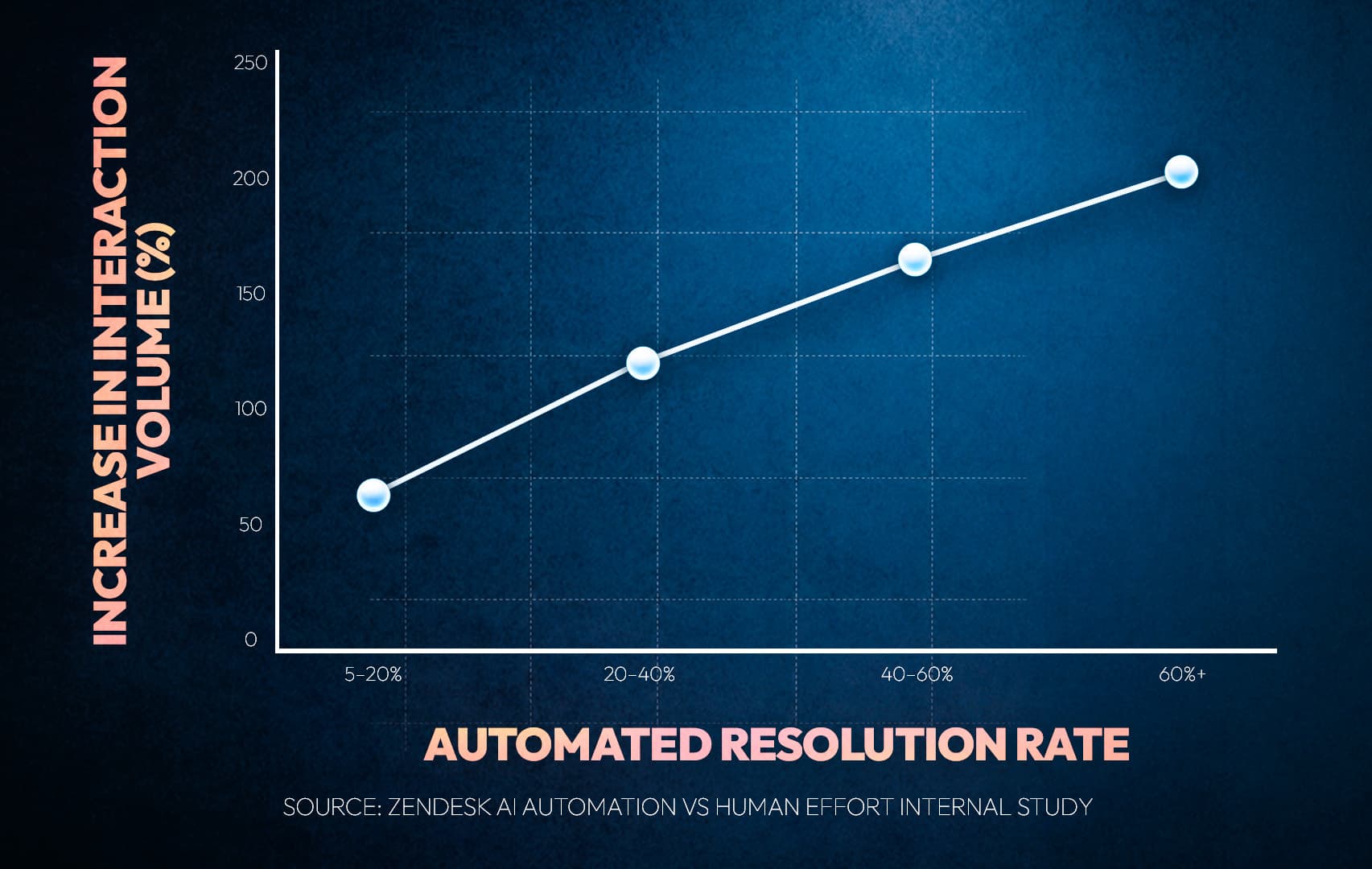
Internal Zendesk research, shared by its CTO Adrian McDermott, shows that higher self-service automation rates correlated with faster contact volume growth.
The CRM giant quizzed many of its Zendesk AI customers, which - on average - had automated 41% of their total interactions. Yet, overall, their total contact volumes had increased by approximately double.
As a result, human contact center agents are handling more customer contacts, not fewer.
Citing these statistics, McDermott believes that this is because when service becomes more efficient, customers are more likely to seek support again and ask new questions.
In doing so, he cited Jevons Paradox. The economic principle states that when a technological process becomes more efficient, use increases, rather than decreases.
“AI isn't skimming from a fixed pool of work,” explained McDermott. “It is absorbing demand the business never could have afforded to serve with people alone.”
“AI is a second kind of labor, not just a substitute for humans.”

Overall, Zendesk’s study found that the median workload of human customer support agents increased by 87%, requiring contact centers to hire additional staff to keep up with demand.
However, McDermott stressed that the average human agent headcount only rose by 3.5%.
That doesn’t mean agents are working longer hours at an occupancy rate of over 90%. Instead, the CTO indicated that these organizations are driving greater efficiency by implementing new solutions, such as Agent Assist.
Is the Contact Center Industry Risking the Same Old Mistakes?
More contact centers are adding AI to reduce contact volumes, and many anticipate headcount reductions as a result.
Research from Valoir backs this up: 22% of contact centers plan to cut headcount within the next 12 months, and 19% already have.
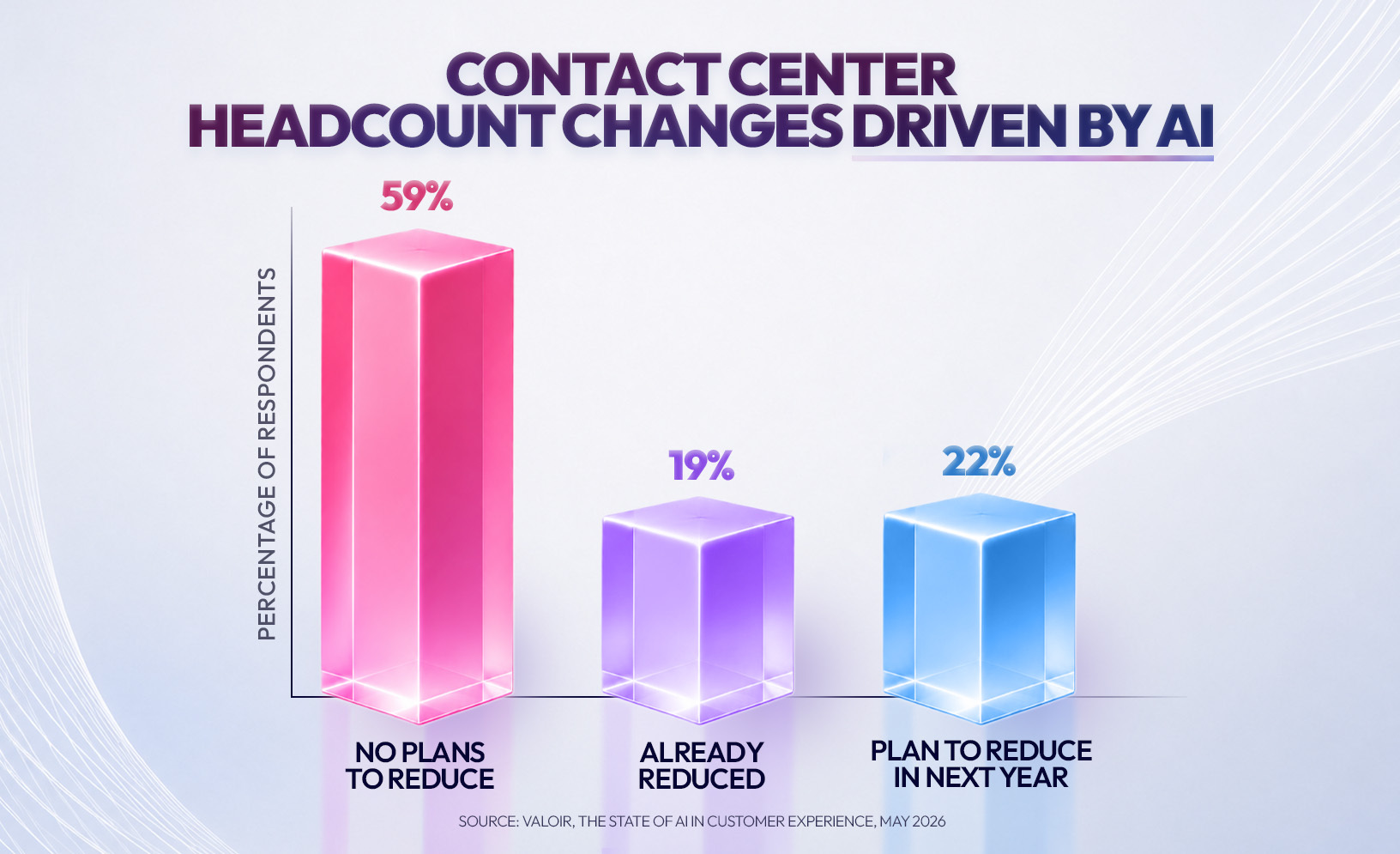
Yet, Zendesk's research shows the expected drop in contact volumes isn't materializing, and improved AI-led experiences are giving customers more reasons to reach out, not fewer.
Ultimately, this creates a real risk: brands that moved too hastily on headcount may need to rehire as their AI strategies mature.
Alternatively, they may fall back and embrace old habits, blocking escalation routes instead of designing for the best possible customer experience.
If that happens, the doom loops of the digital-channel-expansion era will come back stronger.
A Final Takeaway
The real takeaway from this research isn't that AI increases demand as it matures; it's that AI is improving service experiences, and that improvement itself is driving more contact.
The trouble is, CFOs may not see it that way. They're more likely to see rising costs across both AI and human labor.
That's why organizations need to do a better job correlating the impact of contact center AI with business metrics, not just customer and employee ones.
At a broader level, customer service needs to become a part of a brand’s overall revenue intelligence strategy.
The onus also falls on conversational AI vendors. It's no longer enough to pipe data into a third-party business intelligence (BI) tool like Tableau or Power BI; vendors need a deeper strategy for ROI analytics.
Without that, service teams risk being pushed right back into the tactics of ten years ago, designing for cost rather than the best experience.