
October 22, 2026 • 29 min read
11 Revenue Intelligence Solutions & How They Differentiate in 2026

Director of Content & Market Research
October 22, 2026
Revenue intelligence is evolving from a concept into an execution engine for growth.
Right now, that shift matters as enterprises scramble to grow, as evidenced by the sharp rise in enterprises hiring Chief Growth Officers and Chief Revenue Officers.
Yet, these leaders aren't looking at growth in isolation. They want profitable growth that increases customer lifetime value (CLV).
As a result, they're looking beyond traditional sales metrics like pipeline forecasts and deal closes and turning to broader revenue intelligence solutions.
What Is Revenue Intelligence?
Revenue intelligence uses AI analytics to turn fragmented revenue data into actionable insight.
By bringing data together from the CRM, ERP, customer communications, and other sources, revenue intelligence reveals where revenue is won and lost across the customer journey, from marketing through to sales and customer success.
Each CX team then becomes connected around a shared view of revenue performance.
With this view, departments gain a richer understanding of opportunities to add or sustain revenue across their customer base, enabling proactive actions to drive revenue growth.
It also enables marketing, sales, and customer success to collaborate strategically, optimizing moments within the customer lifecycle that are critical to CLV.
Right now, such a revenue intelligence strategy may seem like a pipe dream.
However, as tech vendors embrace the concept, revenue intelligence can become part of the business flow, informing everyday decisions and actions to enable more predictable and scalable growth.
That said, it requires not just a technology change but a broad organizational change.
“Taking a revenue intelligence tool and just deploying it is only step 1A. Organizations need shared goals, clear accountability, and the authority to act across departments, with fewer silos.”

What’s Included in a Revenue Intelligence Solution?
Revenue intelligence is still an emerging category, and no vendor covers everything a complete solution may eventually include. Each is still building out its capabilities.
That said, a revenue intelligence solution should combine some of the following elements:
- Multisource data capture: Automatically pulls in calls, meetings, email, chat, CRM, and third-party data for analysis.
- Pipeline and forecasting: Inspects pipeline, detects deal risk, and generates sales forecasts.
- Renewal and expansion insight: Identifies upsell and renewal opportunities and shows which revenue is at risk and why.
- Conversational intelligence and coaching: Analyzes customer conversations to surface revenue insights, improve rep performance, and guide coaching.
- Cross-functional visibility: Provides a unified view across sales, marketing, and customer success, tied to customer lifetime value.
- AI-driven recommendations: Moves beyond reporting to recommend and coordinate next actions, perhaps with purpose-built agents.
- Fits existing systems: Works alongside existing CRM and tools, surfacing insights where teams already work.
By piecing the elements together, solution providers can develop a revenue intelligence layer that converges the organization around a more holistic growth strategy, without wholesale organizational and hierarchical changes.
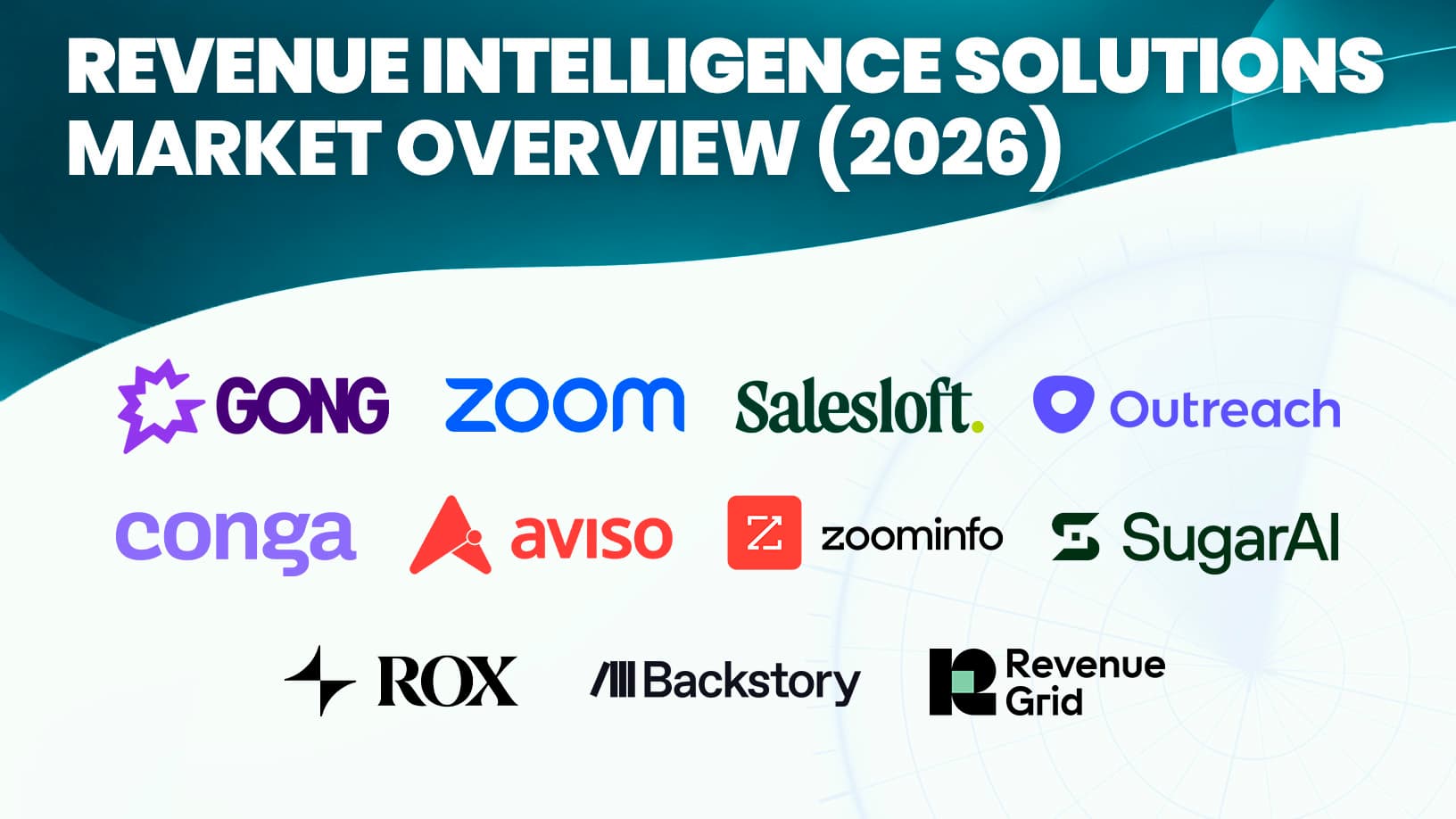
Below is a list of 11 tech providers and an overview of their fast-evolving revenue intelligence solutions.
11 Revenue Intelligence Solutions
The revenue intelligence market is converging around three player groups:
- RevOps platforms expanding into sales execution
- Legacy CRM platforms using broader data and analytics to optimize growth
- Sales intelligence/coaching providers turning interaction data into actionable guidance.
The 11 following revenue intelligence solutions providers will fit one of those categories. Yet, each has its own strategy for optimizing growth at both the rep and company level.
1. Gong
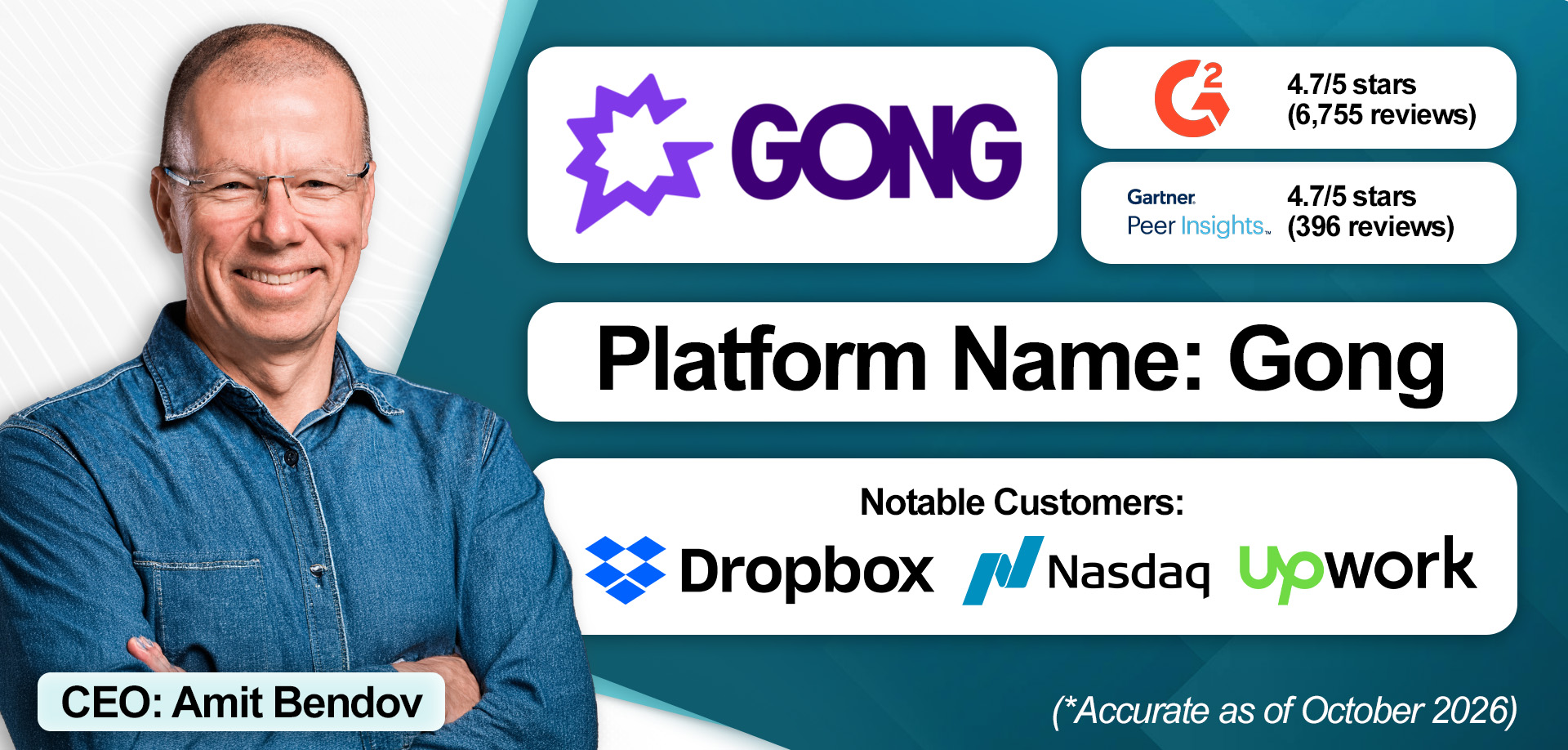 Gong began as a call recording and sales intelligence tool, but it has since repositioned itself as a Revenue AI Operating System (OS).
At the core of the OS sits a revenue graph that organizes the interaction data Gong captures. Gong positions this graph as the base layer for everything it builds on top. That includes tools for deep research, a theme spotter, and cross-account "ask anything" queries to better understand what's driving sales and make faster, data-backed decisions.
The vendor is increasingly using this intelligence to scale best practices across the field. With its AI Builder, sales teams can pinpoint what works, turn those insights into playbooks, and roll them out to reps, accelerating the adoption of new sales strategies.
Gong Enable extends this further. It pinpoints skill gaps from real customer calls, offering AI roleplay scenarios so reps can practice "winning" behaviors ahead of their next live meeting.
Few competitors can link training data to closed revenue so directly.
Another differentiator is in Gong’s CRM-agnostic approach, which suits organizations that want to standardize multiple sales functions even when those functions run on different sales tools.
Lastly, Gong delivers industry-specific "revenue AI", with configurable capabilities, a partner ecosystem, and dedicated go-to-market resourcing for targeted sectors. These chiefly include financial services, healthcare, manufacturing, and technology.
“While it has expanded far beyond its roots in conversational intelligence and sales coaching, it's still best-suited - with tools like Gong AI Builder and Enable - to high-growth teams that prioritize behavioral change as the core means of building revenue.”

Standout Features
- Revenue Graph: Gong organizes customer interactions into a revenue graph and builds AI agents on top of it, alongside leader-facing tools like deep research, theme spotting, and cross-account “ask anything” to empower new users with revenue insights.
- Seller Coaching and Empowerment: Via Gong Enable, users can pinpoint skill gaps from real customer conversations and offer AI roleplays to develop those, directly linking training to closed revenue. That’s a unique capability in this space.
- Industry-Specific Innovation: Gong combines configurable industry capabilities, ecosystem partnerships, and dedicated go-to-market resourcing to deliver unique value across the financial services, healthcare, manufacturing, and tech sectors.
How Much Does It Cost?
Gong adjusts its pricing based on the number of users and business priorities, providing custom quotes. Request a customized proposal from Gong here.
2. Zoom
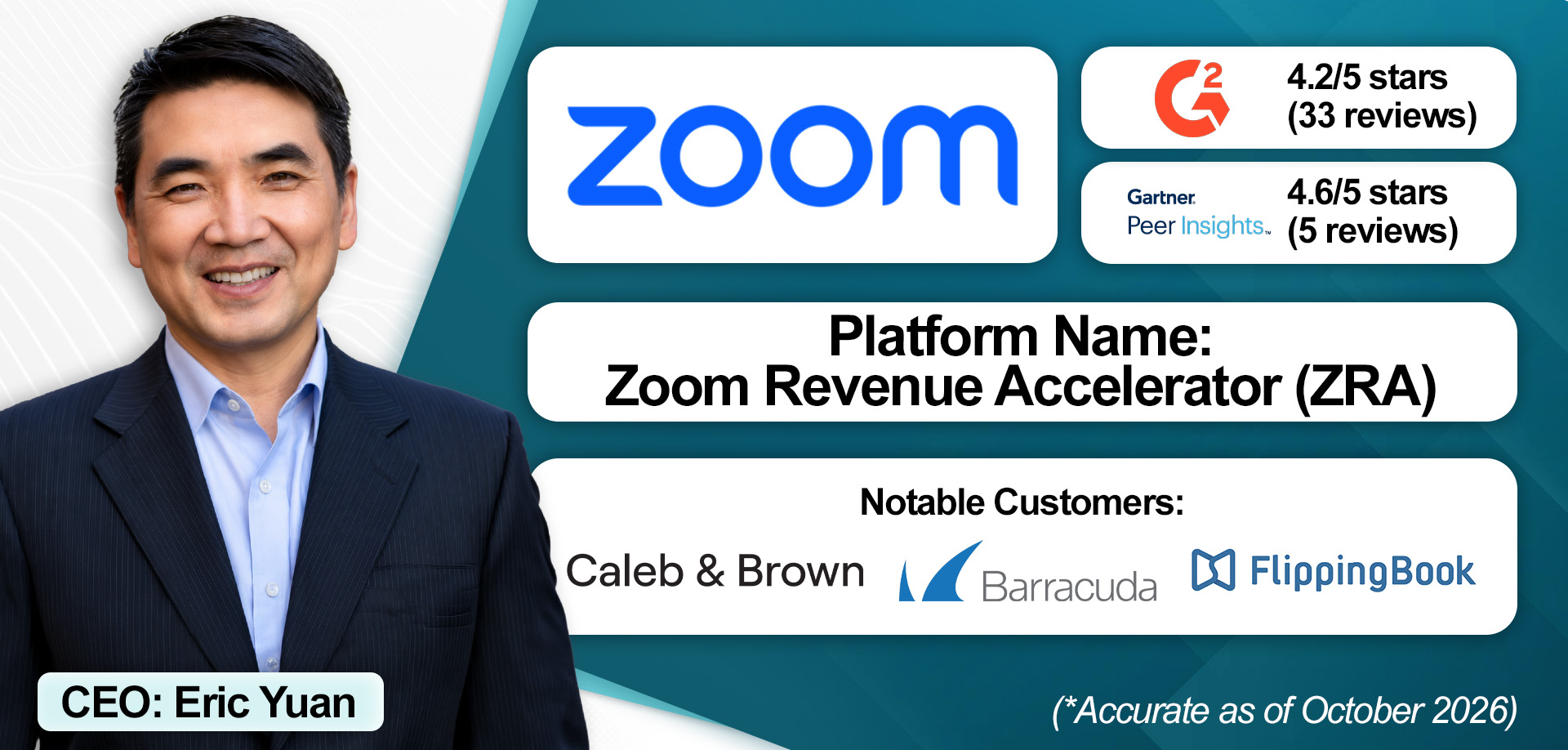
In July 2026, Zoom bought Common Room, a buyer intelligence solution that overlays the sales stack, connecting prospect and customer signals to guide sales teams on who to engage next. By October, this capability had become part of the Zoom Revenue Accelerator (ZRA).
From there, ZRA guides sales teams during the following conversations before mining them to gather intelligence, from isolating the behaviors that drive positive outcomes to spotlighting deal risks. Through ZRA Forecast, it can also use that intelligence to update the forecast.
By piecing these solutions together, Zoom builds what it (like Gong) describes as a “Revenue OS”, which spotlights deal opportunities, routes them through to reps, updates those deals with AI agents, and rolls that into a defensible forecast.
As it does so, Zoom comes to market with key differentiators. First, it collects first-party data of sales conversations through its Meetings platform, where many sales conversations happen. That includes context such as who was there, who led the conversation, what was discussed, and more. Competitive tools lack this insight.
Zoom also has an opportunity to pull context from the service conversations happening elsewhere on its platform, through the Zoom Contact Center, to unlock additional insight into where CLV is won and lost. The provider’s new Unified Context Layer, which sits across its platform, suggests this might be the direction of travel.
Finally, as many sales teams already use Zoom Meetings and Workspace, Zoom can play a headless game, surfacing insights and artifacts on top of the sales stack, with its CRM-agnostic positioning complementing this strategy.
“Zoom has the accurate voice of the customer and the seller. It has a data set with truth, relevance, context, and recency that not a lot of people have, and they could leverage it in an agentic world far more than others.”

Standout Features
- First-party Conversation Data: The provider captures rich first-party data from customer and seller conversations, with structured deal context, such as who participated.
- The Sales-Service Opportunity: Zoom CX Insights analyzes service conversations, giving more insight into where CLV is won or lost. By combining sales and service intelligence, potentially through its Unified Context Layer, Zoom can deliver a more comprehensive view of revenue intelligence.
- Flexible Position in the CX stack: With strong enterprise penetration, Zoom can build revenue intelligence surfaces and artifacts on top of the tools salespeople already use, supporting a CRM-agnostic, headless approach to revenue orchestration.
How Much Does It Cost?
The Zoon Revenue Accelerator (ZRA) is available in three bundles: Essentials, Premium, and Elite. The first two cost $66 and $99.99 per user, per month, respectively. The Elite package is available through a custom quote. Learn more about ZRA pricing here.
3. Salesloft
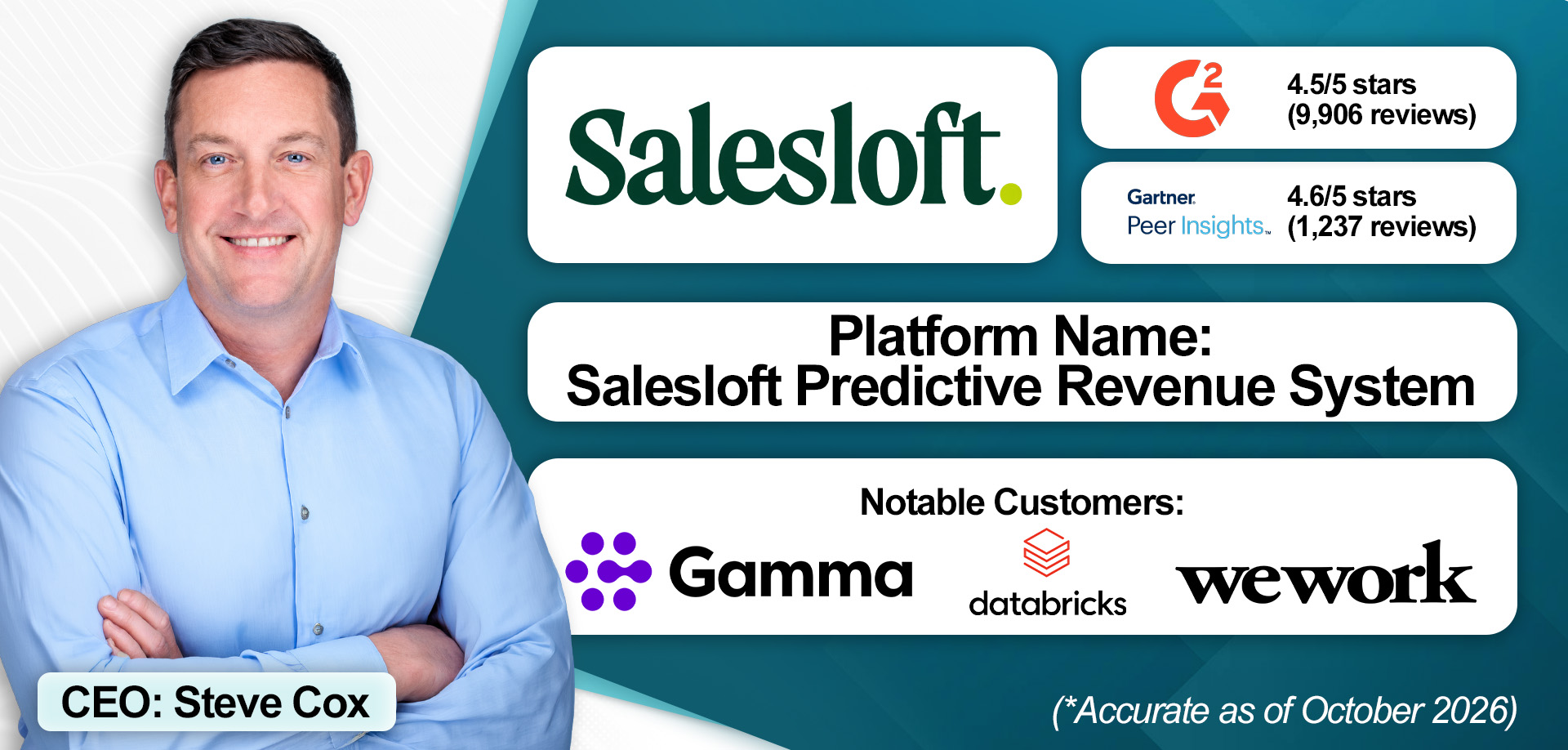
After merging with Clari, Salesloft launched its Predictive Revenue System. The platform brings Clari’s forecasting and deal inspection together with Salesloft’s engagement and orchestration, closing the gap between knowing and doing.
As a result, forecasting, pipeline, and sales workflows now sit in one place, so organizations can decide what to do next much faster than when marketing automation, CRM analytics, forecasting, and action-taking are handled separately. The vendor argues this offers a quicker route to "throwing gas on the fire" when things are going well, or to pivoting when they are not.
Salesloft’s network of revenue agents is another key strength. Account, Opportunity, and Research agents work together to generate pipeline, research accounts, detect buyer intent, and craft personalized outreach. As deals progress, they help accelerate sales by flagging risks and guiding reps toward the actions most likely to move opportunities forward.
Elsewhere, an MEDDPICC (Metrics, Economic Buyer, Decision Criteria, Decision Process, Paper Process, Identify Pain, Champion, Competition) Extraction Agent automatically pulls data into deal summaries and CRM records, following a trusted framework.
The merger has also broadened Salesloft’s reach across buyer personas. Historically, Salesloft focused on sales reps, while Clari catered primarily to CROs and CFOs, with a growing focus on account executives (AEs). Together, the two businesses bridge that gap, expanding the range of revenue leaders and frontline teams they can serve.
“Separately, Clari and Salesloft each delivered value. Together, they connect revenue insights with action, helping teams see where they stand and what to do next, without juggling separate tools for CRM analytics, marketing automation, forecasting, and execution.”
Standout Features
- Sales Execution: Salesloft unifies forecasting, deal inspection, pipeline, and seller workflows, helping teams quickly quantify the impact of workflow changes and to decipher what actions to take next. In this sense, it helps teams quickly adapt to changing conditions and accelerate deals.
- Revenue Agent Network: The vendor has pieced together a network of AI agents that run account research, opportunity prioritization, personalized outreach, CRM updates, and more. As they do so, these agents help automate routine tasks for sales reps, surface risks, and guide them to the next best action.
- User Breadth: Salesloft once prioritized the sales rep. Now, with Clari, it serves AEs, CROs, and CFOs, delivering a unified platform that spans the revenue organization, from pipeline generation through forecasting and execution.
How Much Does It Cost?
Salesloft doesn’t publicly publish pricing. Instead, all packages are quote-based and require a consultation with its sales team. Talk to Salesloft here.
4. Outreach
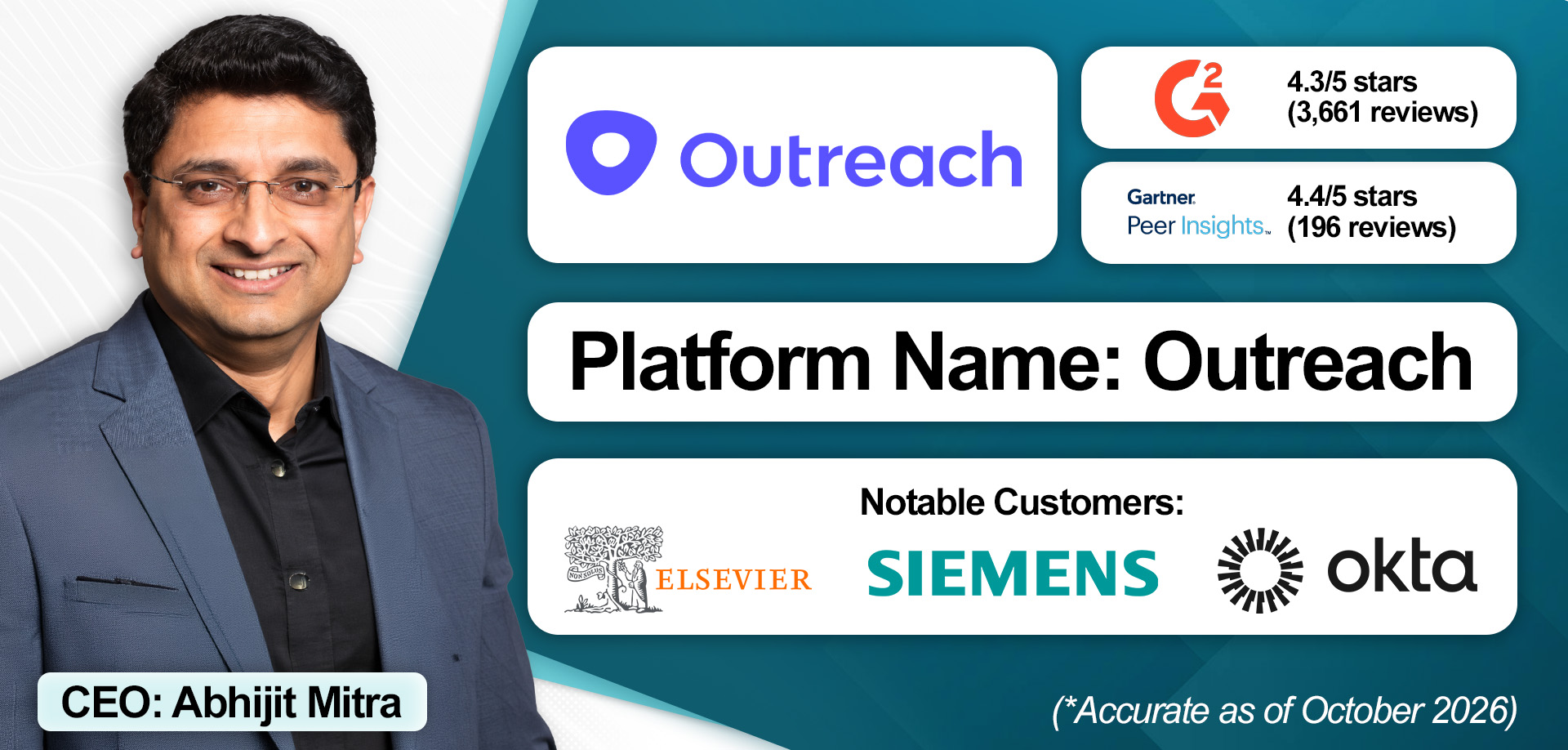
Outreach has invested significantly in data interoperability. It now supports both MCP client and server architectures, allowing external AI models to read and update customer records, while internal agents can ingest data directly from warehouses without duplicating it. As a result, brands can consolidate revenue insights more easily.
From there, Outreach leans into agentic workflows. Its Research Agent and Deal Agent work natively within a CRM system to summarize revenue signals and automate follow-up.
Deal Agent is particularly notable. It recommends CRM updates via Slack or the Outreach app. If the seller agrees, the agent revises the record. This reduces the seller's administrative burden while improving data quality and forecast confidence.
There are also other pre-configured agents. For instance, a Meeting Prep Agent assembles briefs from account, attendee, and opportunity context, so sellers spend less time preparing and more time in conversations. Meanwhile, Outreach provides an “orchestration layer” where RevOps teams can build, customize, and operationalize their own AI agents.
Alongside AI agents, its AI assistant for sales reps, “Omni”, also catches the eye. It lets sellers ask questions and take action across accounts, opportunities, prospects, and meetings, whether in-app or (again) in Slack.
That ability to make Outreach's agents available through Slack is a differentiator. Another is how the platform interacts with LinkedIn. Indeed, it connects LinkedIn activity with intent signals, without manual syncing. That's a unique capability in the revenue intelligence space.
“The big focus for Outreach is helping customers move from task-level automation toward a fully agent-led way of running revenue. That focus makes it a solid choice for brands ready to move toward an agentic revenue operating model.”
Standout Features
- Data Interoperability: Outreach supports both MCP client and server architectures, enabling external AI models to update customer records while allowing its own agents to draw on data from multiple sources without duplication. This helps consolidate revenue insights.
- In-CRM AI Agents: Outreach’s Research and Deal Agents operate directly within a company’s CRM, surfacing revenue signals and automating workflows. The Deal Agent also generates customizable AI deal summaries, enabling organizations to tailor insights to specific processes and priorities.
- Slack Compatibility: Omni, Outreach’s universal sales assistant, brings revenue intelligence into Slack, allowing sellers to ask questions and access insights without leaving the collaboration platform. The Deal Agent can also deliver CRM updates through Slack, making Outreach particularly appealing to organizations deeply invested in the platform.
How Much Does It Cost?
Outreach is available via either a seat-based or consumption-based model. Its consumption pricing is split into five tiers, each designed to support a different entry point for revenue intelligence. Unpack Outreach’s pricing models here.
5. Conga
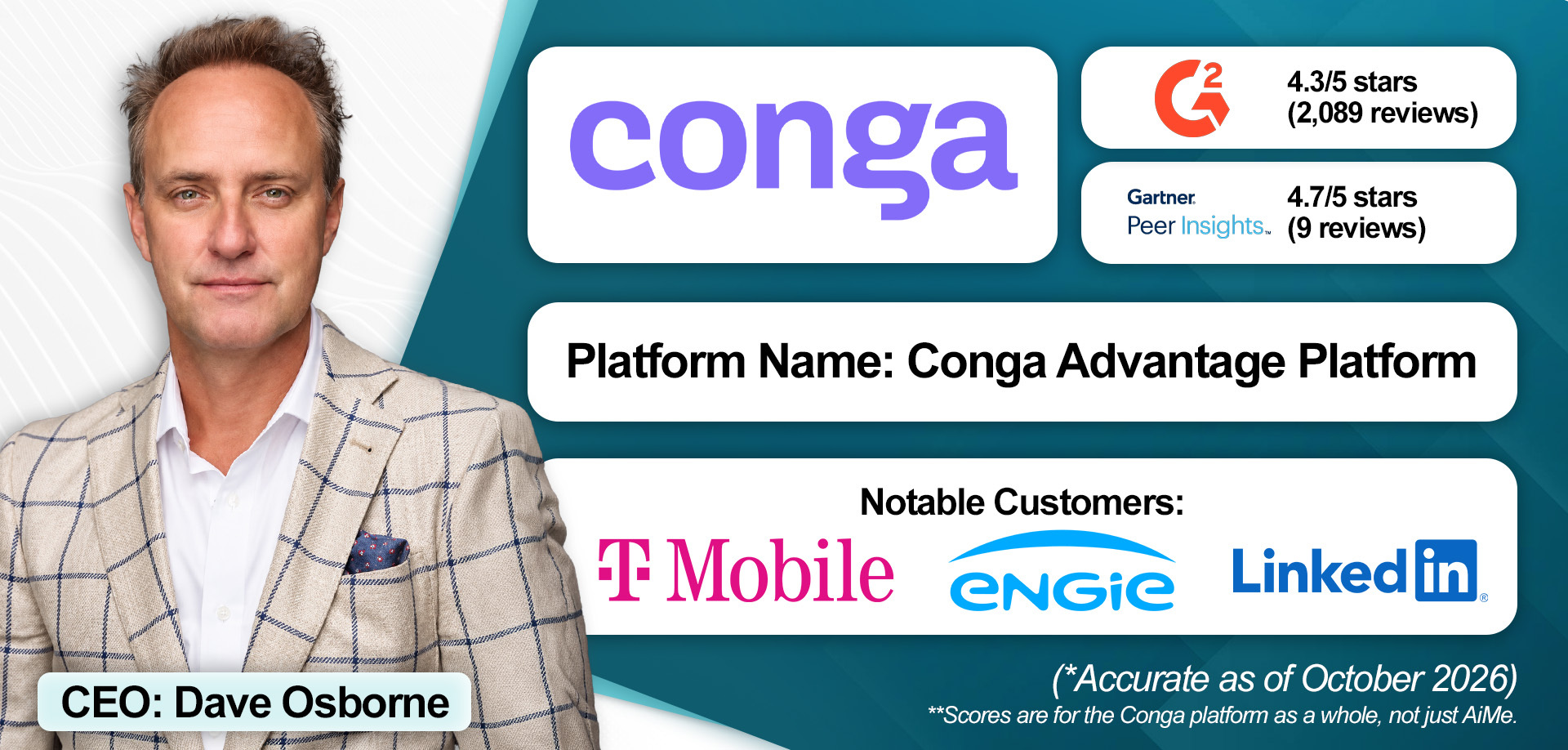
Conga enters the revenue intelligence space from commerce rather than sales, and its strengths lie in what most competitors do not offer.
While others concentrate on the conversation, Conga prioritizes the contract and quote. This matters most for organizations with complex product listings, where revenue tends to fall through the gaps between departments. Conga is the plug.
A key part of this is AiMe, which launched in March 2026. It's an intelligence layer that runs across the Conga Advantage Platform, designed not only to uncover opportunities to grow revenue but also to reduce the cost of sales.
Among its core capabilities, AiMe helps sales reps identify deals likely to stall and the terms that may help close them. It also includes agents that act on the insights it collects, assisting with quote creation and pricing at the point of sale.
Meanwhile, other agents pull new insights into the intelligence layer. These include agents that surface insights from across the Contract Lifecycle Management (CLM) cycle. That's a unique capability in this category.
Overall, this proposition aligns well with the needs of B2B companies with complex product bundles and lengthy legal and contracting cycles.
Finally, the Advantage Platform runs natively on Microsoft Dynamics 365 and SAP. This makes it an attractive choice for brands that center their ERP, CRM, and finance ecosystems around the two enterprise tech giants' platforms.
"Conga is more of a complex implementation, involving finance and legal as well as CX teams. However, it also delivers insights others can't."
Standout Features
- Contract-to-Quote Insights: Conga extends revenue intelligence into the contract and quote stages, uncovering why deals stall at the final hurdle. It goes beyond customer experience data, drawing insights from legal and finance systems to reveal friction across the deal cycle.
- AiMe: AiMe not only identifies revenue growth opportunities but also helps improve margins by highlighting sales process inefficiencies. By incorporating intelligence from the CLM and CPQ systems, it provides a more comprehensive view of where revenue is won, lost, or eroded.
- Microsoft and SAP Integrations: Conga runs natively on Microsoft Dynamics 365 and SAP, minimizing the integration burden for businesses with both brands’ ERP, CRM, and finance solutions.
How Much Does It Cost?
Conga offers customized quotes for its Advantage Platform, with pricing determined by the number of users, deployment scale, and modules selected. Contact the Conga sales team here to request a quote.
6. Aviso AI

Aviso AI’s AI avatars, powered by AI agents, are a flashy yet powerful differentiator within its revenue intelligence proposition.
Consider its AI SDR. It qualifies website leads to generate pipeline. Others guide reps during calls, coach them through simulated customer roleplays, and manage renewals by tracking customer product usage and churn risk.
These share a context layer: Halo. Aviso describes this as “the first AI Pane of Glass for Revenue,” connecting CRM context, conversational intelligence, and knowledge content. Every avatar interaction adds context, so the system learns over time.
Yet, it’s not just an intelligence layer. Halo is also designed to replace the CRM interface, connecting multiple systems of record and allowing users to update them from a centralized workspace, so teams no longer work within each system separately.
Sitting above Halo is MIKI. It extracts context from the system to orchestrate the actions of its avatars and 50+ preconfigured agents. For instance, MIKI may anticipate a difficult sales call and trigger a coaching simulation so reps can prepare when an AI agent flags an at-risk deal.
Then, there are two final strengths. The first is co-innovation. Many of Aviso’s agents began as custom builds for individual customers and were folded back into the core platform once their value was proven. The second is its hybrid pricing model, which blends outcome-based and seat-based elements. This helps buyers swerve spiralling costs as they deploy more agents.
Standout Features
- AI Avatars & Agents: AI avatars backed by 50+ preconfigured agents (plus an Agent Studio) cover prospecting, live call guidance, roleplay coaching, and renewals. Many agents began as customer-specific builds and were absorbed into the platform once proven.
- Aviso Halo: A shared context layer (“the first AI Pane of Glass for Revenue”) that unifies CRM, conversational, and knowledge data, and replaces the CRM interface with an interactive universal layer from which sales teams can update their systems of record.
- Hybrid Pricing Model: A hybrid outcome- and seat-based model pricing avoids the cost spiral of purely consumption-based models as more agents are added, enabling budget predictability. Interestingly, the vendor also pledges to buy out businesses locked into a vendor contract.
How Much Does It Cost?
Aviso AI blends per-seat and outcome-based pricing. However, it flexes its model depending on organizational size and requirements. Get a custom quote from Aviso AI here.
7. ZoomInfo
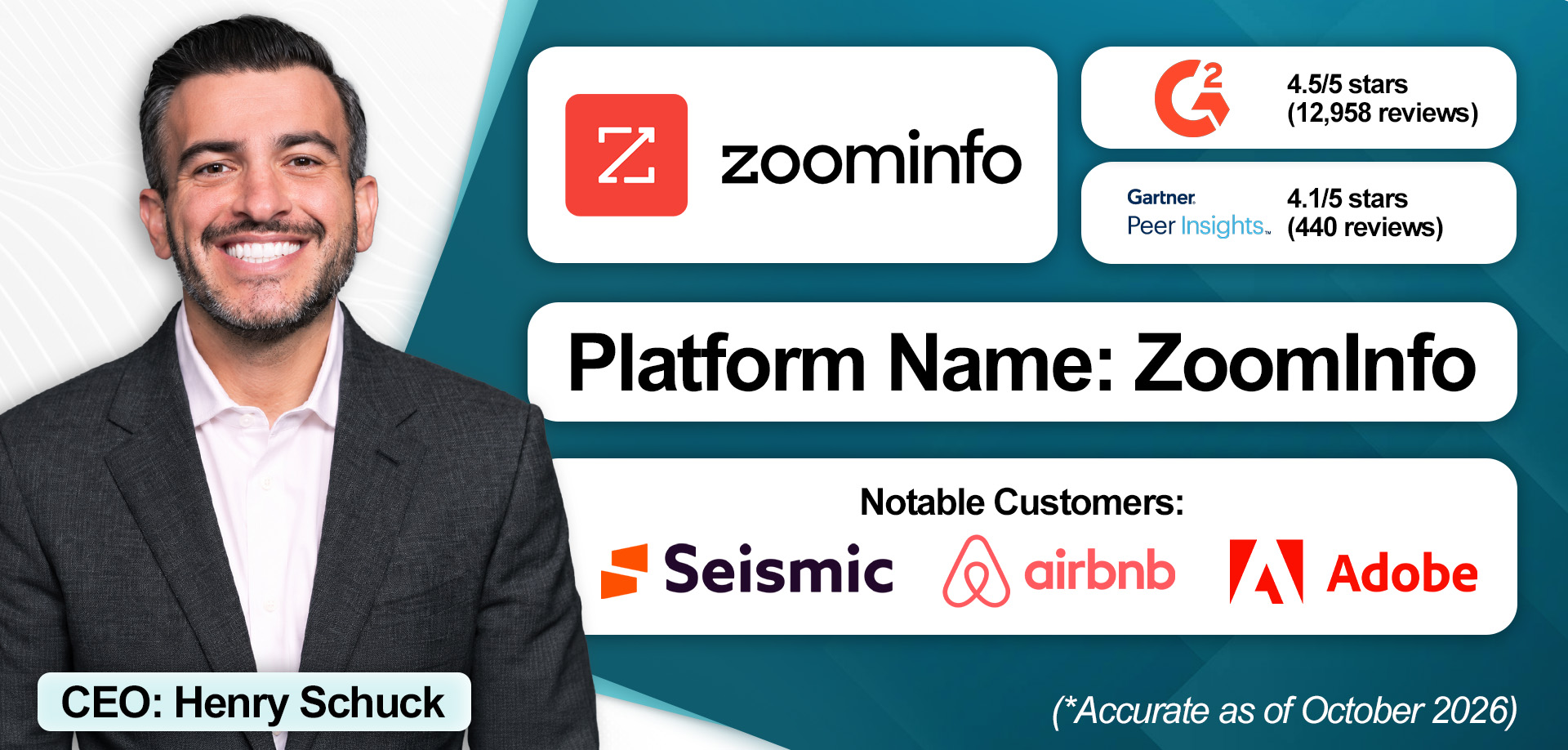
ZoomInfo began as a data provider, enriching sales platforms with a B2B dataset that now spans more than 500 million contacts.
From that starting point, it built a Context Graph that overlays its data onto a business’s CRM to identify the best B2B leads. The graph also tracks key events within those prospects, such as funding rounds or leadership changes, that signal buying intent, and it uses them to generate playbooks that sales reps can use to target those leads.
However, today, ZoomInfo is no longer only about supporting sales teams. It also delivers AI solutions for marketing and RevOps, and, thanks to its Workbounce acquisition, the Context Graph extends across call transcripts, internal communications, product documentation, account notes, Google Drive folders, Notion pages, and beyond.
The Context Graph forms part of the GTM.AI platform, which adds GTM Studio and GTM Workspace for execution.
GTM Studio is where teams combine data sources, assemble an audience, and orchestrate revenue plays. GTM Workspace, ZoomInfo’s unified seller environment, is where teams then execute those plays.
Meanwhile, the acquisition of DoubleO.ai enables ZoomInfo’s Agent Teams to coordinate pre-configured and custom AI agents, turning insights from its Context Graph into action. The Context Graph is also accessible through MCP, allowing external AI systems to tap into that intelligence.
Nevertheless, ZoomInfo’s core differentiator remains its deep proprietary data. This is particularly valuable for B2B teams operating at high volume and with short sales cycles, where fast, accurate lead targeting can make the difference.
Standout Features
- A Deep Proprietary Dataset: ZoomInfo began as a data provider, and its deep B2B dataset bolsters its customers' first-party data pools and helps target new prospects. That’s particularly valuable for B2B teams with high-volume, short sales cycles.
- Customer Acquisition Plays: The provider's Context Graph overlays ZoomInfo’s data onto a business’s CRM to identify the best B2B leads. It tracks key events within those prospects to trigger tailored customer acquisition plays.
- Revenue Execution Capability: The GTM.AI platform pairs the Context Graph with workflows and agents for execution. GTM Studio lets teams combine data sources, assemble an audience, and orchestrate revenue plays, while GTM Workspace, the unified seller environment, is where teams execute them.
How Much Does It Cost?
ZoomInfo Lite is free, with ten monthly credits or 25 with a Community Edition. Its broader platform is available via a consumption-based model or a hybrid model that balances consumption and seats. Brands must contact ZoomInfo to unlock further pricing details. Talk to ZoomInfo’s sales team here.
8. SugarAI
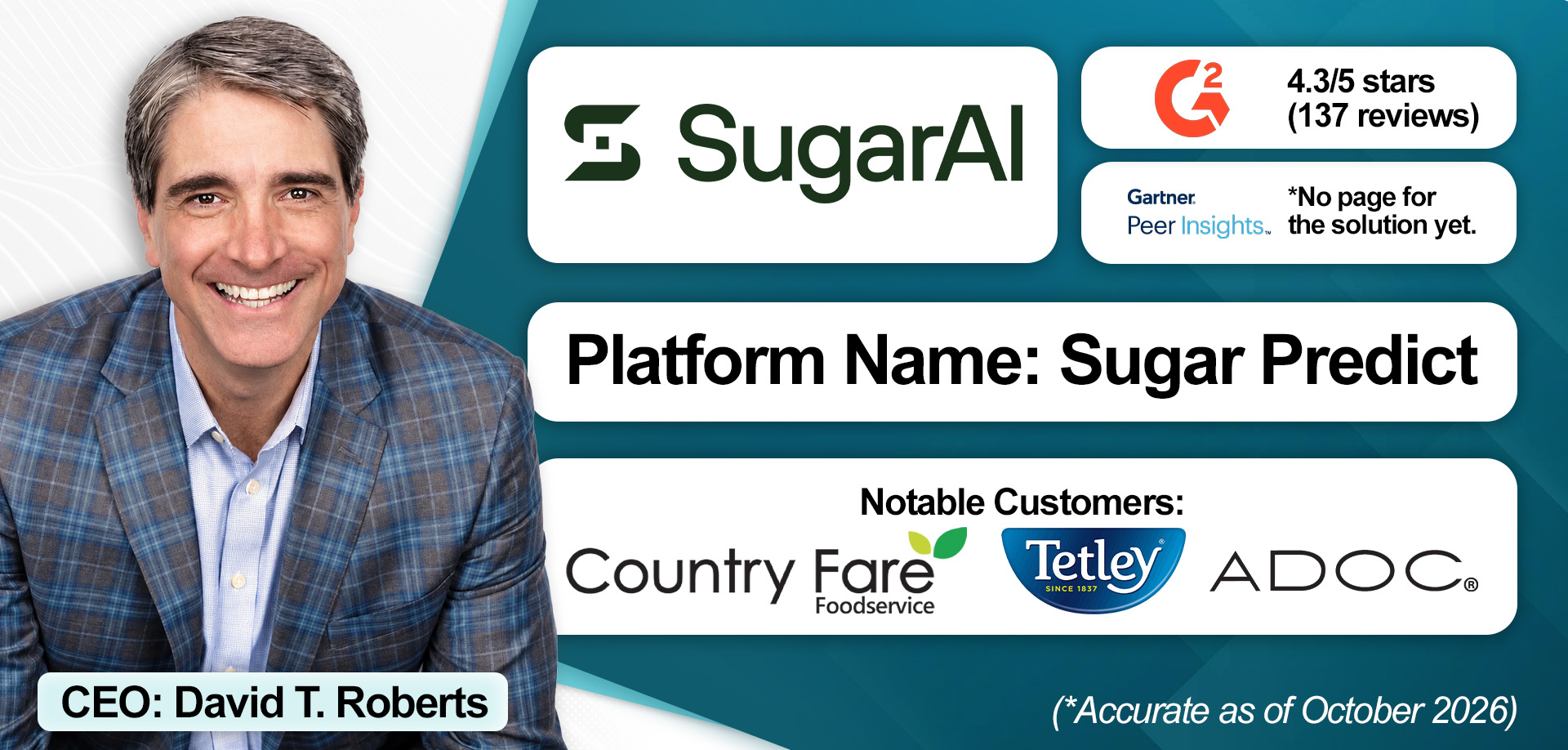
SugarAI, formerly SugarCRM, rebranded in March 2026, signaling a deeper push into revenue intelligence rather than conventional sales force automation.
The vendor had been heading this way for some time, and its acquisition of sales-i in May 2024 put it ahead of much of the CRM space. That acquisition ultimately led to “Unified Intelligence,” in which SugarAI brings CRM and ERP data together and layers AI - through Sugar Predict - over the top to unlock new revenue growth opportunities.
For example, it can analyze order data from the ERP, spot purchasing patterns, and recommend cross-sell opportunities to existing customers. It can also flag at-risk accounts by combining ERP buying patterns with CRM service ticket history, triggering customer retention plays.
These are just two examples of use cases that other vendors would need extensive, tricky integration work to deliver. SugarAI makes them available out of the box.
Meanwhile, these use cases are especially attractive to its target market of manufacturers and distributors, which lack limitless pipelines and prioritize optimizing deals across every account.
Alongside Unified Intelligence, many customers also use the Faye Agent Builder (FAB). This add-on works across the Sugar platform, provisioning pre-built and custom AI agents that analyze Sugar data alongside web data, generate actionable insights, and recommend next steps while respecting existing SugarCRM security permissions. As a result, SugarAI can deliver revenue execution from within the existing CRM interface, with no need for an overlay.
“Through their ERP integration with the CRM, plus data from other sources, you get a more accurate representation of the revenue relationship, the opportunities, and the white space.”
Standout Features
- Unified Intelligence: Through "Unified Intelligence," SugarAI uniquely brings CRM and ERP data together and layers AI over the top to unlock revenue growth. It can recommend cross-sell opportunities from ERP order patterns and flag at-risk accounts by combining ERP buying patterns with CRM service history. Where other providers need tricky integration work, SugarAI offers these use cases out of the box.
- Manufacturing & Distribution Expertise: SugarAI's Unified Intelligence approach is particularly attractive to its target market of manufacturers and distributors, which don’t have limitless pipelines and prioritize optimizing deals across every account.
- Faye Agent Builder (FAB): This add-on operates across the Sugar platform, combining pre-built and custom AI agents to analyze Sugar and web data, surface actionable insights, and recommend next steps. By embedding revenue execution directly into the existing CRM interface, FAB enables teams to act on intelligence without relying on a separate solution.
How Much Does It Cost?
SugarAI intelligence is available as an add-on to its Standard+ package for Sugar Sell. It’s bundled into its Advanced+ and Premier+ offerings, which cost $98 and $155 per user, per month when billed annually. Learn more about SugarAI’s pricing here.
9. Rox
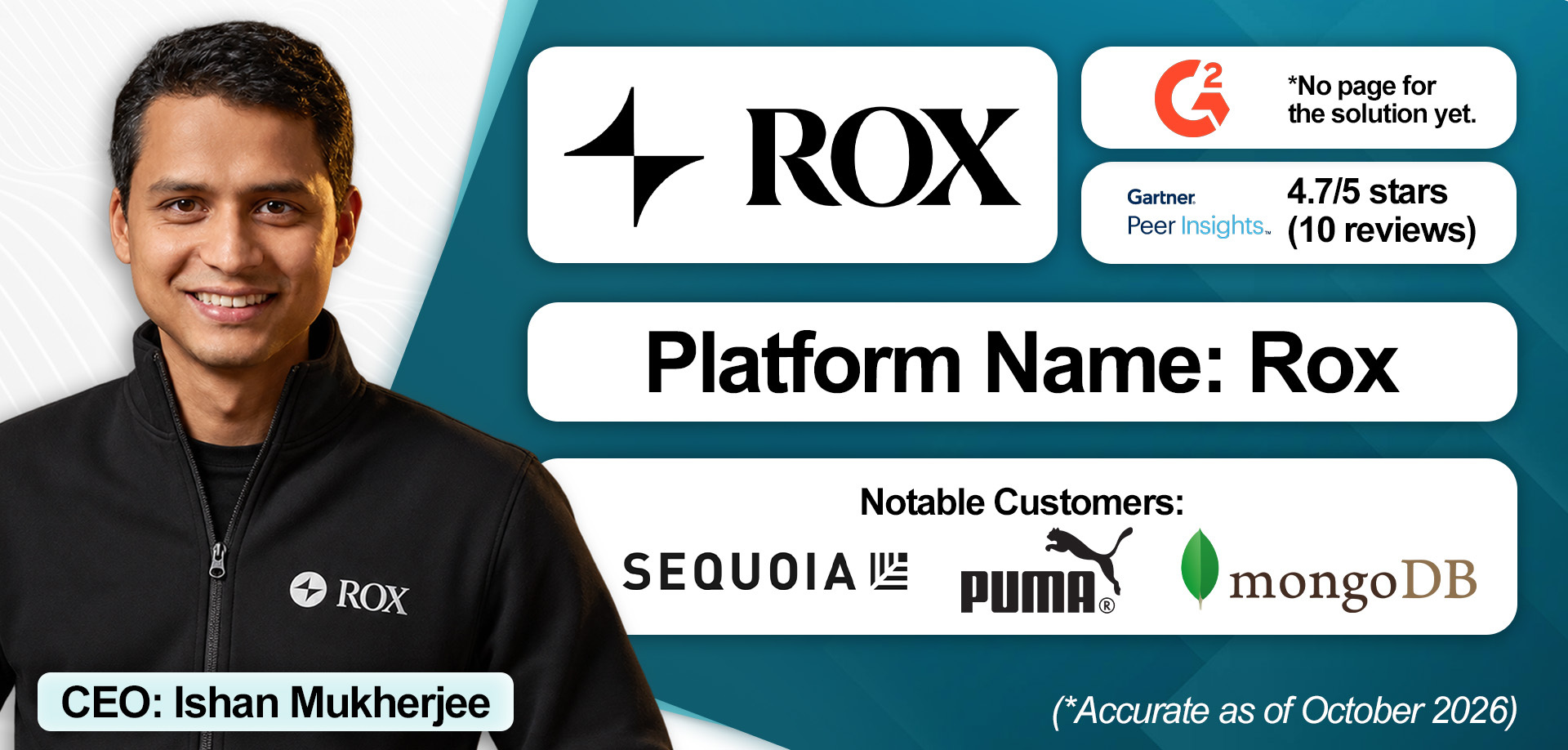
Rox assigns a dedicated revenue agent to each customer account. Drawing on data from the CRM, emails, calendars, documents, and data warehouse, the agent builds a holistic understanding of each account, enriched with external signals such as news and job changes.
The agent then continuously monitors prospects and customers for changes, surfacing signals that could affect buying propensity or customer lifetime value (CLV). When those signals warrant action, it alerts sellers so they can respond quickly.
When a rep has a question about an account, the agent answers it. It also prepares meeting briefs and drafts follow-up emails for review. At the same time, Rox tracks the questions reps ask, learns how they engage with customers, and suggests new workflows to automate more of their work.
The previously mentioned data warehouse connection is also worth a double take. It empowers revenue agents to gather information such as product usage, billing changes, and supply chain issues, providing a deeper understanding of the customer journey, as opposed to only what’s in the CRM.
Meanwhile, brands can quickly quantify the value of these agents through the Rox Value App, which measures Rox’s performance, the pipeline it sources, and the time it saves sales and success teams.
Lastly, Rox is well regarded for its customer support, providing each business with a forward-deployed engineer and growth strategist to speed up onboarding and time to value.
“By drawing on product usage, billing, and supply chain data, Rox is well placed to move further into retention and expansion use cases, which many in this category overlook.”
Standout Features
- Individual Revenue Agents: Each customer account gets its own revenue agent, acting as a dedicated analyst across fragmented data sources. It monitors signals that could affect buying propensity or customer lifetime value (CLV), alerting sellers to intervene when needed.
- Data Warehouse Strategy: The data warehouse connection lets agents gather information such as product usage, billing changes, and supply chain issues. This gives a deeper understanding of the customer journey than the CRM alone and triggers more sophisticated retention workflows.
- Customer Support: Rox offers a forward-deployed engineer and growth strategist to its customers. This helps brands get up to speed with the platform and accelerates time to value.
How Much Does It Cost?
Rox offers its solution to individual sales reps for $100 per user, per month, and smaller teams for $255 per user, per month. These packages include 10,000 and 15,000 actions, respectively. Enterprise deals require a custom quote. Contact Rox’s sales team here.
10. Backstory
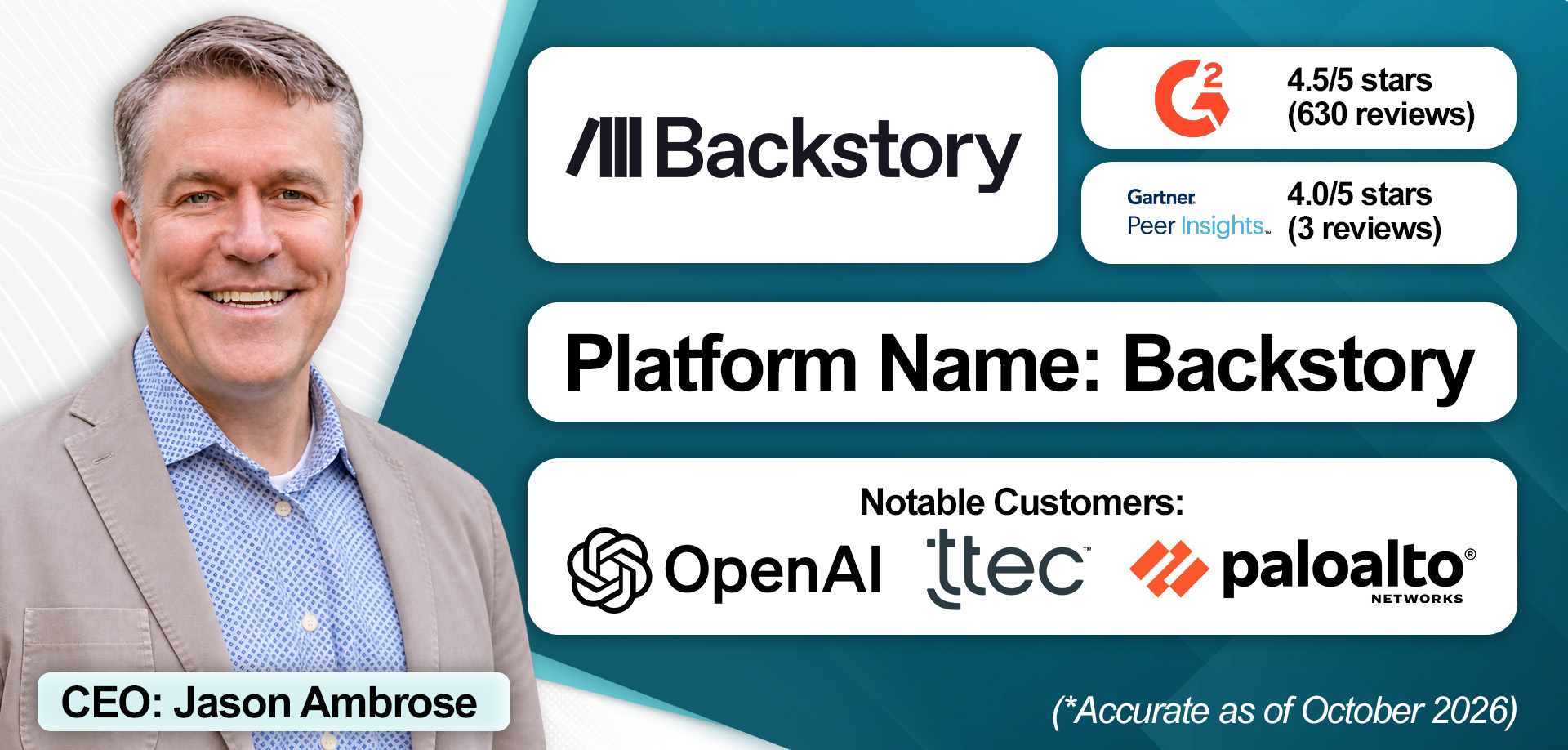
Like many competitors, Backstory (formerly People.AI) delivers a “revenue reasoning layer” that sits on top of a company’s sales stack.
It then aggregates that data with sources many competitors miss, including executive articles, podcast interviews, earnings calls, and company updates, while maintaining consistent definitions across its analytics and workflows.
From there, Backstory automatically surfaces insights about a prospect’s business, priorities, challenges, and leadership, giving sales teams the full "backstory."
While rich data is one differentiator, the vendor is also one of the first in this space to go headless, making its revenue layer available to AI assistants such as Claude, ChatGPT, and Microsoft Copilot, so sales teams can draw on these insights from wherever they prefer to work. This makes it a good fit for organizations looking to move away from the traditional CRM UI.
Meanwhile, its pricing approach is also disruptive. In the first year of the customer's contract, it follows a conventional consumption-based model, where tokens are passed through as a straight, unbridled expense. However, in year two, it uses that first year’s usage to forecast the credits the customer will need and sets pricing or budget accordingly.
As a result, customers get more predictable costs and can use the product throughout the year without repeatedly returning to their CEO or CFO for additional budget.
Standout Features
- Data Breadth & Interoperability: Backstory’s revenue reasoning layer sits on top of the sales stack and aggregates that data with sources many competitors miss to provide the full "backstory." Customers may also bring revenue data into AI chats through Backstory MCP...
- Headless UI: The provider is making its revenue layer available to AI assistants, so sales teams can get insights from wherever they prefer to work. Ultimately, this aligns well with businesses looking to move on from the traditional CRM interface.
- New Take on Consumption-Based Pricing: Backstory customers pay for the credits they use in year one, and in year two the vendor forecasts the credits they will need and sets pricing accordingly. This ensures more predictable costs.
How Much Does It Cost?
In the first year, Backstory charges a platform fee for each active user (not viewer) plus a pre-packaged allowance for AI. It then recalculates the price at the start of every year, based on actual usage. Learn more about Backstory’s unique pricing model here.
11. Revenue Grid
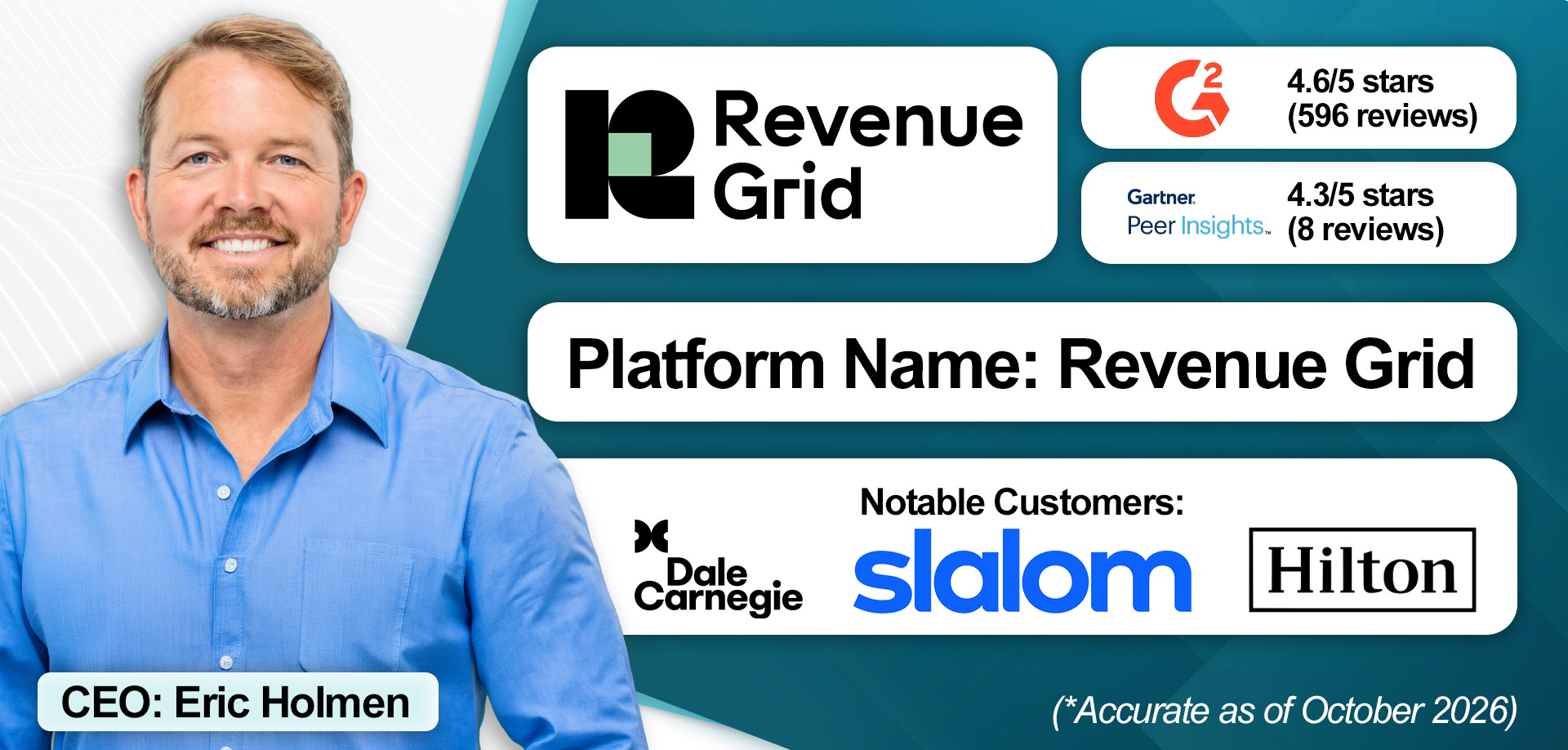
Salesforce has continued to expand its native revenue intelligence capabilities, as its Piper Agent launch illustrates. Yet many of its customers still implement Revenue Grid.
The reason is depth. Revenue Grid’s bespoke Knowledge Capture solution logs sales activities and conversational insights directly into Salesforce, then enriches the raw data with context, relationships, timelines, and intent, organizing it in a dedicated knowledge lake.
From there, Revenue Grid helps brands act on that data through Kora, its AI assistant that answers sales teams’ questions, pulls reports, builds cases, and drafts meeting briefs.
Interestingly, there’s also an Outlook plug-in, so teams get the full power of their CRM inside their email application.
Additionally, Revenue Grid can be deployed on-premises or in a private cloud, with full encryption, strict access controls, and no third-party storage, which makes it a popular choice in highly regulated industries.
Lastly, the technology adapts to a company’s processes by syncing custom objects and triggering native workflows within Salesforce, so organizations can take action inside their core CX platform and beyond, with Revenue Grid aiming to become the “relationship OS”.
Standout Features
- Salesforce Specialization: Although Salesforce has built its own revenue intelligence capabilities, around 800,000 Salesforce users globally also use Revenue Grid. It adapts to company processes by syncing custom objects and can trigger native Salesforce workflows, so organizations can take action inside their core CX platform.
- Knowledge Capture: This bespoke solution logs sales activities and conversations directly into Salesforce, then enriches them with context, relationships, timelines, and intent in a dedicated knowledge lake.
- Flexible Deployment Options: Revenue Grid is widely used in highly regulated industries, particularly financial services, where its on-premises and private cloud deployment options, coupled with robust data governance controls, make it a more compelling choice.
How Much Does It Cost?
Revenue Grid Ultimate costs $149 per user, per month. However, buyers can also purchase the Activity Capture and Knowledge Capture elements of its platform on a standalone basis for $30 and $49 per user, per month, respectively. Learn more about Revenue Grid’s pricing here.
5 Trends Reshaping the Revenue Intelligence Space
The clearest trend is that almost every vendor now ships AI agents that act on revenue intelligence rather than just surface them.
However, beyond the obvious, several other trends are bubbling under the surface, influencing the market’s direction.
1. Context Graphs Lay Between Data Repositories and Execution Capabilities
Revenue intelligence sources are expanding far beyond the CRM. Take SugarAI’s CRM-plus-ERP approach, Conga’s use of contract and quote data, and Rox’s warehouse connection. These are all excellent examples.
That data is then aggregated within a context layer that supports AI orchestration and execution.
2. “Headless” and CRM-Agnostic Approaches are Gaining Ground
Rather than forcing teams into a new interface, vendors are surfacing insights where people already work.
Zoom plays a headless game on top of the sales stack; Backstory exposes its layer to Claude, ChatGPT, and Copilot; Outreach works through Slack and MCP; and Aviso aims to replace the CRM interface entirely. This is clearly the direction of travel.
3. Consolidation and Category Convergence Is Rife
The market is converging around a core set of capabilities. However, vendors don’t yet cover the breadth of them.
“No one has a completely baked solution at this point. Everyone has bits and pieces, so it’s still emerging.”
As such, they’re increasingly encroaching on each other’s territory through mergers and acquisitions (M&A).
Examples include Salesloft and Clari merging, Zoom acquiring Common Room, ZoomInfo acquiring Workbounce and DoubleO.ai, and SugarCRM acquiring sales-i.
As this happens, several vendors are rebranding their offerings as a "Revenue OS".
4. Revenue Intelligence Extends Across the Full Customer Lifecycle
Revenue intelligence vendors are moving beyond their traditional focus on pipeline and deal closure to cover the full customer lifecycle, including retention, renewals, expansion, and customer lifetime value (CLV).
Rox uses warehouse data like product usage and billing changes to power retention workflows, SugarAI combines ERP buying patterns with CRM service history to flag at-risk accounts, and Aviso’s avatars manage renewals by tracking usage and churn risk.
The ambition is a shared, actionable view of revenue across marketing, sales, and customer success.
5. Pricing Models Are Being Reinvented In Response to High AI Agent Costs
As agent usage grows, vendors consider alternatives to unpredictable consumption-based pricing.
Aviso blends outcome-based and seat-based pricing, Backstory resets pricing in year two based on year-one usage, and Outreach and ZoomInfo offer unique hybrid options.
Given this, budget predictability seems to be emerging as a key selling point.
Further Reading
Go deeper on the revenue intelligence space by reading these helpful resources from Schneider and Pace: