
Updated on July 15, 2026 • 31 min read
11 Contact Center Workforce Management Software Providers & Their Differentiators in 2026

Director of Content & Market Research
April 20, 2026
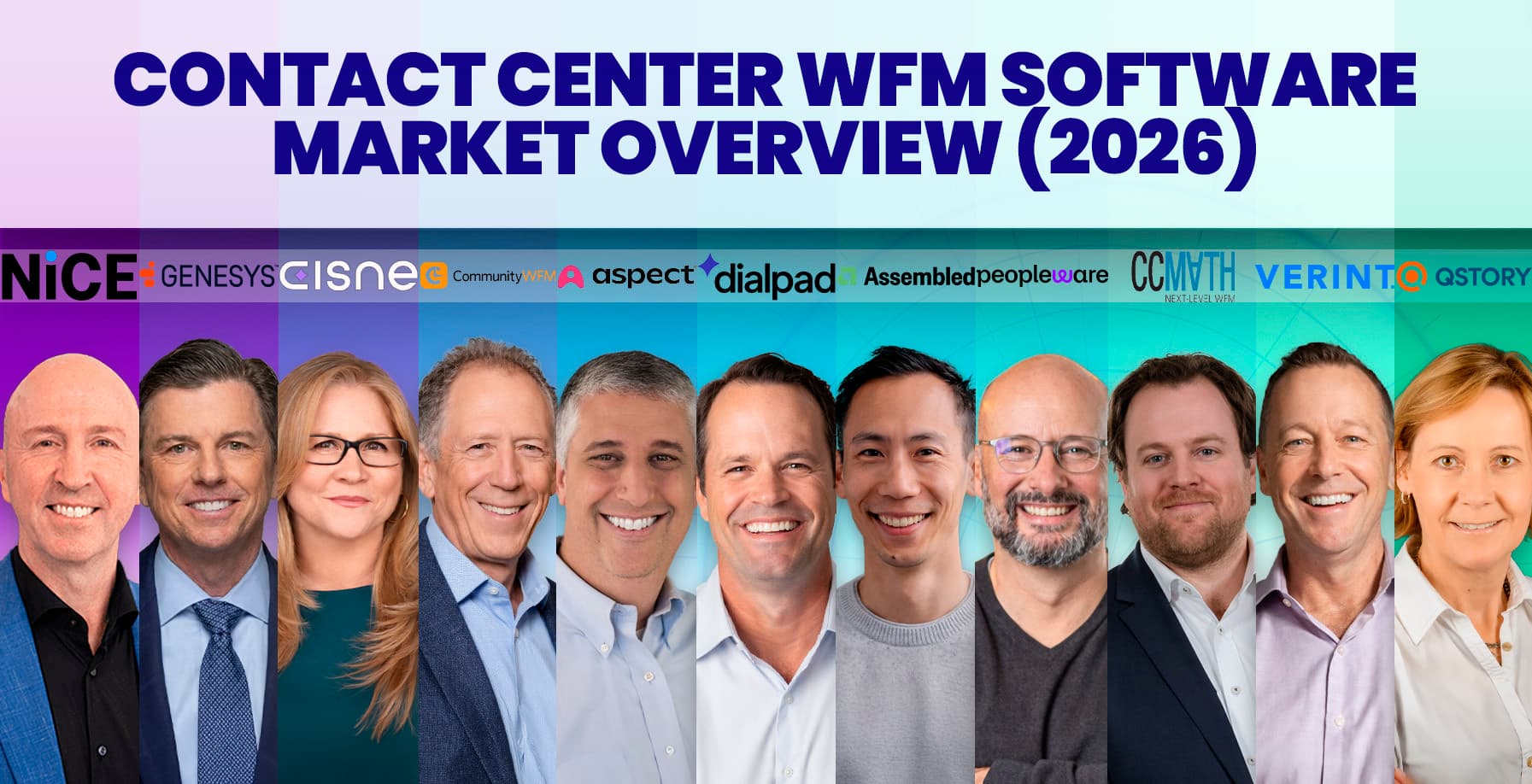
Verint, NiCE, Peopleware… These companies have dominated contact center workforce management (WFM) software since the 1990s and 2000s.
Now, they are set to lead the market into a new era, one where WFM software manages not only human agents but AI agents, too.
The promise of this new era is accelerating innovation across the space. Yet, other trends are also pushing WFM software to change.
Converging technologies, an evolving contact center stack, and new integration requirements are all excellent examples.
However, before diving deeper into these trends, here's a definition of WFM software and an overview of the market's leading providers.
What Is Contact Center Workforce Management Software?
Contact center workforce management (WFM) software helps planners forecast customer demand, build staffing plans that closely match that demand, and monitor how effectively those plans perform.
As this definition hints, WFM software includes three core capabilities: forecasting, scheduling, and intraday management.
Forecasting tools estimate contact volumes over a given period, providing the foundation for scheduling. Scheduling solutions then assign shifts based on that demand, factoring in local labor laws, agent contracts, and employee preferences.
From there, intraday management tools monitor the success of schedules in real time, allowing planners to make adjustments based on actual versus forecasted demand, as well as key metrics such as service level and agent occupancy.
While every WFM platform should cover these fundamentals, many extend further, offering back-office planning, time-off management, and budgeting modules.
The 10 Contact Center WFM Software Providers
The contact center workforce management providers listed below provide the most widely deployed solutions in the market.
Toward the end of the list are also two new names for many: CCmath and Cisne. These are lesser-known but demonstrate innovative approaches to delivering WFM software.
1. Verint
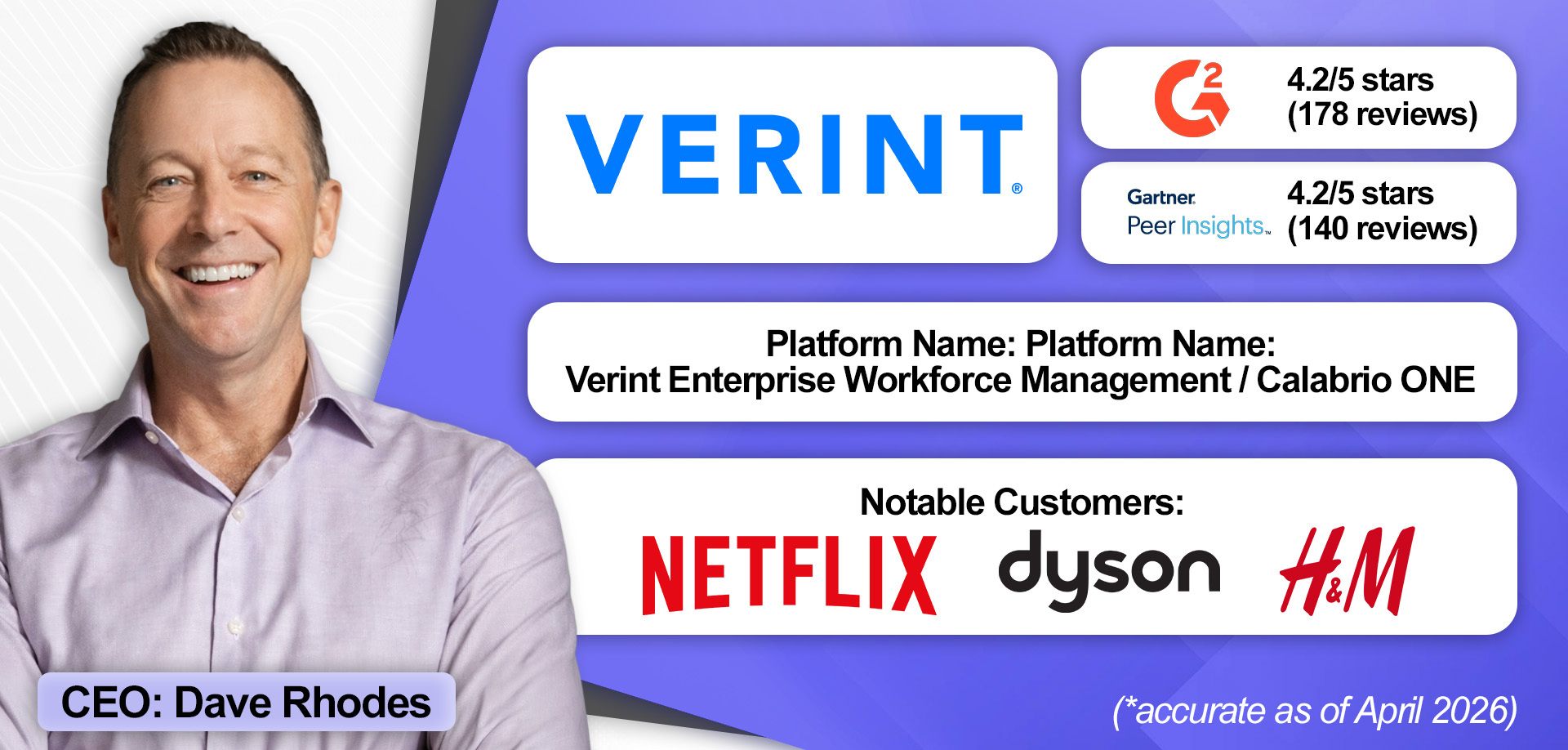
Verint and Calabrio merged in 2025, bringing together two contact center WFM giants under the former’s name.
Combining the two WFM platforms would take years. As such, Verint is moving forward with a two-pronged strategy: Verint WFM will be tailored to the enterprise, and Calabrio WFM to the midmarket.
That strategy ultimately looks to amplify the core strengths of each offering. Verint is deeper and can handle complex contact center structures, deep hierarchies, and advanced permissions. Meanwhile, Calabrio is nimbler, with more AI features.
Yet, while Verint will keep the two platforms separate, it does plan to cross-pollinate both platforms with each other’s most powerful capabilities.
For instance, Calabrio Predictive Actions, part of its Workforce Intelligence suite, will soon be available on Verint. This predicts end-of-day service levels, explains its reasoning, recommends actions, and - critically - can execute those actions on request.
Meanwhile, Verint Strategic Planner enables organizations to model long-term staffing scenarios and assess how decisions - such as hiring, training, or policy changes - will impact service levels, costs, and overall business outcomes. This will soon be available on Calabrio.
By tailoring and cross-pollinating its platforms, Verint can meet customers where they are and work with them to select the best-placed, feature-rich offering.
“We bring speed of innovation and ease of use with the ability to support very large enterprises, the biggest enterprises in the world.”

Standout Features
- Two WFM Solutions: Verint WFM and Calabrio ONE are two of the traditional ‘big three’ WFM solutions (NiCE is the other). With them both housed under one roof, Verint can not only cross-pollinate the standout features but also engage openly with prospects to guide them to the best-placed offering.
- Verint Capacity Planning & Bots: The Verint Strategic Planner is a powerful solution, but the vendor’s WFM bots are equally innovative. A strong example is the TimeFlex Bot, which allows agents to adjust schedules by earning or spending FlexCoins based on whether their changes improve the overall staffing plan or not. As long as agents maintain a positive balance, they can modify their schedules freely.
- Calabrio Workforce Intelligence: Calabrio Workforce Intelligence provides agents, supervisors, and planners with their own virtual assistants. The planner assistant is particularly compelling, using real-time data to anticipate issues before they arise and recommending staffing adjustments to proactively address them.
How Much Does It Cost?
Verint doesn’t list its pricing publicly for either Verint or Calabrio WFM. Instead, it asks prospects to contact its sales team. Request a quote for Verint WFM here.
2. NiCE
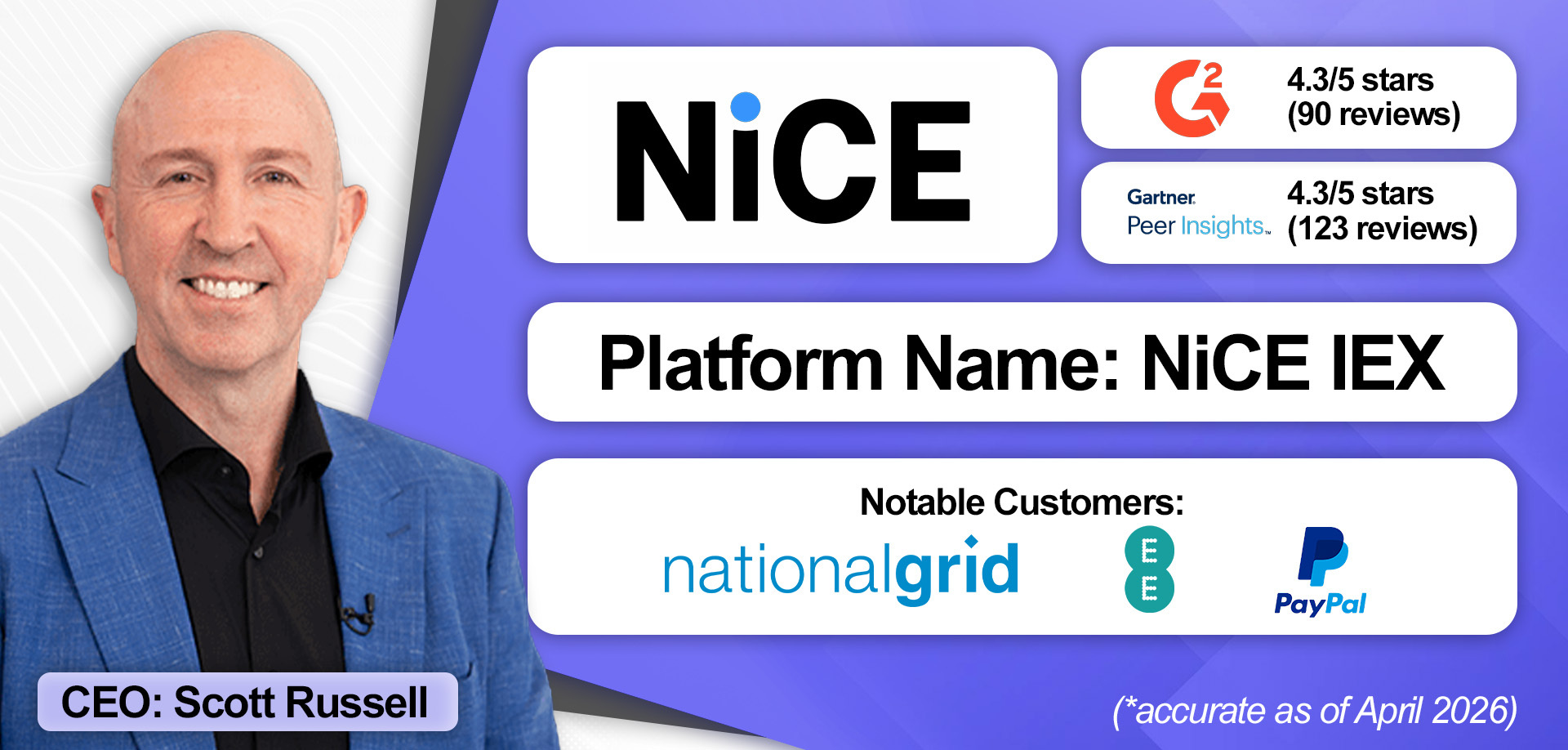
NiCE has maintained its position at the forefront of the WFM market for 20 years, and its vision for the future of WFM software remains compelling.
Having acquired conversational AI giant Cognigy, the vendor has now developed a unified solution for managing and monitoring the performance of both human and AI agents, pulling in data from its quality assurance (QA) solutions, too. It announced this at NiCE World 2026.
Yet, even before that, its offering was already deep. Take forecasting as an example. It hosts 45 different models and allows planners to pull in open-source models.
From there, it applies a “best-pick” AI forecasting approach that automatically identifies the most accurate model by testing multiple options against historical data, performance patterns, and specific scenarios.
Outside of forecasting, NiCE IEX also offers a Strategic Planner, which automatically imports data from multiple sources, enabling planners to evaluate how different FTE levels affect customer and employee metrics, not just operational metrics.
Final notable capabilities include deep back-office forecasting and analytics, alongside its Employee Engagement Manager (EM), which dynamically optimizes net staffing through near-term and intraday scheduling, lowering the risk of overstaffing and understaffing.
"[We are] bringing together our workforce management capabilities, built for human agents, and extending them to support a hybrid workforce of both humans and AI agents. This includes reporting, compliance, coaching, and quality management. The goal is a single suite where both AI and human agents are managed under the same operating model and KPIs."

Standout Features
- “Best-Pick” Forecasting: NiCE hosts 45 forecasting models, running them automatically against historical data to help planners isolate the best across various scenarios. Its broader forecasting capabilities are deep, too. For instance, it offers True To Interval (TTI) forecasting, which reports calls in the interval they end, not begin, and is a simple, yet transformative innovation.
- NiCE IEX EM: IEM enables contact centers to monitor, detect, and automatically balance intraday gaps using AI-powered business rules and goals. When gaps arise, the system automatically offers employees schedule changes to optimize service levels in real time and enable greater schedule flexibility, without involving a supervisor.
- Roadmap: NiCE plans to build a WFM platform that’s part of a workforce engagement management (WEM) ecosystem that manages, monitors, and scales human and AI agent deployments across enterprise contact centers.
How Much Does It Cost?
NiCE doesn’t publicly disclose the pricing of its IEX WFM solution. Instead, prospects must contact the vendor for a consultation. Learn more and request a quote from NiCE here.
3. Peopleware
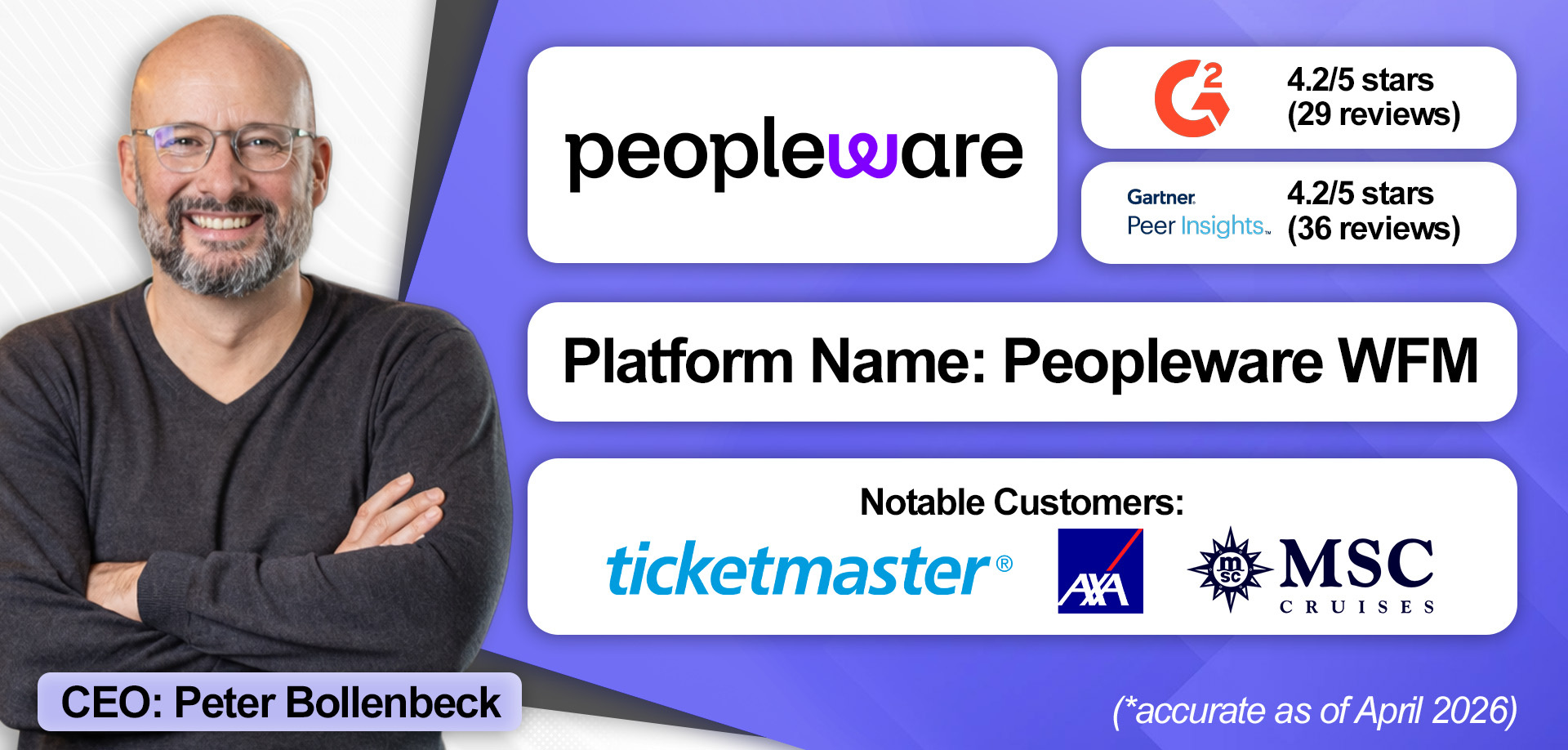
Headquartered in Germany, Peopleware is the unified brand of injixo and InVision Enterprise WFM. It originally focused solely on contact centers but is now deployed across multiple industries, with 500,000+ users in 30+ countries.
Peopleware’s platform is AI-native, with machine learning and optimization embedded across its products since 1996. An in-house team of ML engineers and data scientists continuously maintains and refines the models.
These models run on a single platform, rather than a set of acquired components stitched together. As such, behavior remains consistent across modules.
Integration depth is also a notable strength, with Peopleware providing pre-built connectors for contact center platforms and a documented REST API extending into CRM, HR, and payroll systems. This is crucial, as custom integration is often where WFM projects stall.
Peopleware’s broader roadmap includes several other key developments. Consider its building capacity planning simulations that model variables such as hiring plans, training timelines, and shrinkage over long horizons. These help surface where future gaps will form and isolate which interventions need to start now to prevent them.
A second example is role-based natural language interfaces for agents, supervisors, and planners, replacing traditional dashboards with surfaces that highlight what requires attention rather than exposing the full data model to every user.
The roadmap also includes agentic workflows, more advanced time-off management, and self-service capabilities for agents, extending automation across the workforce layer.
“Peopleware is one of the only remaining best-of-breed WFM solutions out there, and our AI-native architecture allows us to innovate and adapt fast so that our customers always benefit from the newest technological advancements.”

Standout Features
- AI-Native Architecture: Machine learning and optimization have been part of the forecasting and scheduling engine since 1996, with an in-house ML and data science team continuously refining models. The single-platform architecture also avoids the integration and consistency issues common in vendors that have acquired their AI capabilities.
- In-House Knowledge & Support: Peopleware boasts three decades of WFM specialization, with support staff drawn from former planners and an in-house consulting capacity for complex deployments. That depth is difficult to match.
- European Engineering & Data Residency: The provider is headquartered in Düsseldorf, founder-led, and operating under German engineering standards with EU data residency. In a market dominated by US vendors and global suite providers, this is a structural differentiator for European enterprises navigating GDPR and recent data sovereignty concerns.
How Much Does It Cost?
Peopleware tailors price and functionality to each customer’s specific needs. For transparency, the vendor publishes three indicative tiers bundling its most popular feature sets, starting at €329, €799, and €2,999 per month. Learn more about Peopleware’s pricing here.
4. Assembled
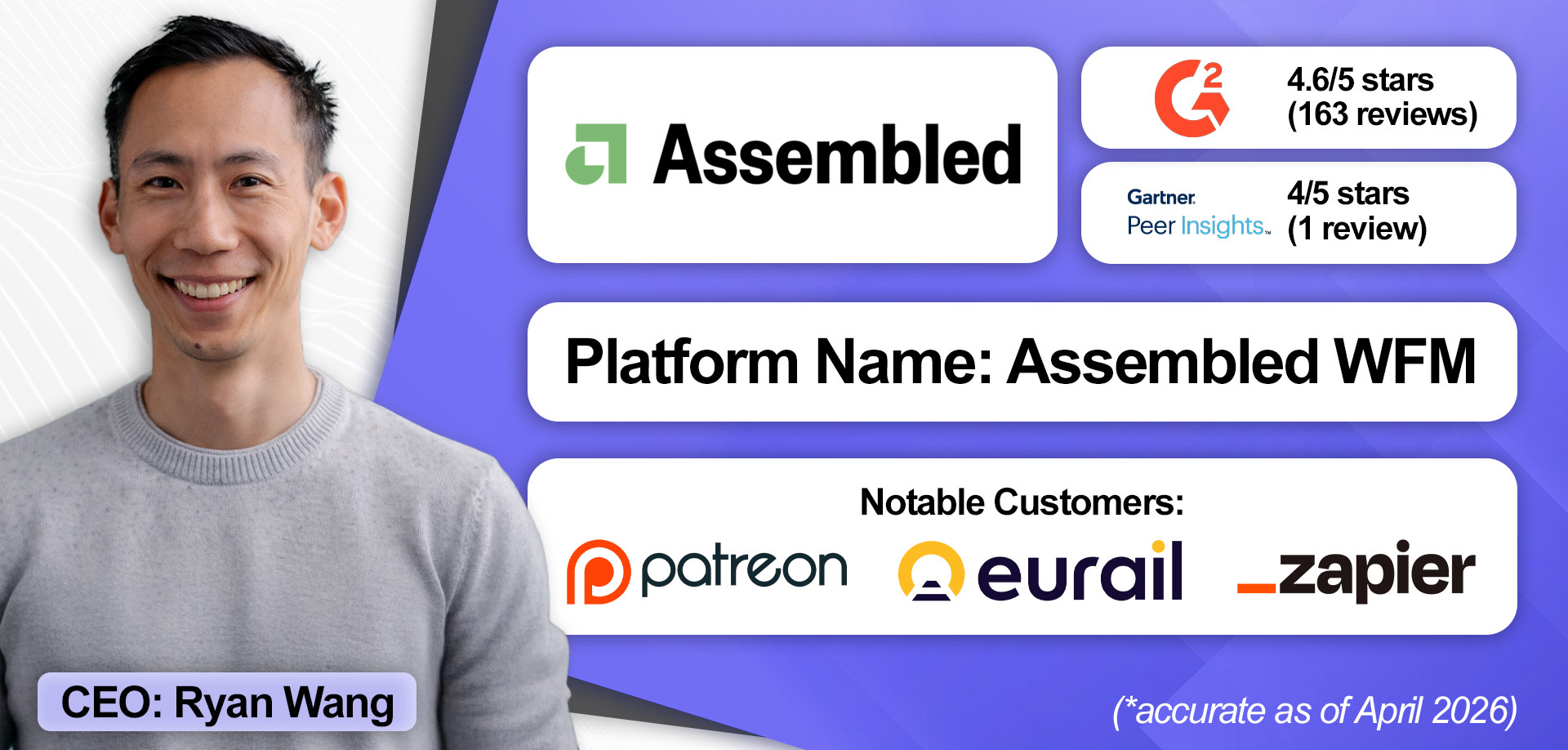
Assembled is both a contact center WFM and conversational AI provider, being the first provider to deliver one platform to manage AI and human agents. Its approach enables superior visibility into how AI changes the contact center demand profile.
While this shared view is only available for its first-party AI agents, the long-term plan is to be AI-agnostic, enabling customers to plug in whichever AI they choose.
Outside of this core differentiator, Assembled is also cloud-native and, since its 2018 debut, has rapidly become one of the most mature platforms on the market.
Take its AI schedule generation built on a unique co-satisfaction methodology, designed by an expert in algorithmic studies. Planners may then tweak these schedules, while the system predicts how those adjustments will impact key customer, employee, and business efficiency outcomes in real time to better inform decisions.
Interestingly, Assembled has also announced MCP support on top of its platform, allowing end-users to connect with tools like ChatGPT, so they can query workforce data using natural language.
Finally, Assembled emphasizes usability and speed to value, with implementations typically around eight weeks, including training.
“Assembled is all about UI, ease of use, speed to value. I've never had customers pull out of implementation because this was too big of an undertaking or they didn't feel supported.”

Standout Features
- AI Ownership: Assembled uniquely offers WFM and conversational AI, enabling contact centers to manage human and AI agents from a single platform. In the future, it also aims to become AI-agnostic, allowing planners to also monitor third-party agents
- Scheduling Capabilities: The provider has developed a scheduling engine that uses multi-outcome optimization instead of sequential decision-making, enabling the rapid generation of complex schedules. It also allows planners to anticipate how schedule adjustments will affect overall contact center performance.
- Onboarding Experience: Assembled aspires to deliver rapid time-to-value, with implementations and onboarding typically around eight weeks. Its intuitive UI also helps reduce setup complexity and speeds adoption.
How Much Does It Cost?
Assembled is available from $25 a month, including scheduling, intraday management, integrations, and more. It also offers feature-rich Pro and Enterprise bundles (with forecasting), yet prospects must contact its sales team to unlock pricing for these packages. Learn more about Assembled’s pricing here.
5. Aspect Software
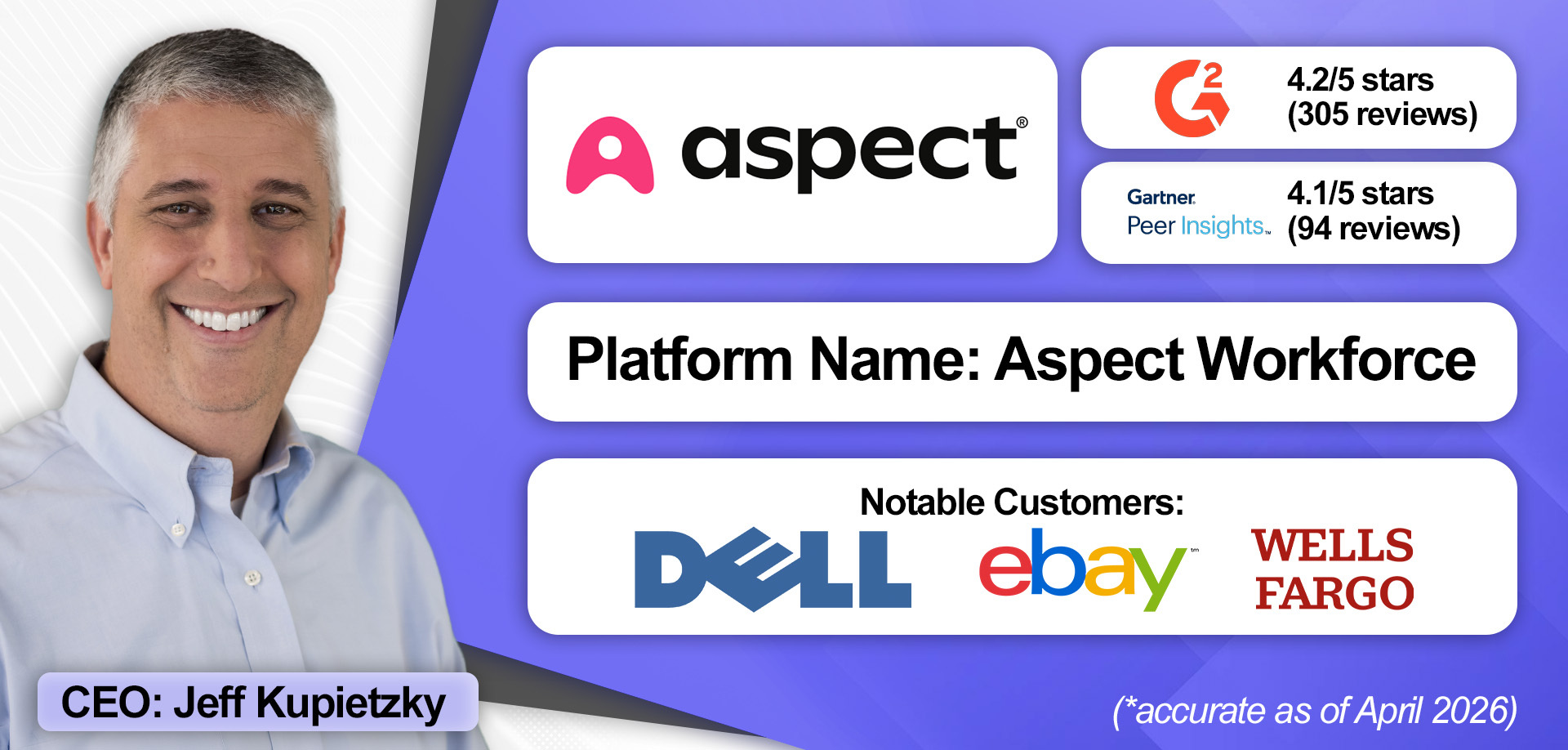
Aspect Software was once a leading name in contact center technology. However, in 2021, it merged with Noble Systems to become Alvaria, and that brand recognition was lost.
Three years later, Alvaria reintroduced the Aspect brand, spinning out a workforce management (WFM) offering, something Aspect Software was well-regarded for.
Upon its re-release, Aspect modernized the user experience and added new capabilities. Aspect Intelligence is a notable example. It aids intraday management by sending warning signals that enable planners to make staffing adjustments before performance is significantly affected.
For instance, instead of discovering lateness after the fact, Aspect Intelligence detects it immediately after the grace period and updates schedules in real time. The solution also monitors early sign-ins during demand spikes, reducing compliance risk and ensuring accurate pay.
Another distinguishable feature is an outcomes dashboard, which will reach general availability in Q3 2026. It quantifies the impact of AI forecasting improvements, automated scheduling, and intraday automation on a real-time basis, presenting tangible outcomes like hours saved, money saved, and ongoing ROI. That helps workforce teams demonstrate strategic value within the business.
Lastly, Aspect is often deployed in enterprises across highly-regulated industries, such as financial services, healthcare, and government, where organizations must comply with complex labor laws (regional and global), union agreements, and internal rules. Handling this complexity is where Aspect excels.
"Navigating union rules, compliance with labor laws, adhering to those labor laws… this is something we do extremely well. We have customers leave us and come back specifically for that reason."

Standout Features
- Intraday Management: Aspect Intelligence enables real-time, proactive intraday corrections (e.g., late arrivals, no-shows, early sign-ins), updating schedules and payroll automatically to reduce manual intervention and prevent service impact.
- Outcome Focus: The upcoming outcomes dashboard quantifies ROI in real time by tracking hours saved, cost reductions, and the impact of changes to forecasting, scheduling, and intraday strategies, demonstrating measurable business value.
- Regulatory Expertise: Aspect supports highly regulated enterprises by managing complex labor laws, union rules, and multi-country compliance requirements, making it well-suited for organizations in industries such as finance, healthcare, and government.
How Much Does It Cost?
Aspect doesn’t publicly disclose pricing for Aspect Workforce. Instead, organizations can contact the provider directly to receive a customized quote. Request a quote and book a demo of Aspect Workforce here.
6. Dialpad
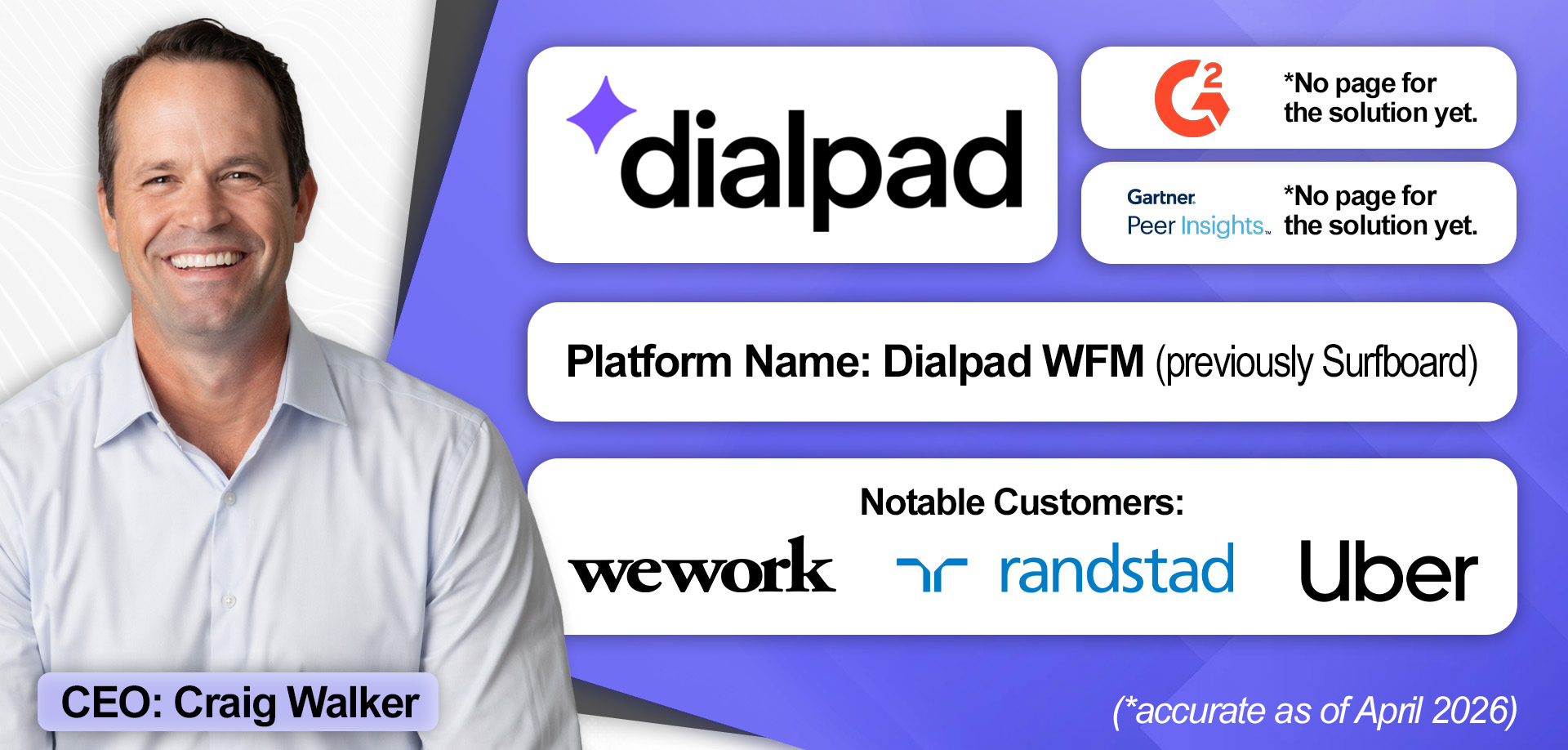
Dialpad acquired Surfboard in October 2024, scooping one of the most disruptive players in the WFM software space.
Surfboard chiefly differentiated through ease-of-use. In its early days, the vendor hired three designers for every ten engineers, which helped establish simplicity and user experience as a key advantage.
Moreover, the whole team stayed close to customers. On-site visits would include engineers, designers, and project managers, ensuring the product accurately reflected the customers’ reality.
Despite joining a much bigger company, Surfboard (now Dialpad WFM) has maintained its focus on ease of use, while leveraging its newfound size to amplify other strengths.
For instance, integrations beyond CCaaS have always been a focus. Dialpad has helped it prioritize those integrations, connecting with CRM, collaboration, HR, and various other tools leveraged across the midmarket and enterprise.
Dialpad also has an experienced AI team, with Google alumni, which has bolstered its forecasting capabilities. Yet, it also broadened the WFM solution’s scope, with the platform evolving to focus on hybrid human and AI agent workforces. Its ultimate goal is to make WFM the orchestration layer that manages both.
“We are really trying to make sure that Dialpad becomes the leading workforce management solution that handles a hybrid team of AI and human agents.”

Standout Features
- Solution Design: Dialpad WFM is built around a modern, product-led philosophy focused on simplicity, usability, and fast onboarding. It is also designed for modern omnichannel environments and, interestingly, incorporates fairness controls (e.g., balanced workloads, burnout prevention) as part of scheduling logic.
- Integration Portfolio: Dialpad WFM maintains a broad integration portfolio. It connects not only with CCaaS solutions but also with CRMs, ticketing tools, collaboration platforms, calendars, and HR systems, enabling enterprises to leverage WFM data in new ways.
- Human-AI Management: Dialpad WFM is evolving to manage hybrid human and AI agent workforces. Already, it incorporates AI deflection rates and performance into forecasting and staffing models, helping optimize human resourcing. The platform also supports new types of human work, such as AI training and annotation.
How Much Does It Cost?
Dialpad is primarily focused on delivering a native WFM experience for its contact center customers. While WFM remains available as a standalone offering, the company carefully qualifies interest to ensure alignment with its future direction before sharing pricing information. Contact Dialpad here for a consultation.
7. CommunityWFM (Now Part of RingCentral)
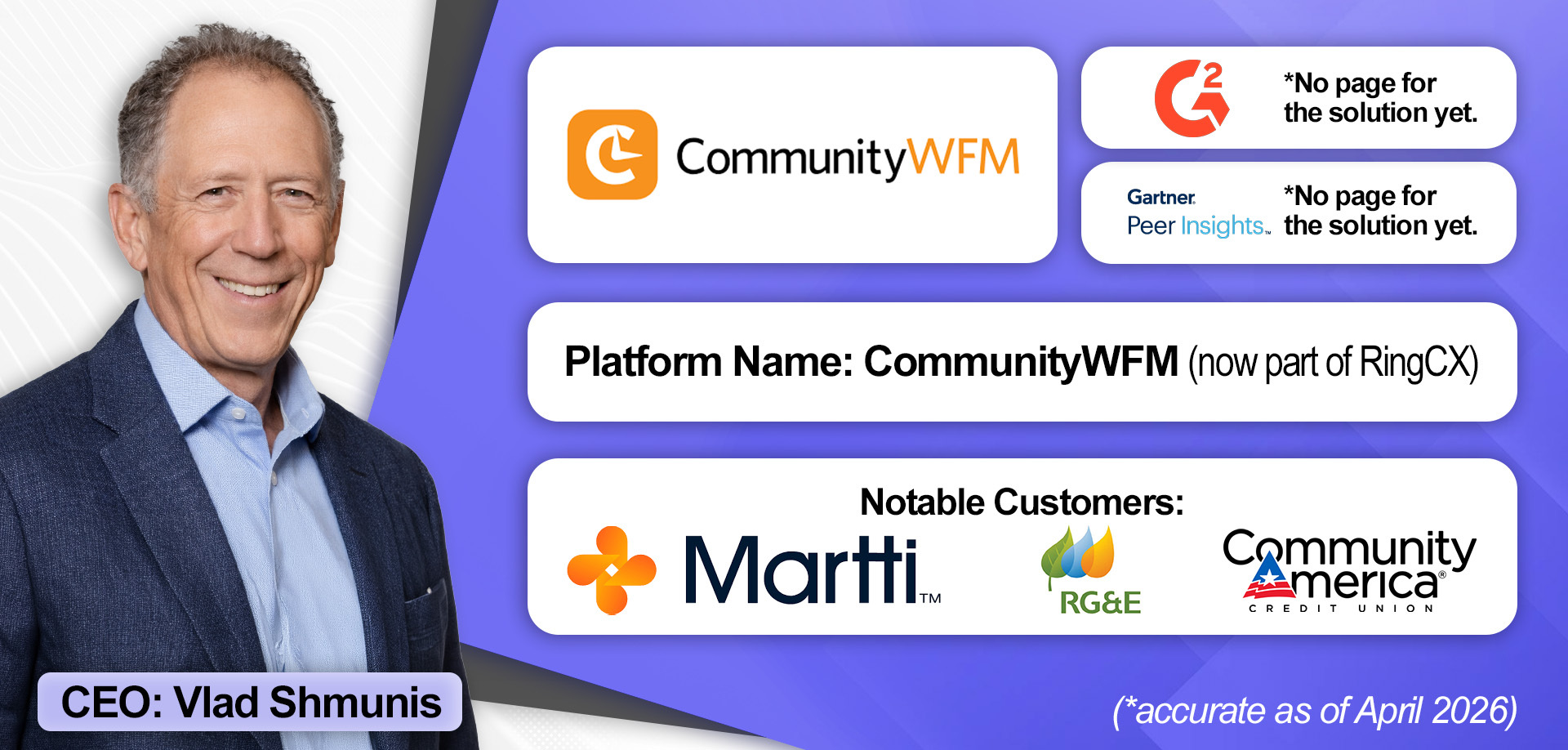
RingCentral acquired CommunityWFM in 2025 to embed its technology within RingCX, the vendor’s CCaaS solution. However, it’s still available as a standalone product.
That product isn’t as feature-rich as NiCE or Verint, but it offers more depth than most CCaaS solutions, striking a balance for buyers who want greater capability than typical contact center platforms without the same level of complexity or learning curve of standalone competitors.
Its interface is key to that, which customers across review sites have praised as “intuitive”. Meanwhile, CommunityWFM is available in multiple cloud configurations, boosting its ease of deployment.
Moreover, “community” is central to the vendor’s vision, as its name suggests. Planners can communicate with the broader contact center team via Microsoft Teams, Slack, email, text messages, and other channels from within the solution.
In terms of capability, its time-off management features, an often underserved remit of WFM, are particularly notable. Take its unique approach to shift bidding as an example. Instead of a manual, step-by-step process, bidding rounds run automatically based on configurable rules. Agents also receive instant feedback through a color-coded calendar showing how likely their bid is to succeed, reducing uncertainty and the need to rebid.
Lastly, RingCentral made CommunityWFM’s pricing model public after the acquisition, available across two tiers: Essentials and Enterprise. These are available at $20 and $35 per agent, per month, respectively. Many customers appreciate that transparency.
Standout Features
- Focus on Simplicity: CommunityWFM, formerly known as Workforce Management Software Group, Inc. (WFMSG), has delivered WFM software for over 20 years. It has always fixated on simplicity, chiefly through its intuitive interface and cloud deployment options, addressing the challenge many organizations face in unlocking the advanced capabilities of leading platforms.
- Collaborative WFM Vision: Too often, contact center teams view planners as the ‘computer said no’ people. However, by embedding unified communications channels into its platform, CommunityWFM prompts planners to get closer to the agent community and build relationships that add context to their WFM data.
- Time-Off Management: CommunityWFM’s predictive time-off management lets agents see, before submitting a request, how likely their paid time off (PTO) is to be approved using color-coded calendars that reflect real-time availability and staffing conditions. That helps set expectations. Behind the scenes, WFM analysts can configure highly granular rules by agent group, schedule, or historical patterns, reducing unnecessary requests. Alongside its unique shift-bidding approach, that’s a differentiator.
How Much Does It Cost?
After CommunityWFM’s acquisition by RingCentral, several media outlets reported that the vendor’s WFM software is available across two tiers: Essentials (previously Standard) and Enterprise (previously Ultimate). These cost $20 and $35 per agent, per month, respectively. However, CommunityWFM doesn’t list pricing on its website. As such, it’s best to chat with its team directly. Contact CommunityWFM and request a demo here.
8. QStory
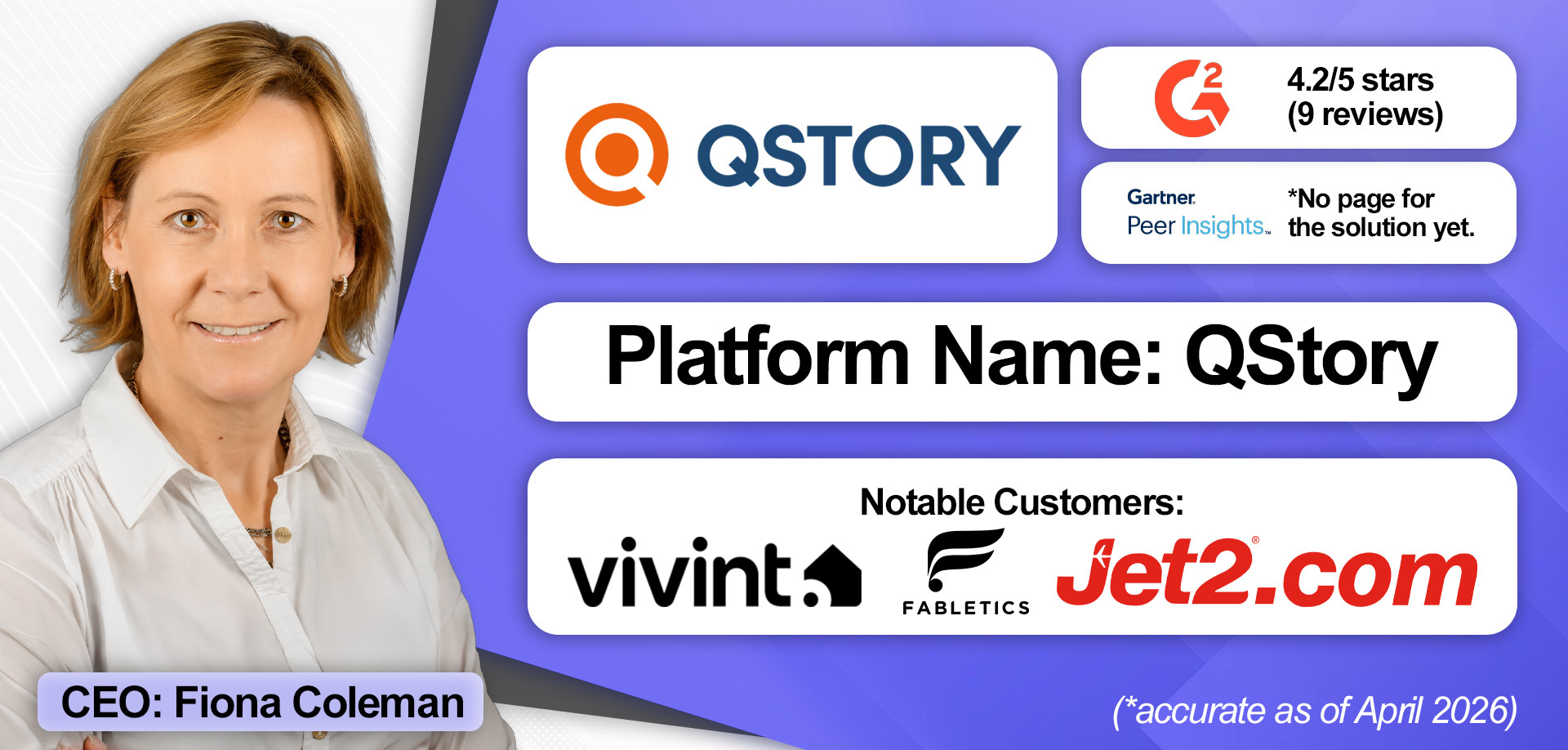
QStory began as an optimization layer that sat above existing WFM and Automatic Call Distributor (ACD) systems, continuously identifying real-time opportunities to improve schedules and performance. Today, it has evolved into a full-scale WFM platform, while retaining the flexibility to be a WFM optimization layer over third-party solutions.
As it has made that pivot, QStory’s scheduling capabilities have become particularly advanced, supporting contract-based, requirement-based, rotational, and preference-based scheduling within a single engine, which also comprises shift bidding.
Another key differentiator here is its Agent Flex tool, which allows agents to move working hours between days within the same week if they wish to leave earlier or start later. The platform presents schedule changes that improve coverage, enabling agents to freely adjust their schedules without jeopardizing service levels.
QStory also extends workforce management beyond the contact center. Its Work Item Planner acts as a "back-office ACD," routing, prioritizing, and tracking back-office work while providing consistent reporting across voice, email, chat, and back-office tasks.
To bolster that reporting capability, the platform generates AI-powered narrative summaries that explain operational performance alongside relevant charts, with plans to tailor these insights using customer-specific language models.
Finally, QStory applies its scheduling engine to across stores and branches, helping locations share resources and manage staffing across nearby sites. That extends its reach to formal and informal contact centers.
"QStory brings together real-time optimization, workforce flexibility, and agent empowerment in a way traditional WFM solutions don’t."

Standout Features
- Deployment Flexibility: Organizations can deploy QStory as a complete WFM platform or layer it over an existing WFM solution to centralize planning and intraday management. This non-disruptive approach allows businesses to modernize at their own pace without replacing existing technology.
- Advanced Scheduling: QStory combines contract-based, requirement-based, rotational, preference-based, and shift-bidding scheduling within a single engine. The same scheduling logic also supports branch workforce planning. Additionally, its Agent Flex capability lets agents move hours between days in the same week through planner-free schedule swaps that improve coverage without creating time debt or credit.
- Real-Time & Historical Reporting: QStory's Work Item Planner routes and prioritizes back-office work while providing consistent reporting across voice and digital channels. The platform also generates AI-powered narrative summaries that explain operational performance, reducing reliance on dashboard interpretation.
How Much Does It Cost?
QStory charges on a monthly subscription basis but does not publicly disclose its subscription rates. Request a demo from QStory to learn more.
9. Genesys
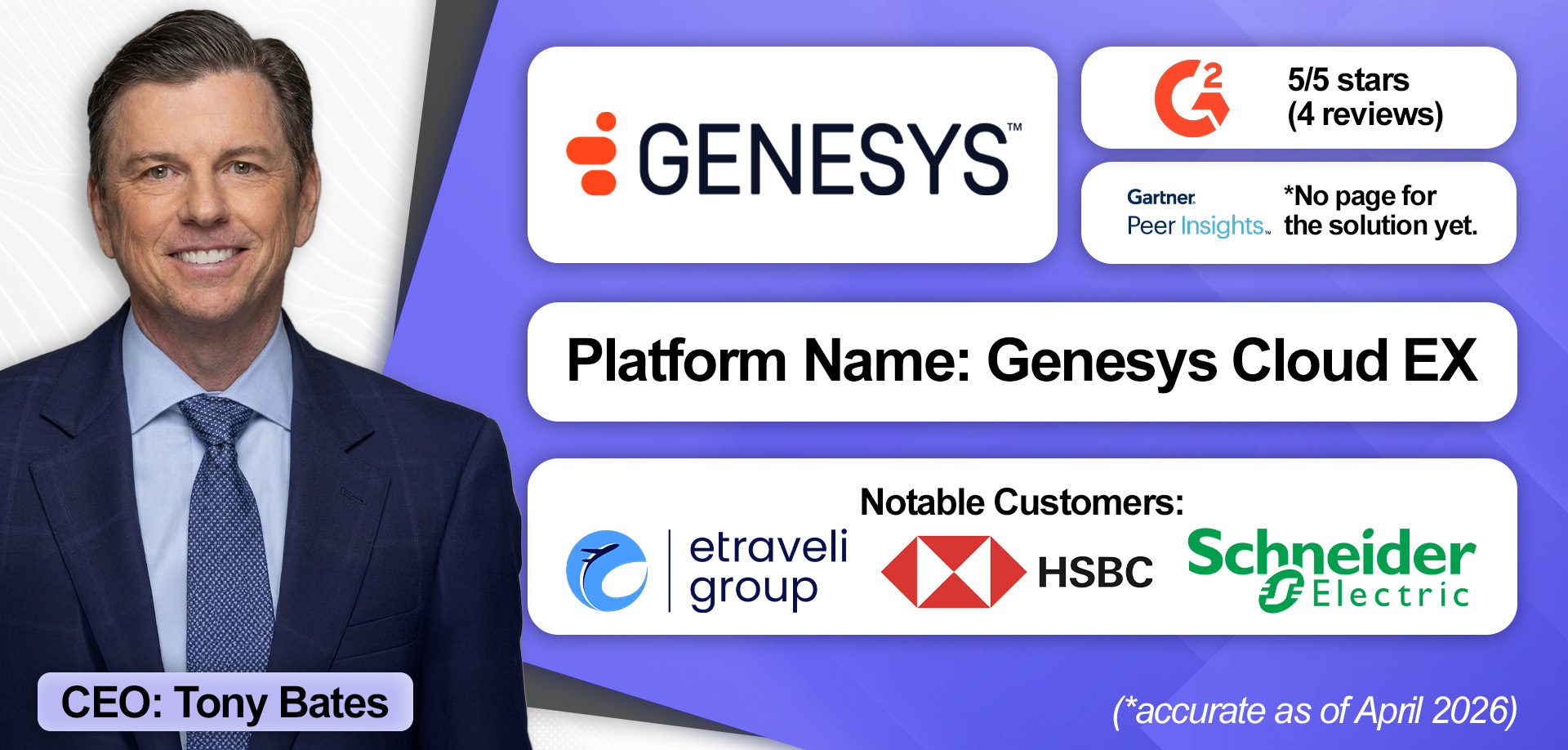
Genesys offers more advanced WFM software than most CCaaS providers through its WEM platform: Genesys Cloud EX.
Take its “Automatic Best Method” forecasting, for example. This uses historical contact volume and handling time data to test forecasting models and automatically assigns the best fit to specific scenarios across channels.
Its agent app, Genesys Tempo, also has several advanced features. Take its shift trading options. Agents can post a shift for others to pick up, browse available shifts, and add shifts to their schedule, working within the limits of their contracts and local labor laws.
Genesys also understands complex business hierarchies, from dispersed business units to planning groups, and accounts for them with its WFM software. That’s critical given how it works with some of the largest enterprises globally.
Many of these enterprises choose a standalone WFM solution from a competitive vendor, often because they work with multiple contact center providers globally and want to centralize workforce management in a single third-party platform.
Nevertheless, contact centers that are fully invested in Genesys will value this, along with its unified platform that combines WFM, QA, gamification, learning management, and more. Over time, as WFM teams leverage QA data to staff more intelligently, this could become a stronger differentiator for Genesys.
“Genesys Cloud WFM is natively unified within the Genesys Cloud platform, connecting workforce data, customer interactions and AI through a single real-time data model. This enables organizations to move beyond reactive scheduling to true workforce orchestration, continuously aligning people, automation and demand to deliver proactive, experience-led outcomes for both customers and employees.”

Standout Features
- “Automatic Best Method” Forecasting: Genesys Automatic Best Forecasting uses the latest volume and handle time data to generate multiple forecasting scenarios and automatically selects the best fit. It accounts for factors like skills, languages, and interaction types to improve accuracy and speed up scheduling, enabling greater agent flexibility.
- Complex Business Hierarchies: Cross-border WFM often falls down when planners unpack various local labor laws and union rules. Genesys understands these, and its solution’s complex business hierarchies enable more flexible structures that support a more complex, global WFM strategy.
- Platform Design: Genesys pools WFM and QA data onto one platform, enabling planners to more simply leverage agent performance insights to inform their staffing strategy. If Genesys can utilize that QA data to auto-adjust agent schedules, it could unlock a significant differentiator moving forward.
How Much Does It Cost?
Genesys Cloud EX is included in the Genesys Cloud CX 3 & 4 bundles for its CCaaS customers. Those wishing to purchase it separately can do so from $90 per user, per month. Learn more about Genesys Cloud EX pricing here.
10. CCmath
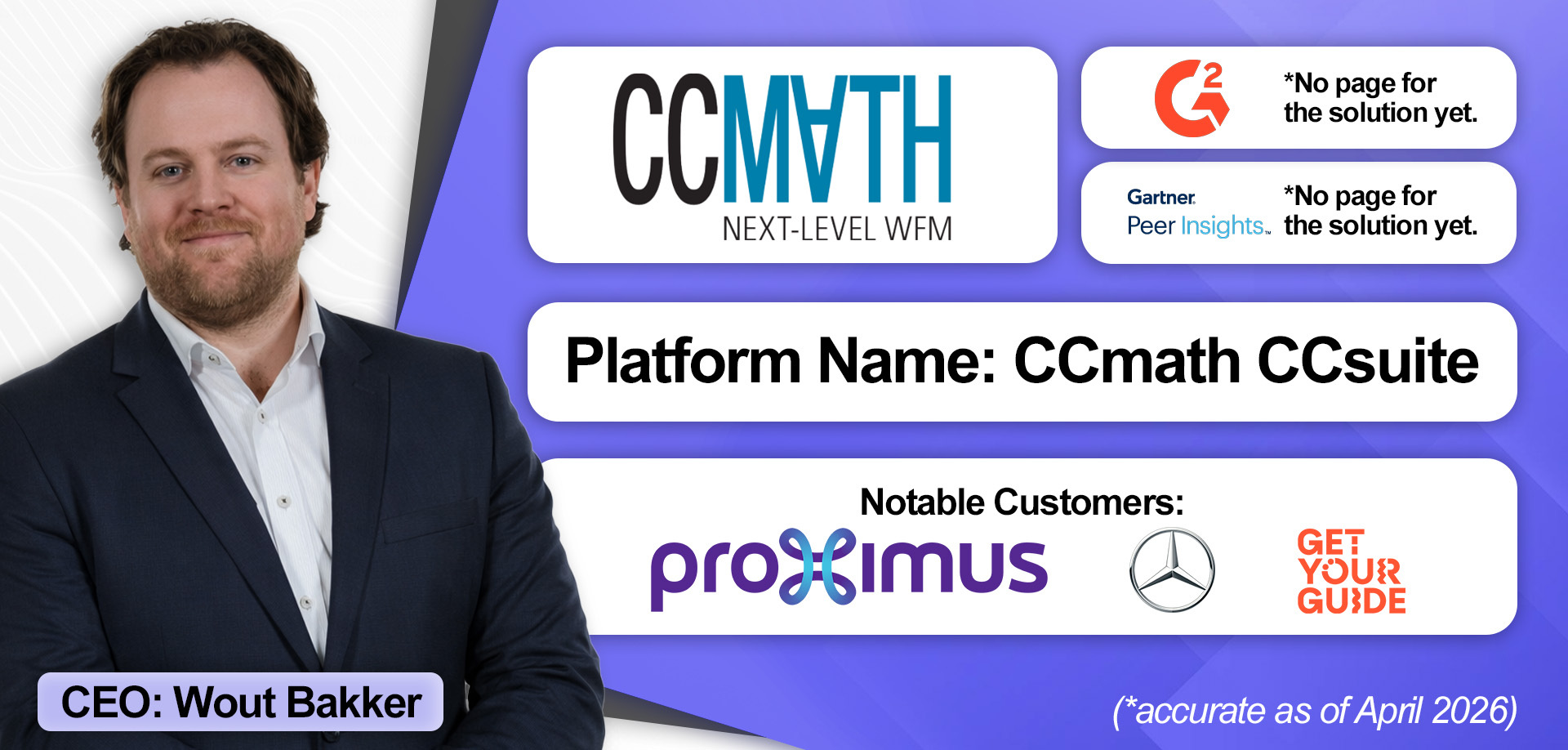
Founded over 20 years ago by a professor at VU Amsterdam, CCmath places a strong emphasis on the science and mathematics underpinning its CCsuite.
This focus is reflected in its forecasting capabilities. An experienced planner at AXA Ireland described the models to CX Foundation as “amazing,” noting that they are sometimes incorporated into competing WFM solutions to enhance their performance.
Within its CCsuite, CCmath supports these models with several nifty features, such as a tool that automatically detects and extrapolates the historical impact of specific events. Its automated repeat calling detector is another example, further bolstering forecast accuracy.
Beyond forecasting, CCsuite includes scheduling, intraday management, and an agent portal, all complemented by a robust integration portfolio. This includes preconfigured APIs for leading contact center and CRM platforms, as well as a connector that enables data export via APIs, flat files, and direct handoffs.
CCmath also places a strong emphasis on customer education. Through its WFM Academy, tailored training programs, and in-house consultancy, the company ensures customers not only use the platform effectively but also develop a deeper understanding of workforce management.
While CCmath is most commonly deployed in Europe, it is expanding internationally. Many of its largest customers are based in the US, alongside several global BPOs.
“We turn workforce planning from guesswork into an accurate, data-driven operation, grounded in data and years of research.”

Standout Features
- Forecasting Models: CCmath promises “unmatched” forecast precision, supported by an in-house team of mathematicians and researchers continuously refining its models. These models are supported by advanced tooling, such as CCmath’s Spline algorithm, which forecasts intraday patterns to support real-time decision-making.
- Customer Support: The provider’s team of dedicated scientists guides prospects through a proof of concept (PoC) and, from there, customers have direct access to support specialists to tailor the platform and optimize outcomes.
- Customer Education: The WFM Academy is an online e-learning platform available to CCmath customers. Through the academy, the provider offers a curriculum covering “every aspect” of WFM. It includes video lectures, quizzes, and assignments, with a “personal trainer” available to help answer any questions.
How Much Does It Cost?
CCMath doesn’t publicly disclose its pricing model. Instead, it invites prospects to request an introductory meeting to learn more about its solutions and discuss pricing. Contact CCmath here.
11. Cisne
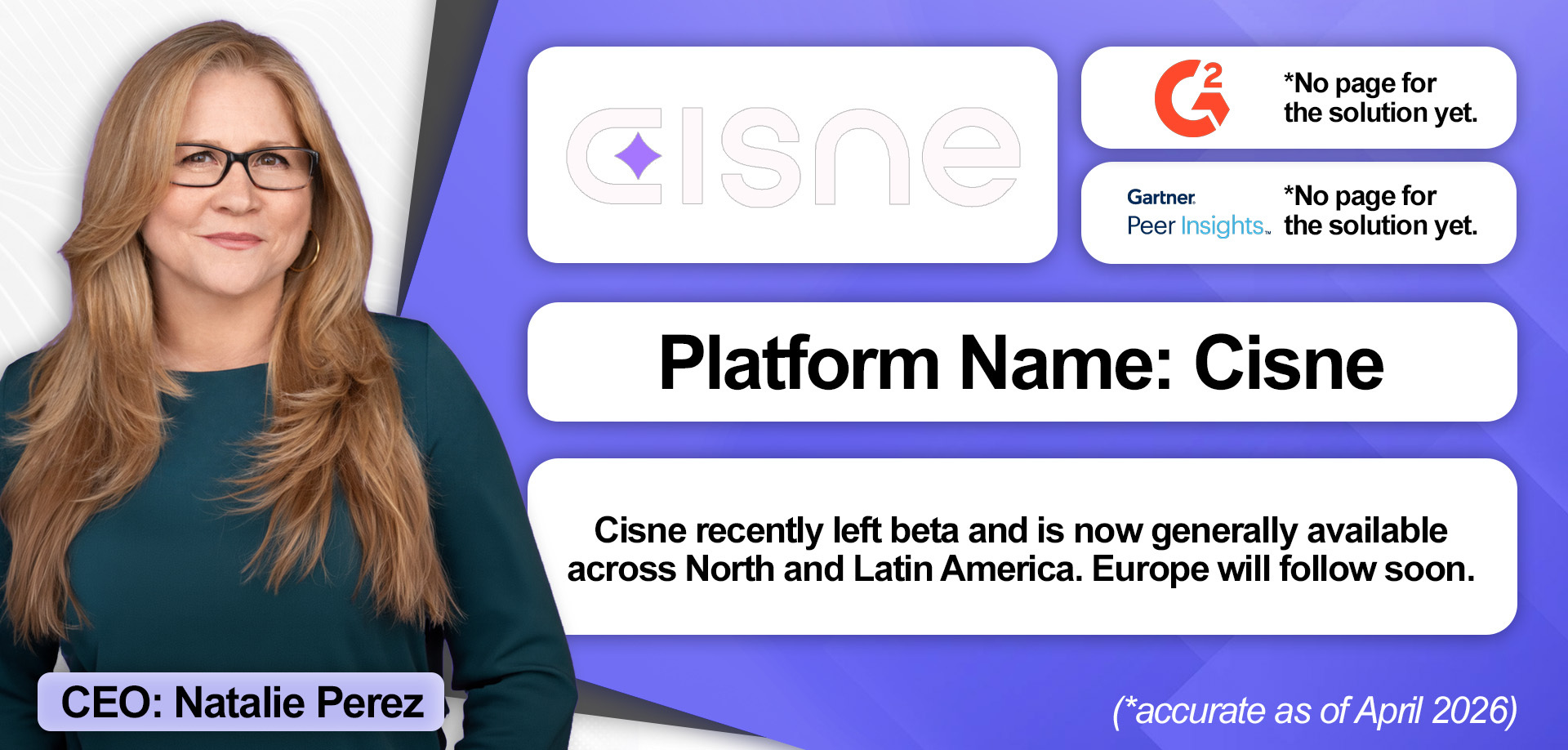
Cisne is the wildcard in this WFM software rundown, as it only become generally available in North and South America in April 2026, with Europe coming soon.
Nevertheless, it stands out for several reasons. First, it embeds native AI agents or “Swan Droids”, which collaborate to complete tasks across WFM functions autonomously.
For example, its Real-Time Analytics Droid detects incoming demand spikes. It then automatically triggers the Staffing Droid to find additional coverage, notifying available agents, opening shifts, and reallocating work.
All this can happen autonomously or with a human in the loop approving actions.
While it has several other agents, Cisne’s UI - which offers a traditional, click-based or conversational experience - is also significant.
For instance, the conversational experience helps forecasters weigh up the pros and cons of multiple forecasting models before testing a few options to see which performs best. As a result, users don’t necessarily need to understand the models deeply; they just need to choose and compare outcomes.
Lastly, Cisne stands out for its innovation around employee well-being. The software uses composite metrics that combine QA and sentiment data to identify when agents may be struggling, enabling it to dynamically adjust schedules and proactively introduce breaks or coaching sessions.
“Our biggest differentiator is that we’re AI native… It’s really at the core of all of these other kinds of cool things that we’re able to do.”

Standout Features
- Swan Droids: These embedded, autonomous AI agents manage core WFM functions, including forecasting, real-time monitoring, scheduling, reporting, and integrations. They can also work together to trigger actions with optional human-in-the-loop control.
- Forecasting Approach: Users can allocate forecasted demand between human and AI agents. The software’s conversational UI also allows planners to simply test and compare models, while questioning the forecasting decisions AI suggests.
- Employee Well-Being: Cisne utilizes composite metrics, combining QA, sentiment, and performance data to detect agent strain and adjust schedules dynamically. It also enables proactive interventions, such as breaks and coaching, bringing well-being into the intraday management conversation.
How Much Does It Cost?
Cisne has not yet released pricing for its WFM product. However, it invites interested organizations to reach out for an initial consultation. Contact Cisne here.
4 Trends Transforming Contact Center WFM Software
In the WFM software overview above, several trends emerged signalling where the market is heading. Here are four key examples.
1. WFM Software Starts to Manage Human and AI Agents
WFM solutions are evolving for hybrid teams where AI and human agents share the workload.
For starters, consider how forecasting tools are changing. Now, they must account for how demand is split, factoring in AI escalation rates and performance to determine staffing needs.
At the same time, the role of human agents is expanding - beyond handling contacts to tasks like AI training, annotation, and oversight - so scheduling must support a broader mix of activities.
Additionally, there’s a need for faster intraday responses, as staffing gaps can emerge from fluctuations in demand, agent availability, and AI updates.
Lastly, WFM will soon provide a single view of both AI and human workload to improve staffing strategies moving forward.
Assembled is perhaps the most obvious example of a WFM software provider ready to manage the hybrid contact center team, offering both AI agents and WFM tech on one platform. NiCE recently followed suit.
Yet, NiCE also aims to provide an entirely coordinated WEM environment, pulling in QA data to provide a single view of not only what’s being handled by AI versus humans, but also of how both types of agent are performing. Notably, Dialpad is also building toward such a platform.
2. The Gap Between WFM & QA Closes
As AI and human work converge, QA data shouldn’t sit in isolation and away from the WFM platform. Contact centers must understand how AI agents impact key customer and business outcomes, comparing them directly with human agents to inform smarter workforce decisions.
Yet, beyond the hybrid contact center workforce, there is a greater opportunity for WFM and QA convergence.
For instance, if planners can see which types of contacts specific human agents handle best, by channel and intent, they can build more efficient schedules and know exactly who to call on when demand spikes unexpectedly.
Additionally, consider how AI could flourish in a connected WFM-QA environment.
Imagine a live agent preparing to log off for the day: AI could monitor intent in real time, draw on QA data to predict which queries are quickest to resolve, and serve up a simple one to close out, letting the agent sign off at the right moment.
The market is already moving in this direction. Cisne auto-adjusts an agent’s schedule based on their sentiment. Meanwhile, NiCE, Dialpad, RingCentral, and Genesys offer WFM and QA solutions and are well-placed to bring similar possibilities to life.
Yet, standalone players are also recognizing the opportunity. For instance, Assembled and Peopleware have partnered with Level AI and evaluagent, respectively, to form close go-to-market partnerships.
3. Merger & Acquisition Activity Continues to Shake Up the Space
RingCentral's acquisition of CommunityWFM in September 2025 is the latest in a string of WFM software rollups by CCaaS providers.
In the preceding two years alone, NICE acquired Playvox, Dialpad snapped up Surfboard, and Zendesk scooped Tymeshift.
This trend reflects how WFM software has become a core component of the modern CCaaS stack, and how acquisition has helped Dialpad, RingCentral, and Zendesk fast-track their CCaaS ambitions.
However, it also exposes a harder truth: building an enterprise-grade WFM solution from scratch is no easy feat. Despite innovation from enterprise giants such as AWS, Microsoft, and Cisco, homegrown offerings remain far less capable than those from established specialists like Verint, NICE, and Peopleware.
As such, there appears to be little risk of standalone WFM vendors being overtaken by broader providers stepping into the market.
4. WFM Integration Requirements Are Becoming Orchestration Requirements
Today’s customer service stack is far more fragmented and dynamic. Alongside a contact center platform and CRM, a typical environment may also include collaboration solutions, ticketing, HR systems, and conversational AI. Each system owns a piece of the operational picture.
Traditionally, WFM software has plugged into one or two of these solutions. Now, it needs to sit across all of them, becoming the system that:
- Aggregates data from multiple sources
- Normalizes it into a single operational view
- Drives decisions
- Pushes actions back out into other systems
Consider time-off management as an example. In the past, that might have lived purely in WFM. Today, it could originate in an HR system, sync into WFM, affect schedules, and then trigger updates in collaboration tools like Slack or Teams. Without strong orchestration, contact centers end up with duplicate processes and inconsistent data.
In this sense, WFM software is moving from a planning tool connected to the stack to a central coordination layer across the stack.
More Contact Center WFM Software Options
Each provider in the contact center WFM software market overview offers solutions for forecasting, scheduling, and intraday management (at the very least).
Yet, there are also providers that specialize in specific elements of WFM software.
For instance, some specialize in forecasting and budgeting. Three excellent examples are Cinareo, Datanitiv, and Real Numbers.
- Cinareo offers several advanced features, such as cost-per-interaction modelling across locations, multi-skilling simulations, and AI investment modelling, to name a few. Much of its business comes from being resold by Aspect and its prominent placement in CCaaS marketplaces, including the Genesys AppFoundry. Cinareo also offers in-house consulting and fully managed services.
- Datanitiv provides similarly mature capabilities, including multi-partner planning governance tools and automated planning workflows that keep global, multi-site operations aligned. It combines these with a customer-centric approach, customizing its platform to a brand’s specific challenges. Its client roster includes several notable BPOs, such as Teleperformance, Foundever, TTEC & Telus Digital.
- Real Numbers is the brainchild of prominent industry expert Ric Kosiba. Its proposition centers around a four-step process for contact center planning, which it tailors to each business. The vendor then hand-holds companies through embracing its technology, with sophisticated what-if modelling, risk assessments, and optimization analytics.
The continued success of these solutions underscores that there is still a place for specialized, independent tools, with a hands-on approach and a community of planners obsessed with digging into the weeds.
There are also free online tools that planners can incorporate into their WFM strategy. For instance, forecasting spreadsheets based on time-series forecasting methods and Erlang C calculators for staff planning are widely available online. CCmath even offers a free Erlang calculator to engage prospects.
Elsewhere, some planners are also turning to AI solutions, such as Google Gemini, to upload their knowledge and data to build WFM software in-house. The trouble with such solutions, however, is that if the creator leaves, the planners taking over won’t understand how they work. That’s a massive risk.
As such, specialist WFM software is still the gold standard, and innovation is accelerating as AI promises to transform the contact center’s demand profile. Long may it continue!