June 1, 2026 • 5 min read
Zoom Launches ZoomMate and AI Productivity Suite

CX Analyst & Thought Leader
June 1, 2026
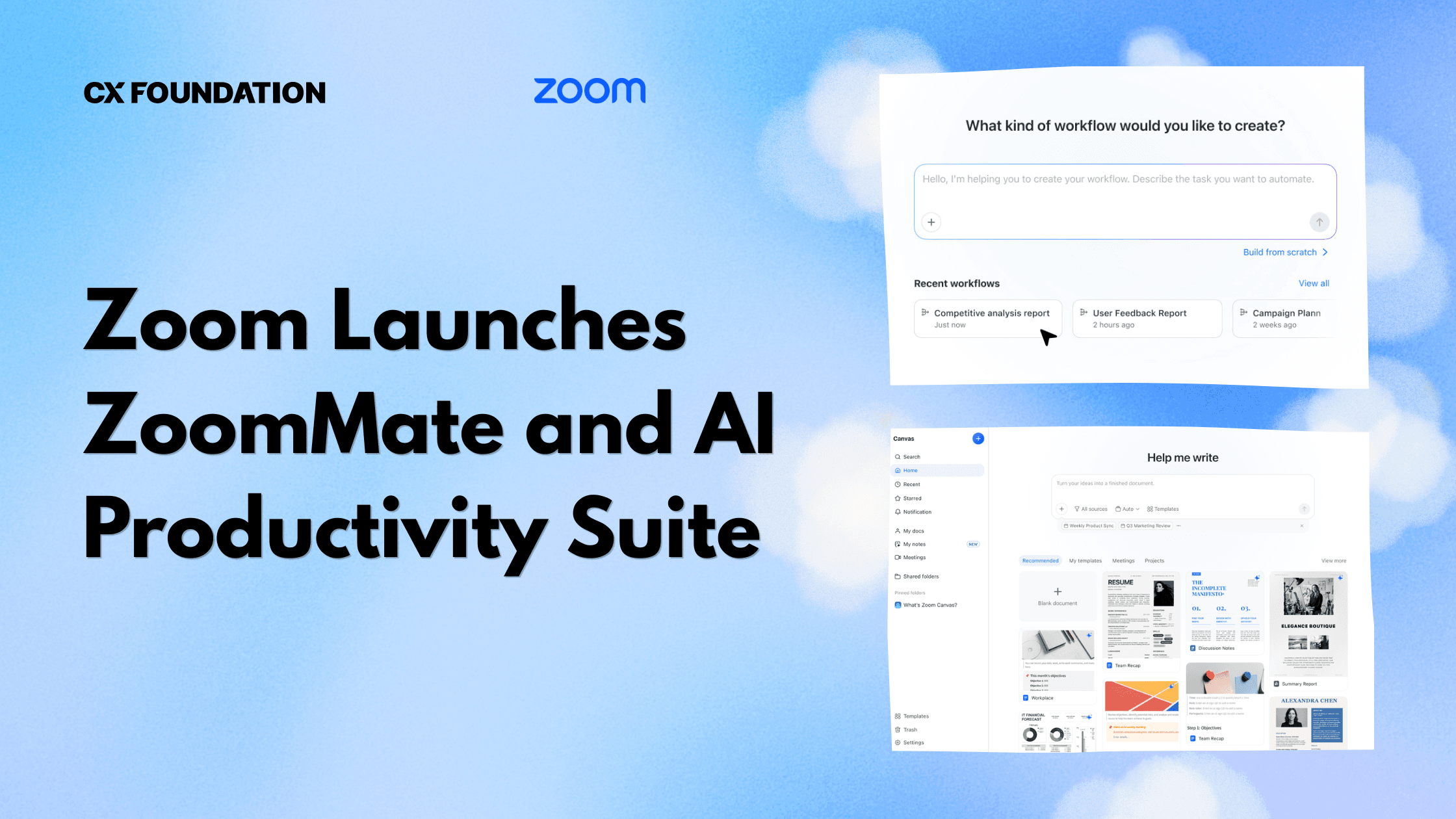
Today, enterprise communications and collaboration powerhouse Zoom launched ZoomMate, an agentic AI coworker that analyzes, assists, and acts across integrated systems to turn conversations into context-backed deliverables. ZoomMate attends your meetings, listens to your conversations, pulls relevant data from connected third-party applications, and autonomously creates and completes related tasks.
ZoomMate leverages Zoom’s AI Productivity Suite, also launched today, to generate relevant meeting documents and deliverables across Zoom Canvas (formerly Zoom Docs), Zoom Slides, Zoom Sheets, and Zoom Paper.
Zoom’s thesis here is simple: work starts with a conversation, not a structured tasks list or teamwide project files.
Because all your tools and applications exist within the same ecosystem, ZoomMate maintains full context across channels, teams, systems of record, conversations, and documents. ZoomMate then uses the AI Productivity Suite to turn insights into actions: creating content, scheduling follow-ups, initiating agentic search, monitoring ongoing projects, and executing workflows.
The market is moving away from isolated AI helpers and toward tools that can better connect decisions, data, and workflows across an organization. Many AI offerings operate on the edges of work, with limited access to the real-time context affecting decisions. ZoomMate approaches this differently because it sits inside the conversations where those decisions unfold. This can give it live business context and help make its recommendations more grounded in the work that teams are actually doing.
Melody Brue
What Can ZoomMate Do?
ZoomMate searches, orchestrates, and completes work across Zoom and integrated third-party tools regardless of format or channel.
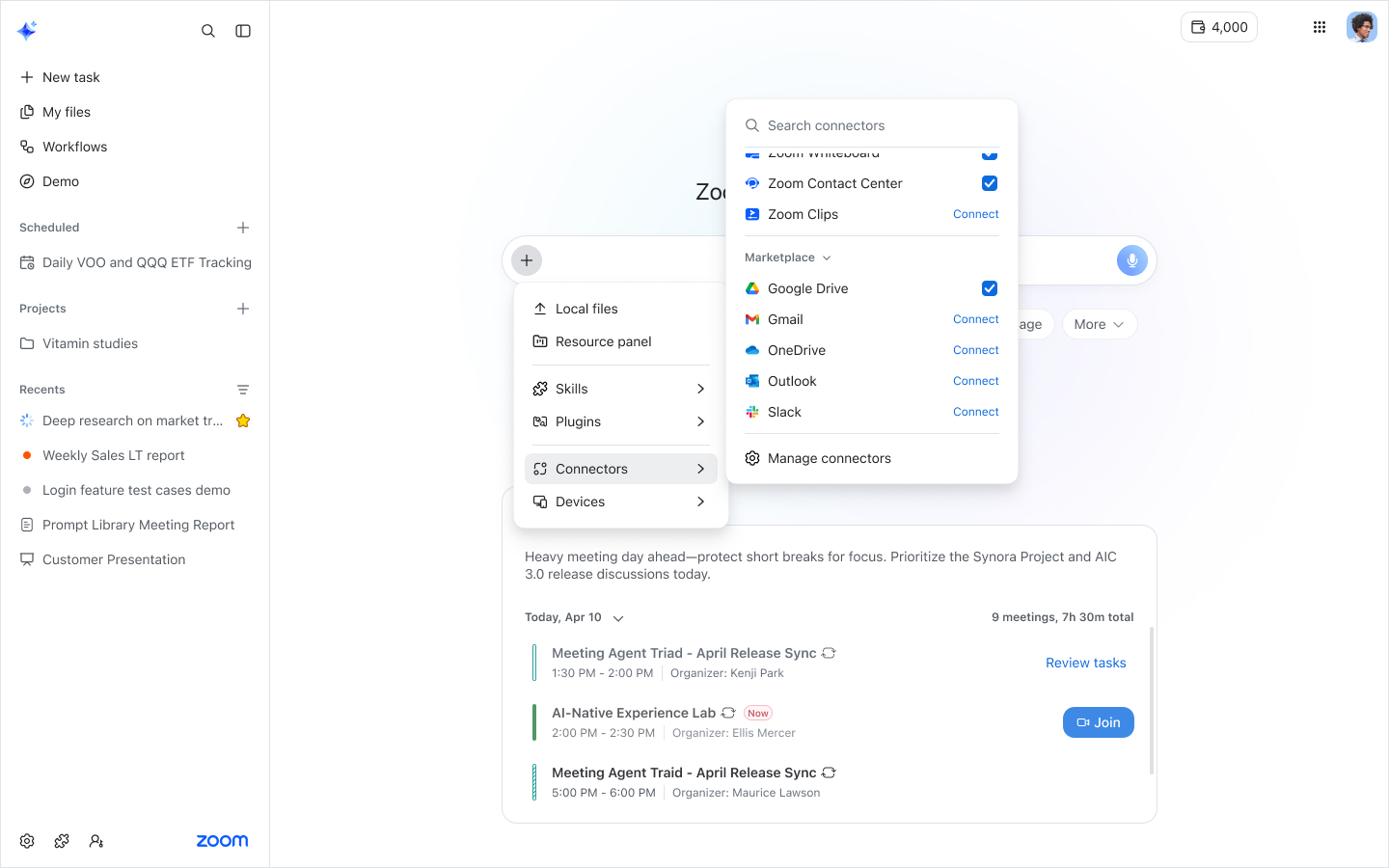
ZoomMate’s agentic search goes far beyond standard indexing: it reviews data across your knowledge base, customer conversations and records, tickets, files, projects, and even the web.
Its AI-generated suggestions and outputs are based entirely on your data: ZoomMate understands the complete conversational context, analyzes root causes and sentiment, and surfaces the most relevant information for the specific task at hand.
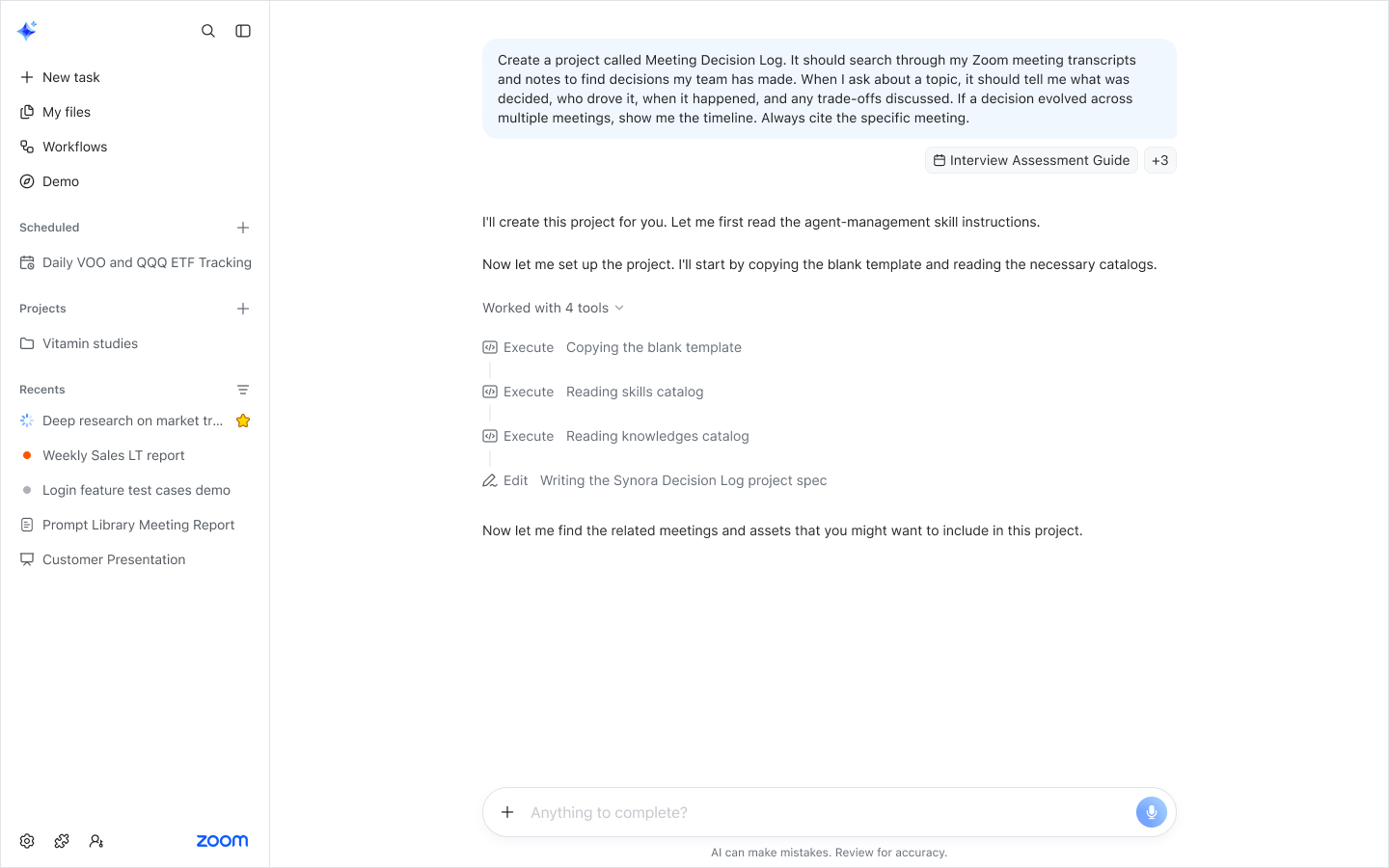
ZoomMate’s agentic layer is the orchestrator: updating records and executing tasks in real time, across systems and applications.
Intelligent agents create content for and monitor ongoing projects, update CRM systems, schedule meetings in third-party calendars, build repeatable workflows from meeting context, follow up with customers, and more.
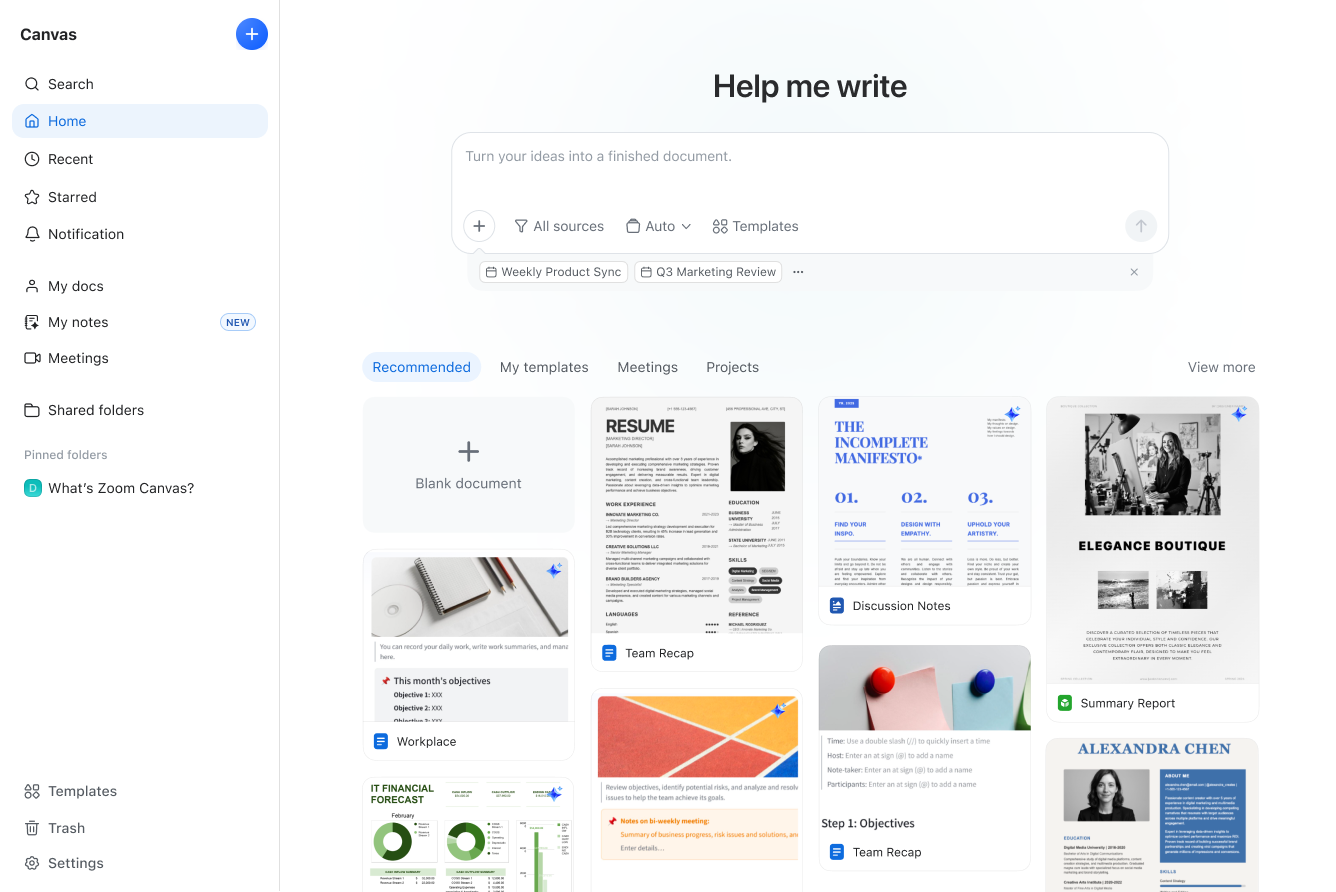
Finally, ZoomMate completes the work based on the deliverables that it designed and that your human team collaborated on.
It drafts presentations, spreadsheets, project plans, documents, knowledge base articles, and customer-facing communications in the Zoom AI Productivity Suite.
The AI Productivity Suite is included with a ZoomMate subscription, available as a standalone product, or available as a $10/user/month paid add-on to an existing Zoom account (AI credits included.)
ZoomMate Differentiators, Benefits, and Use Cases
Unlike standard AI assistants or meeting summary tools, ZoomMate provides proactive and real-time task execution based on the actual conversations your team members and customers are having.
This means a better and more consistent customer experience, faster service, fewer workflow bottlenecks, continued improvement, and manageable scalability.
Today’s AI tools can capture conversations or generate content, but they often lack the full context of people’s conversations across meetings, chat, email, and in-person. Zoom was built from the conversation out, which gives our AI a unique understanding of what teams discussed, what decisions were made, and what needs to happen next. The AI Productivity Suite helps teams move from conversations to completion by turning meeting context into actionable work, without forcing users to reconstruct information across disconnected tools.
Russell Dicker
Sales teams can use ZoomMate to automate the prep and admin work that bogs down the sales process: ZoomMate can open account history, review tickets and notes, and provide relevant details to the human agent before they hop on a call.
Once the call ends, ZoomMate updates the opportunity record, drafts the follow-up email, and turns the discussion into a proposal or a pitch deck, all within the Zoom interface.
Professional services can easily turn a discovery call into polished proposal, a budget model, or a client-ready deck in minutes.
For service and support teams, ZoomMate searches across tickets, customer records, and knowledge articles to surface the relevant history mid-conversation. It reads the root cause and the customer's sentiment, then logs the ticket, drafts the reply, and triggers the right follow-up or escalation once the call wraps.
What This Means For Zoom and CX
The ZoomMate+AI Productivity Suite announcements show Zoom is no longer trying to win as the best place to have a meeting.
Instead, Zoom wants to be the single interface for planning, hosting, and acting on meetings, optimizing workflows and the customer experience based on complete conversational context and existing customer data across your tech stack.
This “single platform” approach puts Zoom directly on the same course as competitors like Salesforce, Google, and Microsoft (many of whom have recently launched enterprise AI agents like Agent 365, Gemini Agent, Agentforce 360, etc.)
It’s a risky approach: while some Zoom users will likely see today’s announcements as ways to potentially cut down on their tech stacks, others may not want to use Zoom as both a system of record and a system of action.
Then there’s the single-vendor dependency risk associated with going “all in” on a single platform (especially given that agentic tools are only as trustworthy as the accuracy of their models.) While Zoom says results respect existing access controls and governance, that level of trust can only be earned post-deployment, not on launch day.
That said, ZoomMate and the AI Productivity Suite help Zoom become the place where work actually happens, not where work is simply discussed. Whether it works will come down to two things: reliability in production and the willingness of enterprises to let conversations, not documents and databases, be the true systems of record.