February 24, 2026 • 3 min read
Zoom Virtual Agent 3.0 Arrives

CX Analyst & Thought Leader
February 24, 2026
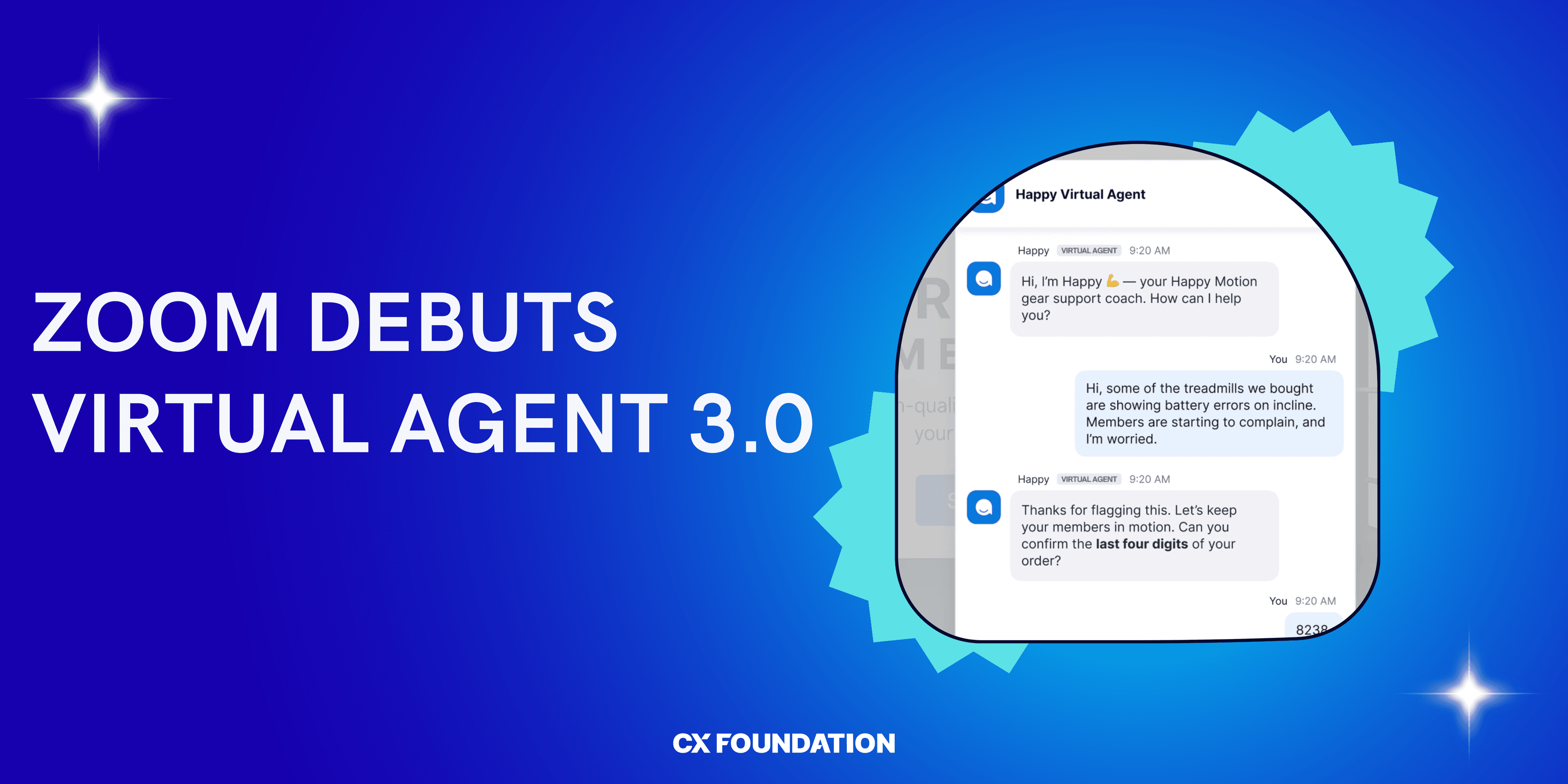
Today, Zoom debuted their Zoom Virtual Agent 3.0 (ZVA), designed to autonomously and entirely resolve customer support issues across voice and chat – or remove friction from the customer journey should the issue require escalation to a live agent. ZVA 3.0 aims for resolution–not just containment–and provides enterprise governance that provides data sources, decision logic, and complete workflow paths. Its new execution architecture enables observable cross-system interactions alongside multi-step actions.
Although many enterprises are already taking an “AI-first” approach to the customer experience, 43% of consumers still say chatbots fail to resolve their issues. ZVA 3.0 hopes to close that gap, providing enterprise customers with a competitive edge in what it calls the “resolution economy” – where customers prioritize total resolution over the speed of support. Studies support this theory: A 2026 study from Glance found that 75% of consumers say they’ve received a fast response that still left them frustrated, while 68% of customers cite “getting a complete resolution” as the most important part of the support process (only 15% cited speed of response as priority one.) [*]
Agentic AI was just the beginning. Zoom Virtual Agent 3.0 orchestrates multi-step workflows across systems, continuously learns from human resolutions, and provides full transparency into every agentic action. This allows organizations to confidently automate complex interactions. It’s more than a product update, it’s another step toward more connected customer relationships, where AI and humans work together to resolve issues faster and build trust.
Chris Morrissey
Zoom Virtual Agent 3.0 Features
In Spring 2026, Zoom users should expect multimodal intelligence that lets ZVA interpret and act on customer-provided documents, images, forms, and other structured identifiers like serial numbers. Continuous learning and a structured feedback loop from integration with Zoom Contact Center will also be available come Spring, as will proactive outbound engagement.
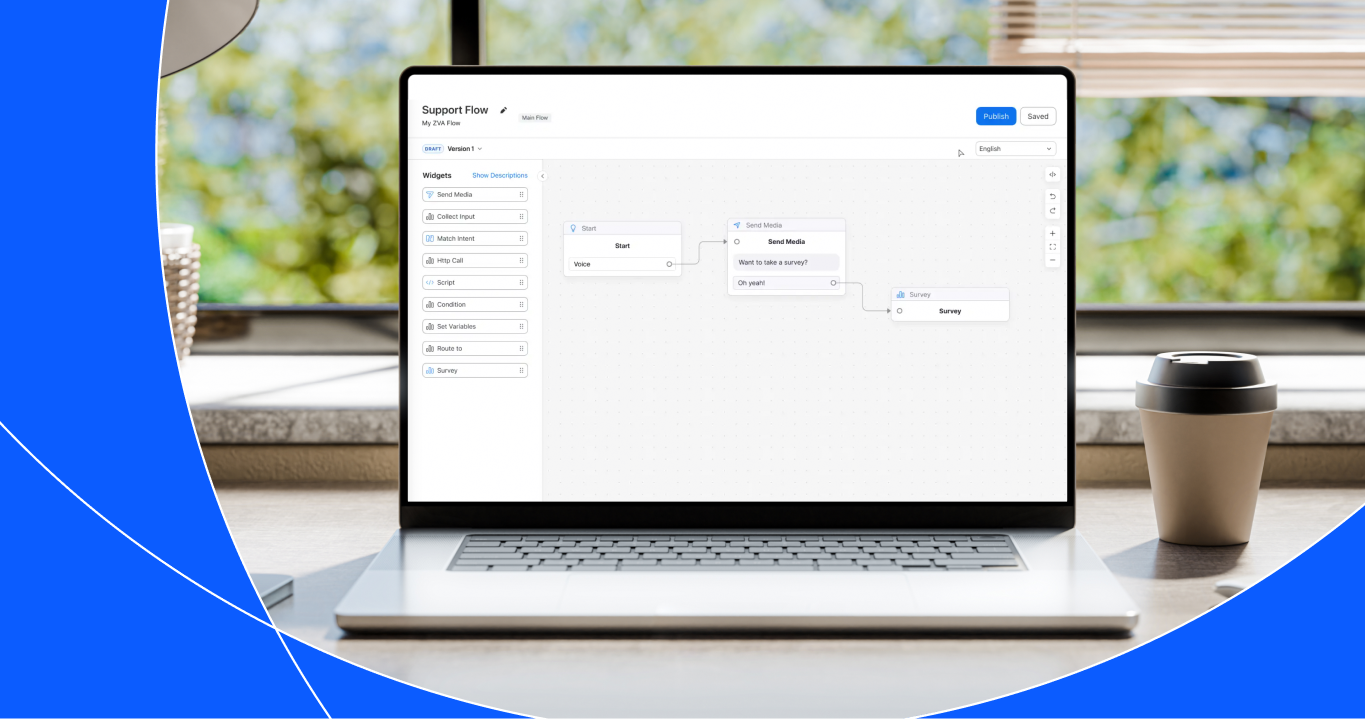
Early results are promising: after implementing ZVA 3.0 across Zoom virtual agents, Zoom’s no-match rate (the percentage of conversation turns where a virtual agent didn't understand user input) dropped from 35% to 0%. This signals the potential for a marked increase in first contact resolution rates. Zoom’s billing team also saw deflection rates rise from 0% to 30% in three months, resulting in a monthly savings of 1,000+agent hours.
What This Means For CX
The real significance of ZVA 3.0 is its potential ability to improve customer trust. The 43% chatbot failure rate means customers have learned, through repeated experiences, that speed and resolution aren’t the same thing – and that many AI-powered chatbots provide neither.
ZVA 3.0's emphasis on observable decision logic, auditable workflows, and continuous learning from human agents reflects a more mature understanding of what enterprise AI actually requires: accountability, not just capability.
Earlier AI deployments too often prioritized rapid rollout over responsible architecture, damaging the customer experience and trust in the process. ZVA 3.0’s potential for complete transparency into agentic actions – proving both the what and the why – is exactly the kind of governance infrastructure the industry has needed.