February 5, 2026 • 3 min read
Workday Becomes the Latest Tech Giant to Trim Its Customer Service Workforce

Director of Content & Market Research
February 5, 2026
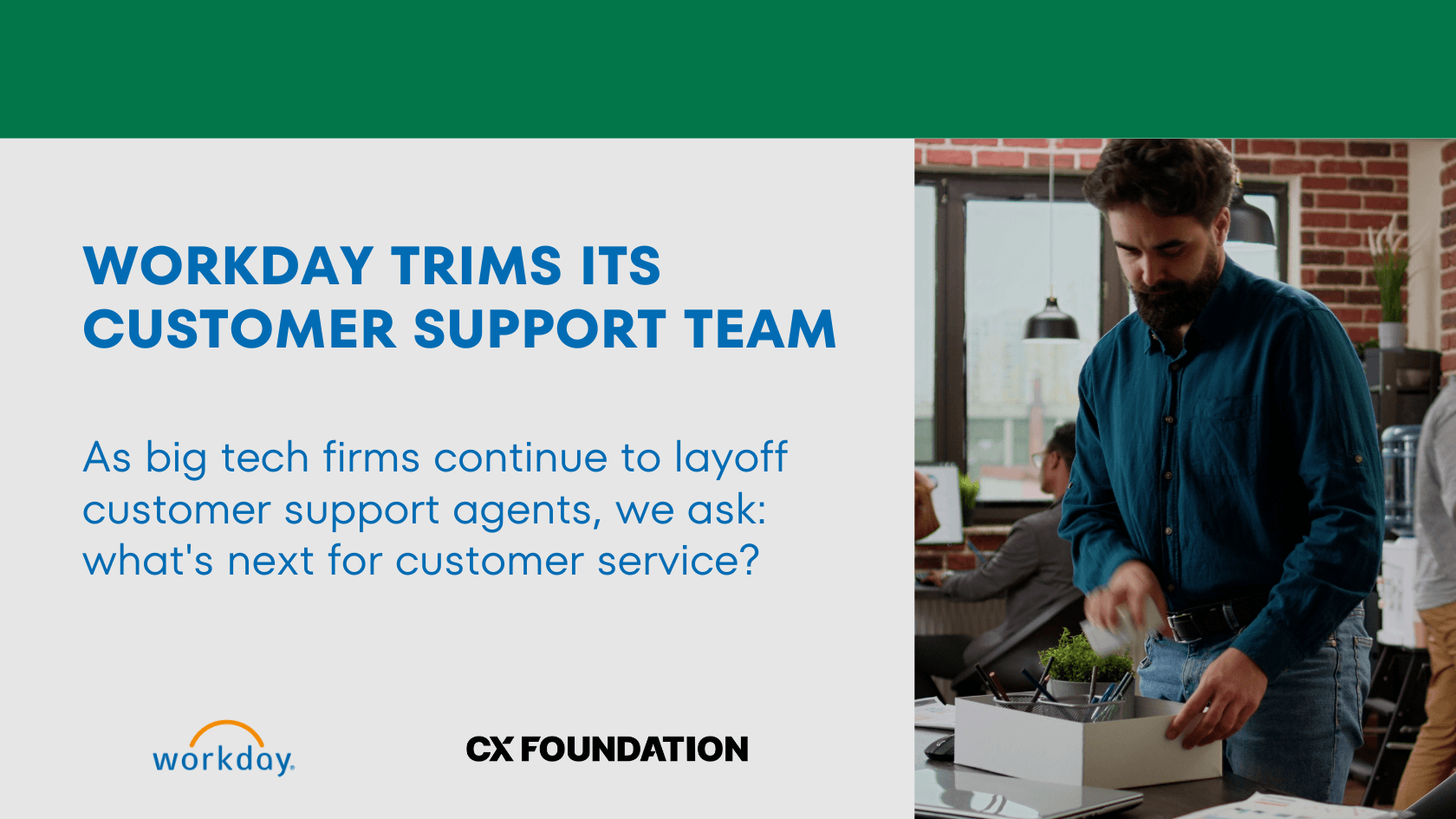
Workday is the latest enterprise technology provider to cut hundreds of customer service roles.
The human capital management (HCM) provider disclosed the layoffs in a regulatory filing, citing the need to “better align its people and resources with its highest priorities.”
Overall, Workday will reduce its workforce by 2%, primarily impacting “non-revenue-generating roles” within its global customer operations team.
Two percent of Workday’s employee base equates to approximately 400 jobs.
Workday’s maneuvers come after Salesforce and Atlassian hit the headlines in late 2025 for cutting customer service roles and pointing the finger at AI.
Big Tech’s Customer Service Workforce Reductions
In August, Salesforce CEO Marc Benioff revealed on The Logan Bartlett Show that the company had reduced its support team by 4,000 employees after reporting that Agentforce helped resolve 85% of customer contacts.
A month later, Atlassian - a prominent project management and IT service management (ITSM) provider - shrunk its support team by 200 people.
Elsewhere, ServiceNow claims to have reduced customer service demand by 90% with AI. However, it hasn’t made any layoffs. Instead, it’s pivoting its customer support model.
Changing Customer Service Models
Beyond the tech sector in itself, many companies may opt to reskill employees rather than eliminate roles, like ServiceNow.
In doing so, some will evolve customer service into a broader customer success function.
Why? Because there is significant value in leveraging human relationships to secure loyalty, especially in today’s subscription economy.
Zeus Kerravala, Principal Analyst at ZK Research, addressed the shift in customer service models during a recent episode of the CX Reflect podcast.
“Every major technology shift eliminates some jobs but creates others,” he said. “Think about airline ticketing kiosks or mainframe administrators; those roles disappeared, but the industries didn’t shrink. They grew, just differently. This transition is no different. Some roles won’t survive, but new ones will emerge.”
“Companies have a responsibility to help people reskill, and individuals have a responsibility to adapt. AI is going to be embedded in everything.”

Yet, while some brands consider cutting staff or shifting customer service toward growth initiatives over retention, looming regulations may soon force a rethink.
Mandated Human Customer Service
California lawmaker Rick Chavez Zbur recently proposed the Right to Human Customer Services Act (AB 1609).
If passed, the act would force brands that sell goods and services in California to offer human customer support across voice and digital channels in less than five minutes.
Meanwhile, last year, two senators introduced the Keep Call Centers in America Act of 2025.
While this prospective legislation primarily aims to prevent US companies from offshoring customer support, it would also require companies to disclose to customers if they’re conversing with an AI application.
At that point, the customer would have the choice to route to a US-based human agent.
The threat of such regulations could mitigate much of the impact AI has had on lowering demand for human-assisted service.
Indeed, Gartner has even predicted that the advent of such regulations could hike customer service volumes by 30% over the next two years.
If this is indeed the case, many brands may reconsider plans to shrink or pivot their service teams, even as AI starts to handle more queries.