January 13, 2026 • 5 min read
Salesforce Bids to Make Copilots Cool Again with Its 'All-New' Slackbot

Director of Content & Market Research
January 13, 2026
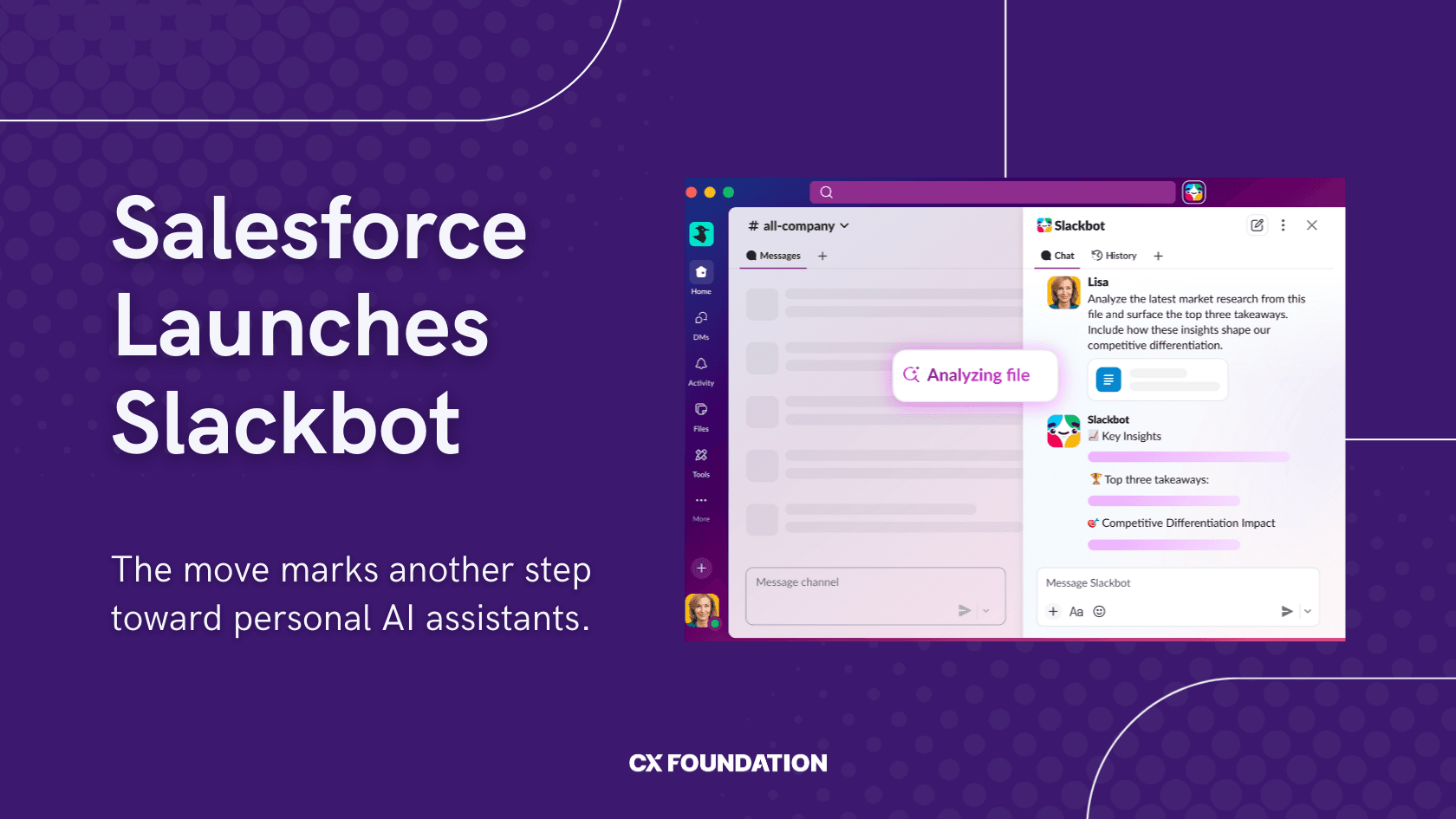
Salesforce has announced the general availability of its revamped personal AI assistant for Slack: Slackbot.
The offering is reminiscent of other ‘Copilots’, which assist users as they complete tasks such as drafting communications, creating content, and retrieving information.
That said, Salesforce claims to have solved two major user gripes about AI assistants.
The first is that many AI assistants live outside of where work happens, forcing employees to learn new systems and continually switch contexts.
The second is that they typically don’t know the individual user, their work, or their organization, which limits how helpful they can be.
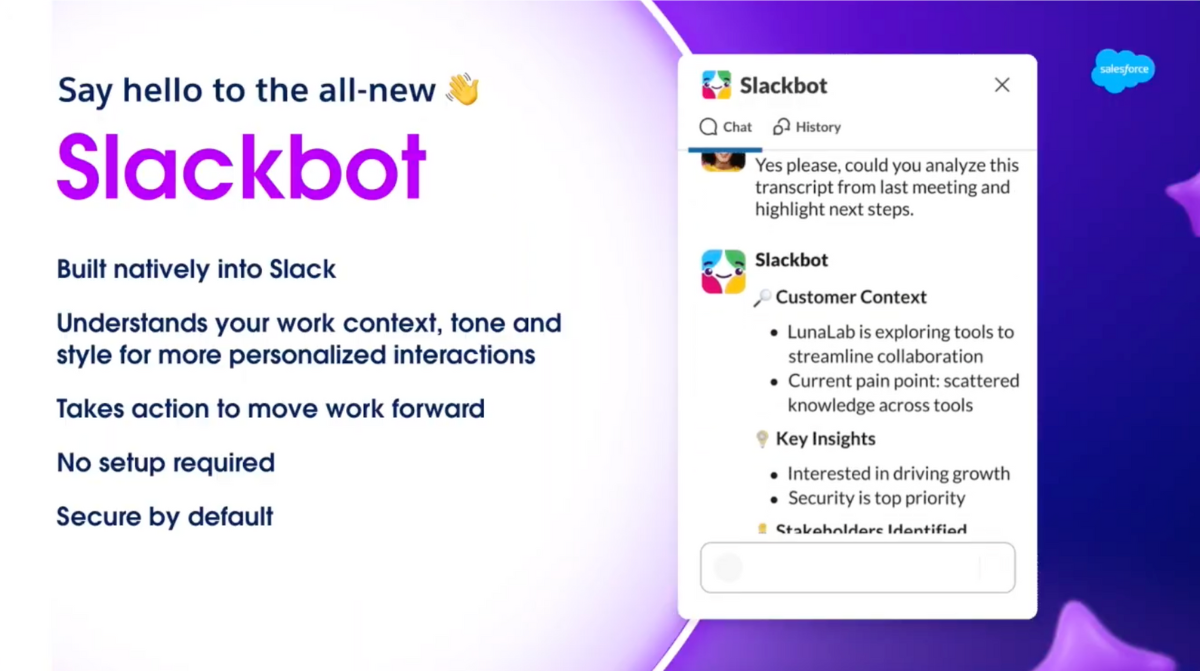
According to Salesforce, Slackbot addresses these issues by understanding the user’s work, tone, and organizational context while accessing the same conversations, files, and history as they do.
“It is a deeply personal agent that is specific to me. It’s your agent. It’s not for your teams; it’s your personal productivity assistant, and it’s sitting there right natively in Slack.”

While it’s only now generally available, Salesforce has leveraged Slackbot internally for two months, gushing about an ‘incredible’ reaction from its team.
Indeed, Gavin described it as the “fastest-adopted product in Salesforce history,” with approximately 80,000 of its employees already leveraging Slackbot.
“We’re seeing teams save around five hours a week, and some individuals saving up to 20 hours,” he concluded.
The Use Cases for Slackbot
Slackbot helps users schedule meetings, catch up on missed conversations, prepare agendas, create content, and get answers across meetings, chats, and documents.
Yet, beyond the expected use cases of a Copilot within a collaboration platform, Salesforce shared two more niche examples its team benefits from.
First, managers are asking Slackbot to rank their key ‘focus areas’ for the day by analyzing team conversations and priorities.
Second, Slackbot is assisting employees in writing their self-evaluations by summarizing their work over the past year from Slack conversations and projects.
Yet, there are many more custom examples that the Salesforce team is actively sharing with one another, per the vendor.
“What we’re seeing is that it kind of goes viral across the organization: finance, engineering, marketing, all these line-of-business teams have these ‘stealable’ prompts now that get shared around.”

Salesforce is now working on a ‘Shareable Prompts’ feature to help its customers’ employees find new use cases, spread them amongst their teams, and benefit similarly.
However, the ‘bigger picture’ for Slackbot extends much further…
What’s Next for Slackbot (& Enterprise Communications)?
Parker Harris, Chief Technology Officer at Slack and co-Founder of Salesforce, defines Slackbot as the “front door” to tomorrow’s enterprise.
In doing so, Harris positions Slack as the home for work, and, as Slackbot evolves, employees will take fewer trips out of the house.
When they need to complete a task in an adjacent system, employees may prompt the future Slackbot, which determines the systems involved and coordinates the work across the systems and agents behind the scenes.
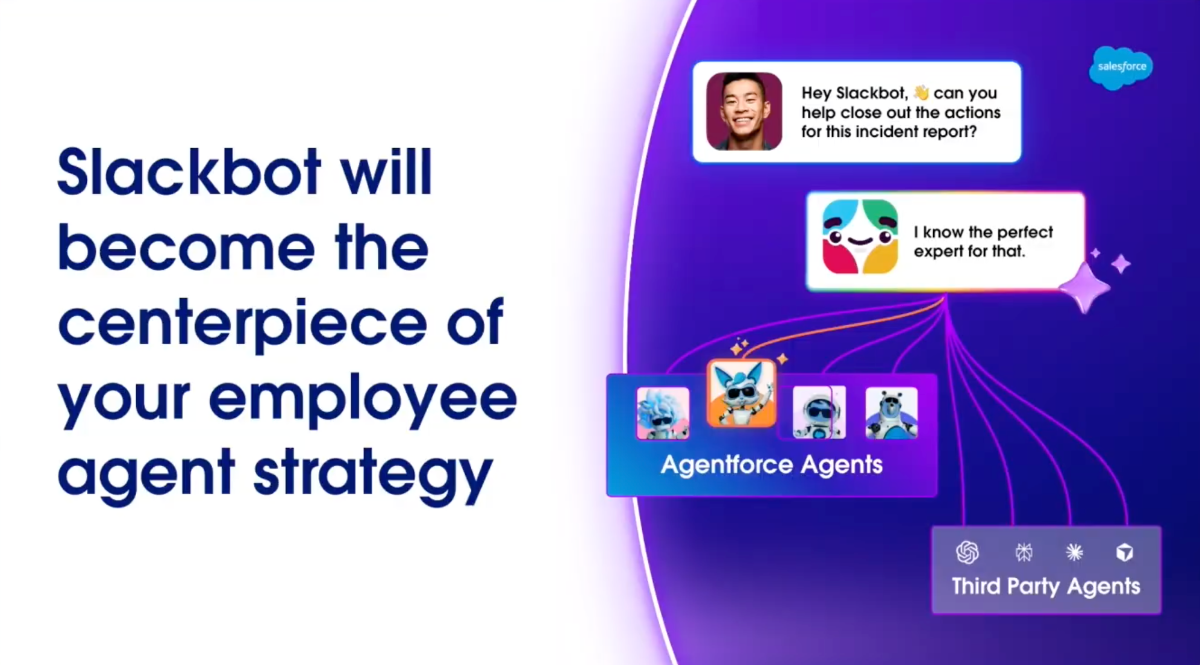
For instance, a salesperson could ask Slackbot to prioritize a list of prospects for an outreach program. The system may then collaborate with agents inside Agentforce Sales, or a third-party CRM app, to feed through the list.
Salesforce is building toward a future by making Slackbot an MCP client, which allows third-party integration partners to build MCP servers that Slackbot can connect to.
“We’re starting small with enterprise search connectors, a few opinionated third-party tool calls out of the box – like [Google] Calendar - and then moving into the MCP client/server methodology over time.”

Overall, the vision for Slack appears similar to Zoom’s vision for its platform and AI Assistant. Yet, the emphasis on this being a ‘personal’ helper is particularly intriguing.
Our Take: One Step Closer to TRULY Personal Employee & Customer AI Assistants
Slackbot doesn’t just work from the same environment as the employee; it aims to start communicating like the employee. It picks up on the user’s tone, phrases they use, and emojis they favor. That pulls us closer to a future where AI assistants adapt to the individual.
While Slackbot may only now interact like an employee, soon it may adjust based on how they think and learn.
As this trend accelerates, AI assistants for neurodivergent employees may surface, responding to individual needs rather than forcing one-size-fits-all workflows.
A recent story on the latest contact center trends shared the possibility of a customer-facing AI assistant supporting people with ADHD in overcoming the ‘blank page problem’.
The blank page problem encapsulates the phenomenon where people with ADHD can stare at a screen for hours, unable to write a first sentence.
Yet, if AI picks up on this, offers suggestions for the first sentence, they can immediately move forward. That small nudge could make all the difference.
A future where AI becomes responsive in that way won’t just improve productivity; it can fundamentally improve access and experience for employees and customers alike.