
April 14, 2026 • 6 min read
HubSpot Spring Spotlight 2026: 5 Big Talking Points

Director of Content & Market Research
April 14, 2026
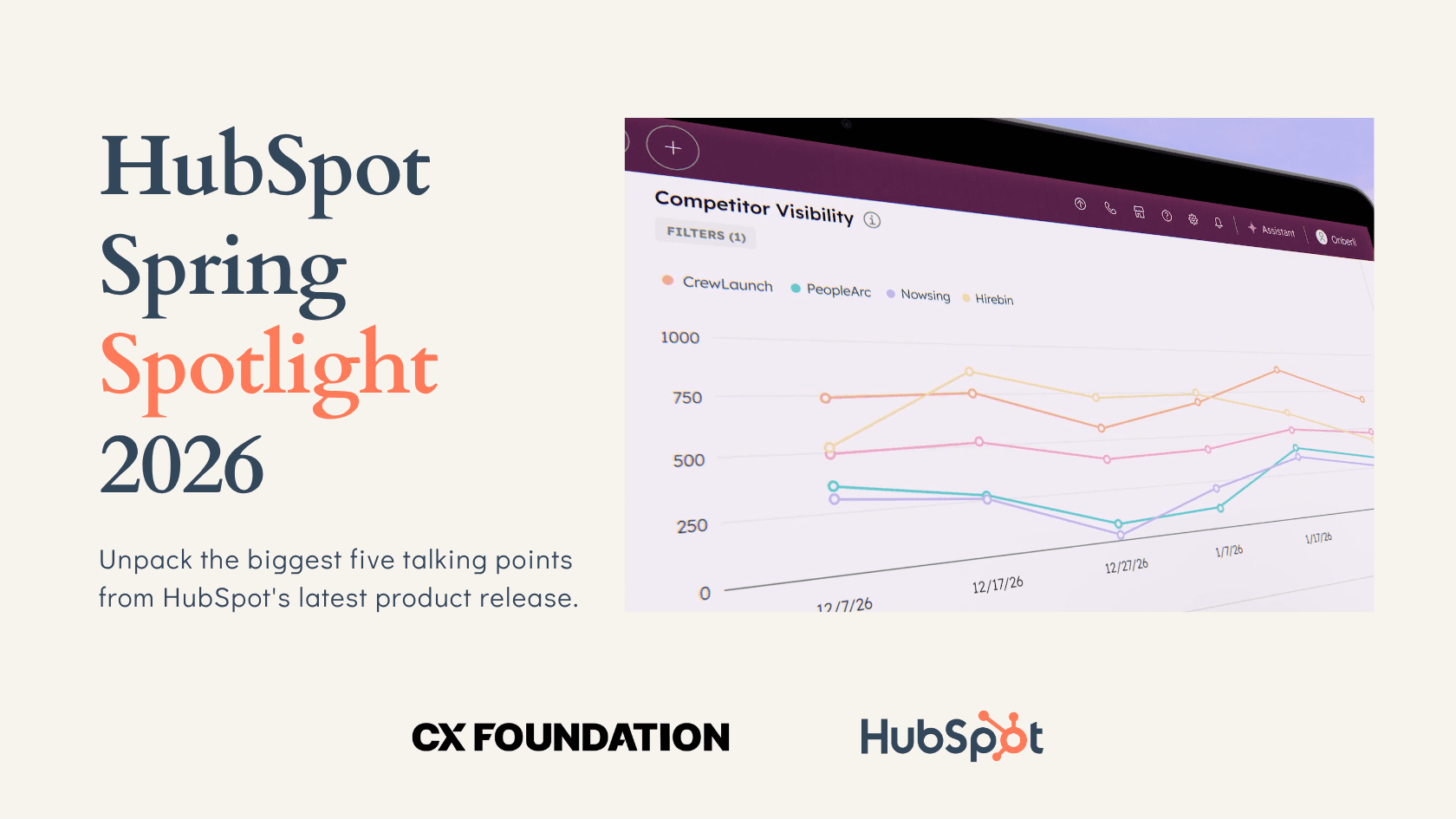
HubSpot has announced its Spring Spotlight 2026 release, focused on the idea of building the “agentic customer platform”.
For HubSpot, the agentic customer platform is a system that brings together a brand’s customer and business data in one place, making it accessible to both human and AI employees so they can work together to market, sell, and serve customers.
In other words, it represents the next evolution of its Smart CRM vision, incorporating more customer context and supporting AI that not only assists but also reasons, adjusts, and acts across one core CX ecosystem.
The first three talking points below highlight how HubSpot is drawing richer data onto its platform and enabling AI to more effectively support customer-facing teams.
1. HubSpot AEO Goes Live, a ‘First-of-Its-Kind’ Tool to Improve Brand AI Visibility
Buyers aren’t just searching on Google anymore. They’re asking tools like ChatGPT, Claude, and Gemini for recommendations, and using AI-powered answer engines to research solutions.
Brands that don’t show up there miss opportunities.
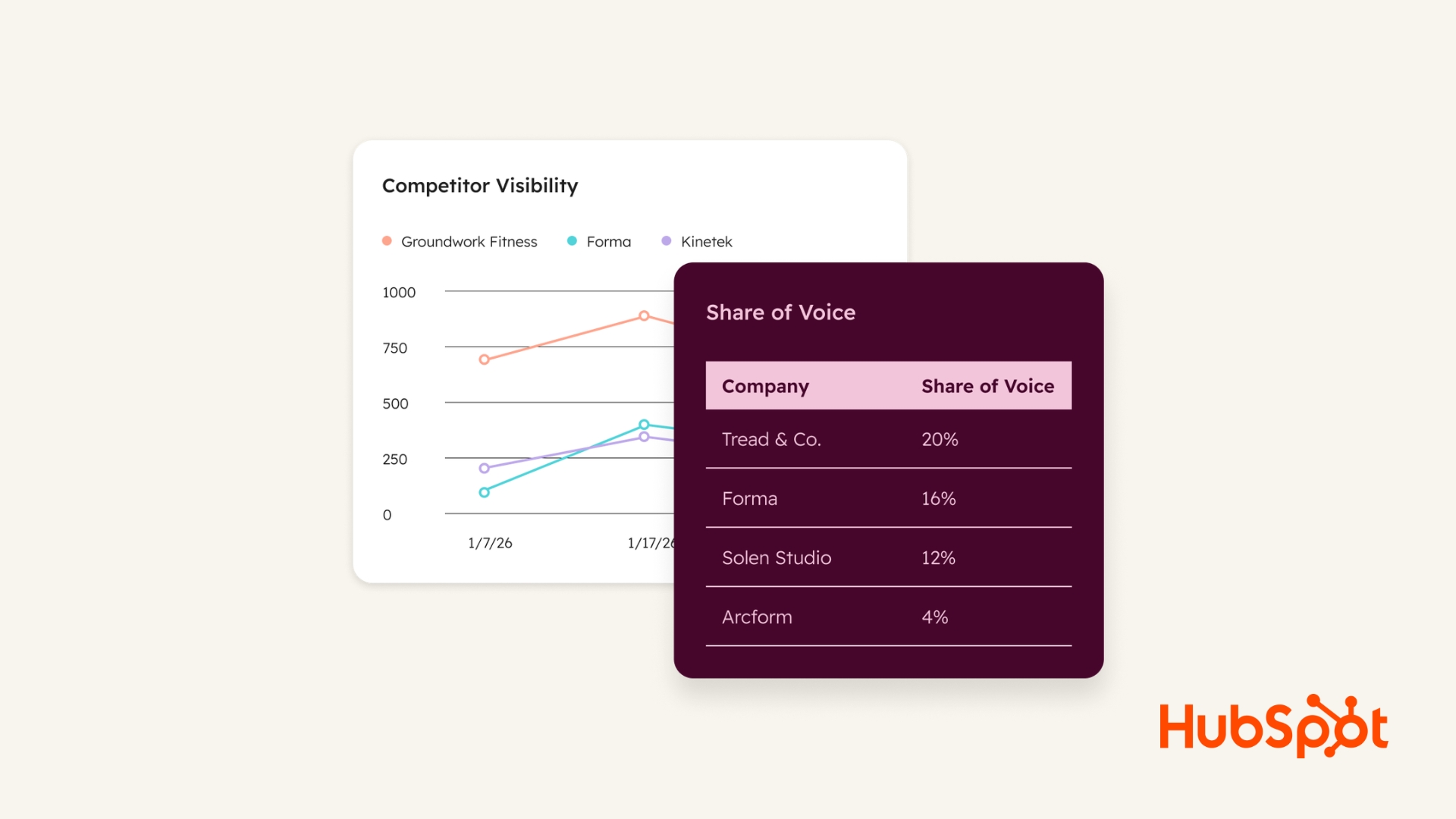
That notion prompted HubSpot to release a first-of-its-kind AEO (Answer Engine Optimization) solution, which helps marketing teams monitor their visibility across AI search tools and compare performance against competitors.
It does so by utilizing a company's own data to track prompts that real customers are likely to use in AI engines.
If a brand is lagging against these prompts, AEO also suggests why, highlighting the sources AI trusts, i.e., industry publications, review sites, and Reddit discussions.
From there, HubSpot recommends customers leverage its updated Breeze Assistant for Loop Marketing, which helps generate content that answers real buyer questions, drafts case studies AI can cite, and publishes thought leadership across trusted sources.
HubSpot AEO is now available with a Marketing Hub Enterprise or Pro plan. It’s also available for $50 per month as a standalone solution.
“How buyers search is fundamentally changing. They are asking questions in places like ChatGPT and Gemini, and the companies that show up in those answers are already winning. That's exactly why we've built HubSpot AEO: to help businesses improve their AI visibility, grow brand awareness, and ultimately drive more qualified leads.”

2. HubSpot Rebuilds Its Prospecting Agent, Announces a 28-Day Free Trial
Sales teams often get bogged down in busywork as they close deals. HubSpot has “rebuilt” its Breeze Prospecting Agent to take more of that work off their hands.
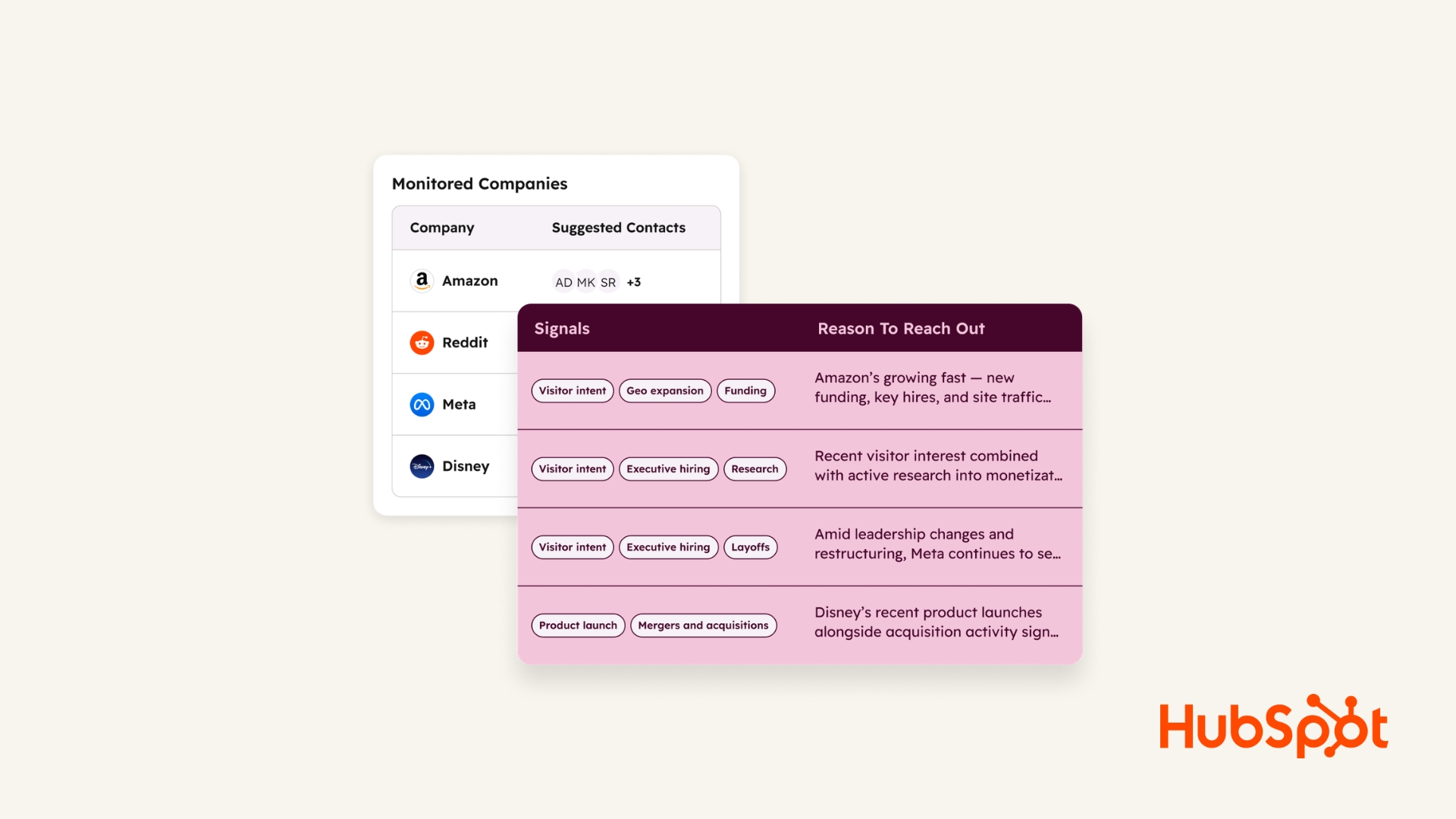
For starters, it now researches a target company, identifies potential members of the buying committee, and enriches the CRM with key contacts.
Additionally, it tracks buying signals, such as funding announcements, product launches, or new hires. The Prospecting Agent can then draft personalized outreach emails, based on real signals, for sales to review, tweak, and send.
After, it books meetings and, before the call, the agent compiles insight into the company’s recent activity, pain points, and company news to prepare the salesperson.
HubSpot’s AI Meeting Notetaker then helps to capture everything on the call.
Then, another new tool comes into play: Smart Deal Progression. It updates deal details (budget, timeline, etc.) and suggests next-best actions, citing the transcript.
HubSpot Breeze can then draft follow-up emails until (hopefully) the prospect is ready to sign.
As such, AI does much of the busywork across the buying cycle, and HubSpot hopes to help customers bring its vision to life by offering Prospecting Agent with a 28-day free trial.
“In two weeks with Prospecting Agent, we booked a new discovery call and created a pipeline opportunity. With our old approach, that took two months. Our BDRs (business development reps) are doing real personalization now, not token swaps, and they're spending that saved research time prospecting more companies.”

3. HubSpot Customer Agent Now Covers Email
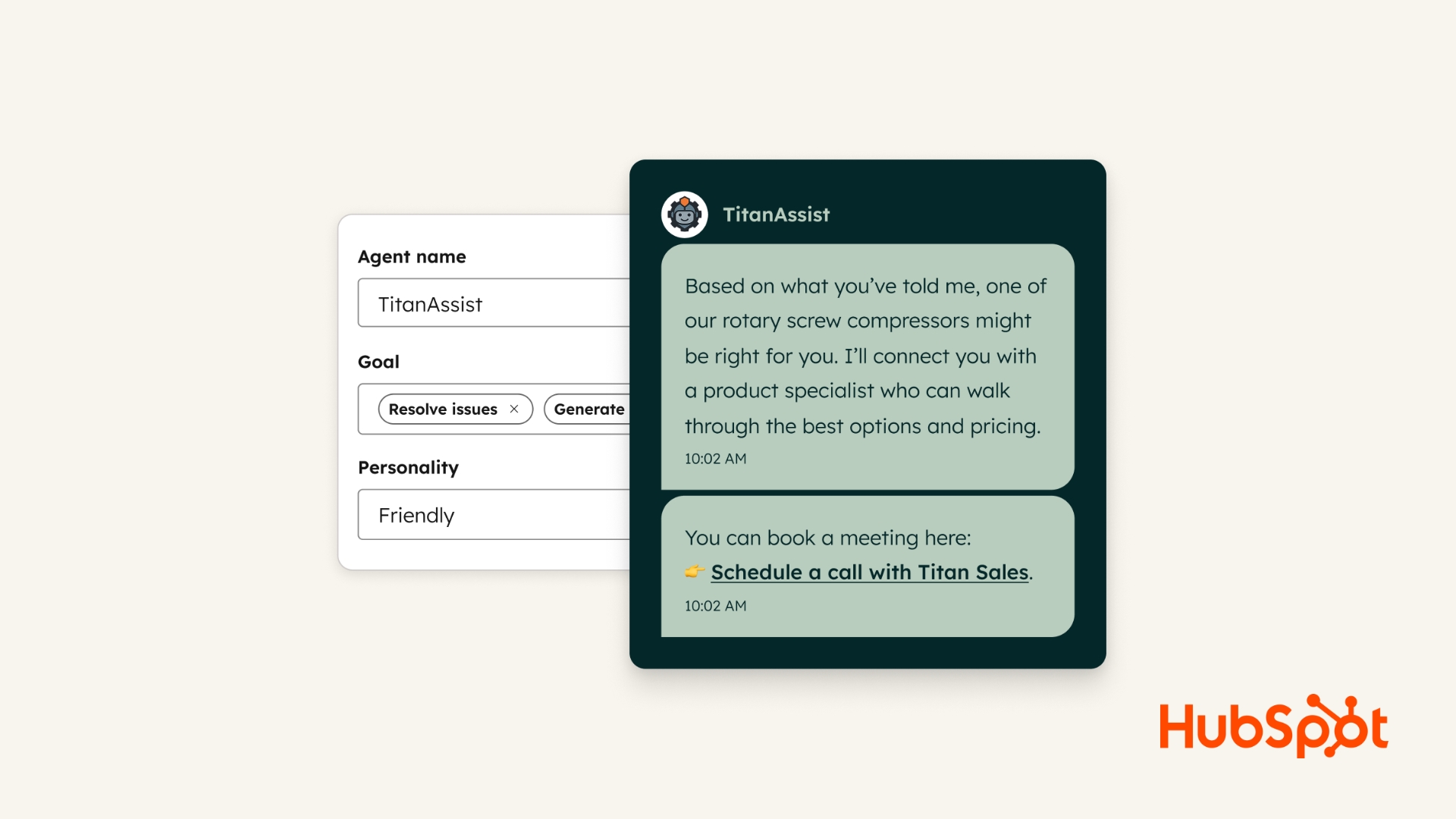
While this may not be the most eye-catching announcement, it’s an important one: HubSpot’s Breeze Customer Agent now supports email.
Customer Agent is a customer-facing AI agent that can autonomously handles inbound queries, extending support beyond chat and into the inbox.
Yet, it doesn’t work independently from the get-go. At first, it drafts responses for review. So, when live agents log in the next morning, they see dozens of ready-to-send replies, which they can edit and send.
From there, support teams can release the handbrake across intents where they are confident the Customer Agent will provide an accurate response.
However, there is still a brake pedal, with Customer Agent escalating urgent customer problems, billing issues, and other pre-defined queries, which is a critical safety mechanism.
“Customer Agent has had a significant impact on our support operations. The agent now resolves 70 to 80 percent of our email tickets, and our time to close has dropped from more than 16 hours to less than 10.”

4. HubSpot Rethinks Its AI Pricing Model
The new-look Prospecting and Customer Agents are now available on an outcome-based pricing model, as laid out below.
- Customer Agent: ~$0.50 per resolved conversation
- Prospecting Agent: ~$1 per qualified lead
This represents a shift from traditional pricing models, paying for results rather than usage.
Outcome-based pricing has historically faced resistance due to its unpredictability. However, HubSpot has notably selected use cases where the outcomes are measurable and ROI is easy to demonstrate.
Indeed, both agents map directly to measures such as increased revenue, reduced workload, and headcount.
Yet, perhaps most notably, outcome-based pricing aligns with midmarket companies that don’t wish to implement AI for its own sake, but want demonstrable growth and returns.
While it’s unclear whether this pricing model will endure over the long term, it signals a shift in how SaaS companies may evolve from selling tools to delivering measurable value.
5. HubSpot Continues Its Grounded & Practical Approach to AI
HubSpot continues to be first to market with practical AI applications, such as AEO, just as it was with its ChatGPT–CRM connector in 2025 and its native TikTok integration earlier this month.
Yet despite this innovation streak, HubSpot isn’t chasing flashy AI. Instead, it remains focused on where AI delivers real, tangible value.
While the company may push boundaries more aggressively in marketing, its broader approach is consistent: AI is embedded directly into the platform as agents and assistants, with minimal need for custom development. That simplicity is a key driver of adoption in the mid-market.
There’s little that feels overly futuristic. Instead, customers have clarity; they know what they can do and what outcomes to expect, removing much of the guesswork.
Rather than telling customers they can build anything, HubSpot aims to go further to ensure the right data and context are in place, embedding AI on their behalf and accelerating time to value.